A washing machine transmission failure rarely happens at a convenient time. For repair shops, the problem shows up as a customer complaint about a noisy spin cycle or a drum that will not turn. For OEM buyers, the same failure mode becomes a line-down risk, a warranty claim, or a batch of field returns. The practical conclusion is simple: transmission parts should be selected by matching torque load, cycle profile, mounting geometry, and supply reliability, not by brand name alone. Cixi Gaite Electric Co., Ltd. has focused on washing machine core components since 2002, producing gearboxes, reducers, synchronizers, clutch assemblies, drive shafts, and P-shaft components for OEM manufacturers and aftermarket channels. This guide explains how to evaluate washing machine transmission parts, what to check before ordering, and where a China manufacturer can fit into your supply chain.
A transmission part is only as good as its fit to the actual washing machine load profile, and that fit starts with verified dimensions, materials, and process control.
Why Washing Machine Transmission Failures Matter for Buyers
When a washing machine transmission fails, the symptom is often mechanical: grinding during agitation, a burning smell near the belt, water leaking past a worn seal, or a pulsator that moves weakly under a full load. These symptoms point to different root causes. A stripped gear tooth may indicate torque overload. A seized bearing may come from water ingress or poor lubrication. A slipping clutch may be a wear item reaching the end of its designed life. For B2B buyers, the cost of failure is not just the part price. It includes labor, shipping, warranty administration, and the risk of losing a service contract or an OEM production slot.
For aftermarket distributors, the challenge is catalog coverage. A repair shop may need a transmission for a semi-automatic twin-tub washer, a belt-driven model, or a direct-drive unit. Each configuration uses different gear ratios, shaft lengths, mounting flanges, and clutch engagement methods. If the replacement part does not match the original mounting pattern, the repair becomes a custom job. That is why experienced buyers ask for dimensional drawings, material specifications, and cycle test reports before placing volume orders. They also want a supplier who understands that a washing machine transmission is not a generic gearbox. It works in a wet, vibrating, reversing environment with frequent starts and stops.
Cixi Gaite Electric Co., Ltd. builds transmission components for exactly this environment. The company operates from a production base of approximately 10,000 square meters in Cixi, Ningbo, Zhejiang. Its product range covers washing machine gearboxes, gear reducers, synchronizers, clutch assemblies, drive shafts, and P-shafts. Because these parts sit between the motor and the pulsator or drum, every tolerance decision affects noise, efficiency, and service life. Buyers who treat transmission sourcing as a commodity purchase often pay later through field failures. Buyers who treat it as an engineering match tend to get lower return rates and more stable aftermarket sales.
Transmission failures are usually a system problem, not a single-part defect, so buyers should evaluate the whole drive train rather than replace one gear in isolation.
Core Components Inside a Washing Machine Transmission
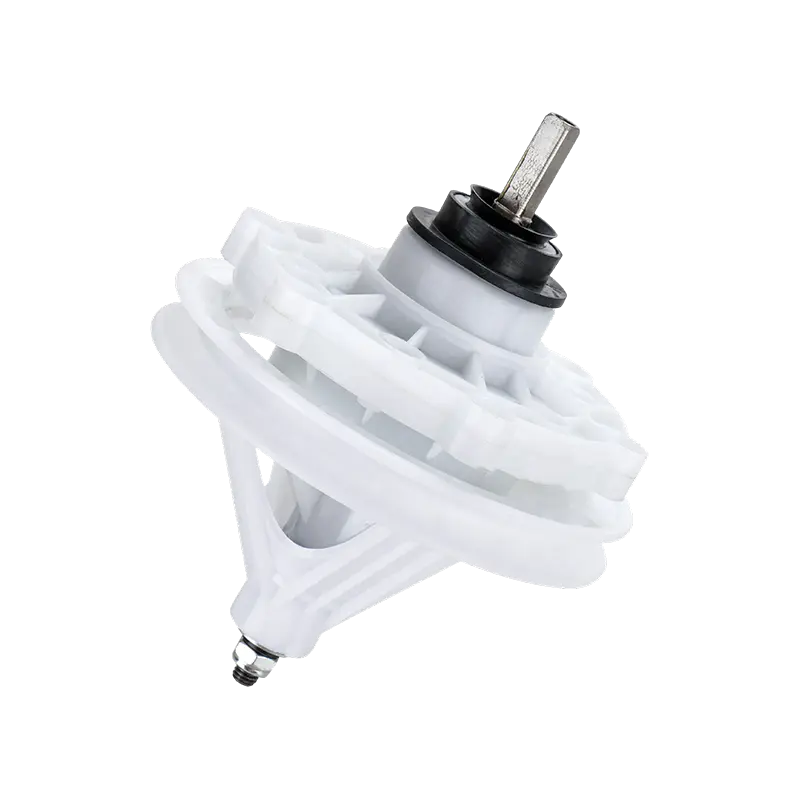
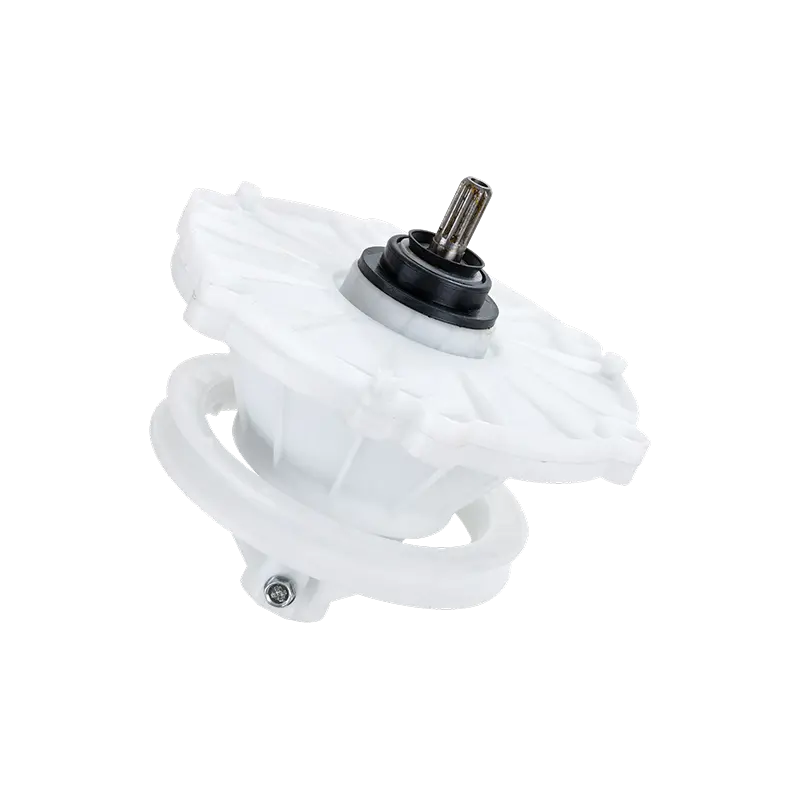
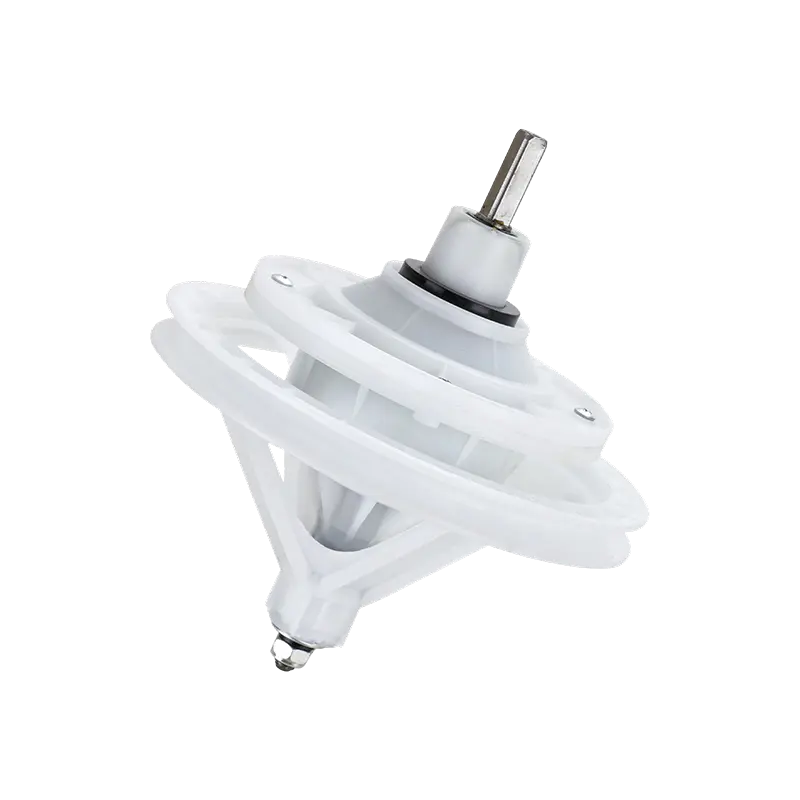
A complete washing machine transmission assembly may include a gear case, a gear reducer unit, a synchronizer, a clutch assembly, a drive shaft, and a P-shaft or pulsator shaft. The exact combination depends on the washer type. In a semi-automatic twin-tub machine, the transmission often works with a belt-driven motor and a separate spin tub. In a fully automatic top-load washer, the transmission may use a planetary gear reducer and a clutch to switch between wash and spin modes. In a direct-drive unit, the motor connects more directly to the transmission, reducing belt losses but increasing the need for precise electronic control and robust bearings.
Each component has a distinct job. The gear reducer lowers motor speed and increases torque for agitation. The synchronizer helps engage or disengage drive paths smoothly, which reduces shock loads. The clutch assembly locks or releases the drive depending on the cycle phase. The drive shaft transfers rotation to the pulsator or drum. The P-shaft and pulsator shaft components support the agitator and must resist both torque and bending forces. If any one of these parts is underspecified, the whole transmission can fail prematurely.
Buyers should also consider how parts interact. A gear reducer with excellent teeth but a soft shaft may wear quickly. A clutch assembly with strong springs but poor sealing may corrode in humid laundry rooms. A synchronizer with tight tolerances may shift smoothly when new but become sticky after detergent exposure. This is why Cixi Gaite Electric Co., Ltd. organizes its product system around both component type and application condition. Its site includes dedicated paths for washing machine gearboxes, P-shafts, gear reducers, synchronizers, clutch assemblies, and drive shafts. For buyers who need a starting point, the washing machine transmission page provides an overview of how these parts work together in a complete drive system.
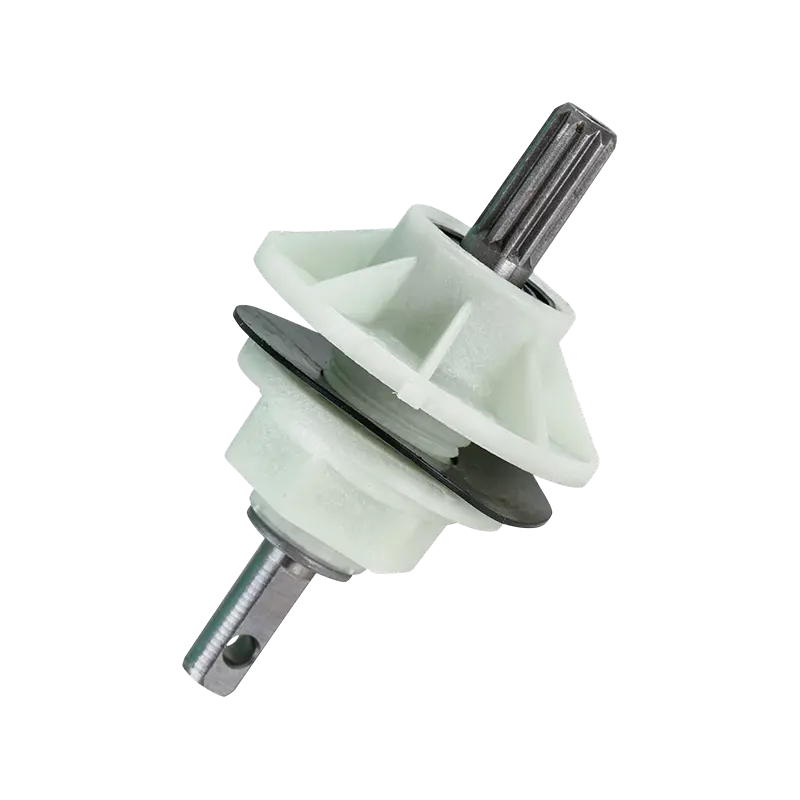
 Washing Machine TransmissionThe Washing Machine Transmission is the core power unit of semi-automatic agitator washing machines, used to effectively convert the high-speed rotation of the motor i...View Product →
When requesting quotations, provide the washer type, motor power, cycle frequency, mounting dimensions, and expected service life. A supplier who asks for these details is more likely to deliver a transmission that fits the first time. A supplier who quotes only on a part number may leave the fit risk with you.
Treat the transmission as an assembly: gear reducer, synchronizer, clutch, drive shaft, and P-shaft must be matched as a system for reliable wash and spin performance.
OEM vs. Aftermarket Transmission Supply: What Changes
OEM and aftermarket buyers often need the same physical part but have very different buying criteria. An OEM manufacturer usually plans production months ahead. It needs consistent dimensions, documented process control, and a supplier that can support volume ramp-ups without changing materials or tolerances. An aftermarket distributor needs broad coverage, fast response, and packaging that protects the part during long-distance shipping. The aftermarket also faces more variation because it may serve many washer models, ages, and regional configurations.
For OEM programs, the transmission is usually designed into the washer platform. The buyer shares drawings, samples, and performance targets. The supplier then runs sample validation, pilot production, and mass production. Traceability matters because a defect can affect an entire production batch. For aftermarket programs, the part must often match an existing original number or a known interchange. The buyer may not have the original drawings, so reverse engineering and dimensional verification become critical. In both cases, the supplier should be able to separate OEM-grade production from lower-cost service-grade production if the application allows it.
Cixi Gaite Electric Co., Ltd. maintains both OEM and ODM paths for five core product families: clutch assemblies, drive shafts, gear reducers, gearboxes, and synchronizers. That structure gives buyers a clear choice. If you have a complete specification, you can use the OEM route. If you need design support, custom labeling, or a modified mounting interface, the ODM route may be more suitable. The company’s stated focus on washing machine transmission systems means the engineering conversation can start with the application rather than with a generic catalog number.
Comparison of OEM and aftermarket requirements for washing machine transmission parts.
| Requirement |
OEM Supply |
Aftermarket Supply |
| Order volume |
High, planned, and stable |
Mixed, seasonal, and fragmented |
| Specification source |
Original drawings and validation samples |
Reverse engineering and interchange data |
| Quality focus |
Process capability, traceability, and warranty |
Fit, durability, and catalog coverage |
| Packaging |
Bulk or line-side packaging |
Retail-ready or protective individual packaging |
| Lead time |
Longer planning horizon |
Faster replenishment for repair demand |
OEM buyers should prioritize process control and traceability, while aftermarket buyers should prioritize fit verification and fast-moving catalog coverage.
Key Selection Criteria for Washing Machine Transmission Parts
Selecting a washing machine transmission is not only about finding the lowest price. The wrong choice can cause noise, water leaks, premature wear, or safety issues. Experienced buyers compare parts across several dimensions: torque capacity, gear ratio, mounting interface, material grade, sealing, lubrication, and test data. The weight of each factor depends on the washer type and the market. A commercial laundry application may prioritize cycle life over cost. A budget aftermarket line may prioritize availability and price while still meeting basic safety and fit requirements.
The chart below shows an illustrative comparison of selection factors based on typical B2B sourcing conversations. It is not a statistical survey, but it helps buyers see where engineering attention usually pays off. The bars are intentionally simple so they can be used in internal review meetings without implying false precision.
Relative Attention in Transmission Part Selection
Material and
Heat Treatment
The chart reflects a practical pattern: dimensional fit and torque capacity usually drive the first round of supplier discussion. If a transmission does not mount correctly or cannot handle the agitation load, no price advantage will save the project. Material and heat treatment come next because they determine how long the gear teeth and shafts resist wear. Sealing and lubrication matter more in humid or high-detergent environments, where corrosion and emulsification can shorten bearing life. Supply consistency is the final factor, but it is often the one that decides whether a buyer keeps a supplier after the first order.
Cixi Gaite Electric Co., Ltd. addresses these factors through its washing machine component portfolio. The company’s gearboxes, reducers, synchronizers, clutch assemblies, and drive shafts are designed for washing machine duty cycles. For buyers, the practical step is to request a sample and run it through a simulated wash and spin program. Check noise, temperature rise, and torque output before and after the test. That kind of validation tells you more than a catalog sheet alone.
Start every transmission sourcing project with dimensional fit, torque capacity, and material validation, then negotiate price only after those fundamentals pass.
Gearbox Types and Their Application Fit
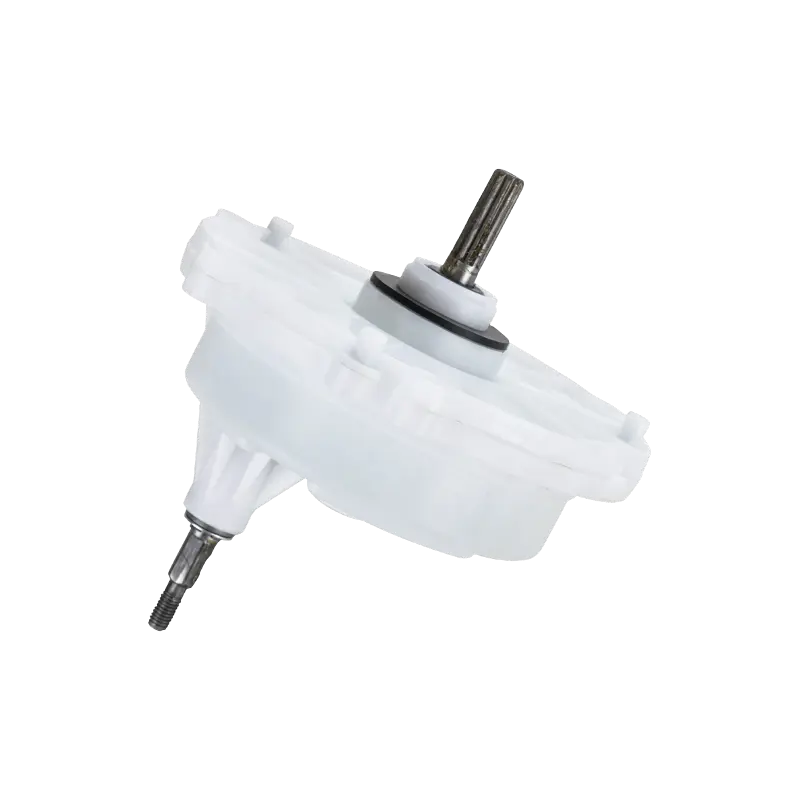
Washing machine gearboxes are not one-size-fits-all. A semi-automatic twin-tub washer may use a simple reduction gearbox with a belt-driven input. A fully automatic top-load washer may use a more complex gearbox with a clutch and synchronizer. A direct-drive washer may use a planetary gear reducer integrated with the motor control. Each design changes the load path, the number of bearings, the lubrication strategy, and the service procedure. Buyers should match the gearbox type to the washer platform rather than force a universal part into every model.
For semi-automatic and twin-tub machines, the gearbox often works alongside a separate spin tub. The transmission must handle frequent direction changes and high starting torque. A robust gear case and a well-supported shaft are important because the pulsator can experience uneven loads when clothes bunch on one side. For belt-driven models, the gearbox input receives power through a pulley and belt. Belt tension, pulley alignment, and bearing preload all affect noise and life. For direct-drive models, the gearbox must tolerate electronic speed control and rapid reversals. A planetary gear reducer can distribute load across multiple teeth, which may improve torque density and reduce size.
Cixi Gaite Electric Co., Ltd. offers gearbox paths for semi-automatic machines, twin-tub reducers, gear cases, and general washing machine transmissions. It also lists belt-driven, direct-drive, dual-direction rotation, high-torque, and planetary gear reducer options. This range allows a buyer to choose a configuration that matches the washer architecture instead of redesigning the entire drive system. For a twin-tub program, the twin-tub washing machine reducer page is a useful reference for understanding how the gearbox interfaces with the rest of the transmission.
 Twin-tub Washing Machine ReducerThe Twin-tub Washing Machine Reducer is the core power device of semi-automatic twin-cylinder washing machines, responsible for converting the high-speed rotation of t...View Product →
When comparing gearbox types, ask for the rated input speed, output speed, gear ratio, allowable radial load, and lubrication type. If the supplier cannot provide these values, the gearbox may be a generic unit rather than an application-matched design. Also confirm the mounting bolt pattern and shaft end dimensions. A gearbox that is mechanically strong but does not fit the existing bracket will create extra assembly work and potential alignment errors.
Match the gearbox type to the washer architecture, because belt-driven, direct-drive, and twin-tub systems place different loads on the transmission.
The Role of Gear Reducers and Synchronizers
A gear reducer does more than slow down the motor. It multiplies torque, controls agitation speed, and helps the transmission survive repeated starting loads. In a washing machine, the reducer may use spur gears, helical gears, or planetary gears. Helical gears tend to run more quietly, while planetary designs can handle higher torque in a compact space. The choice depends on the available space, the desired noise level, and the manufacturing cost target. A reducer that is too small may overheat during a long wash cycle. A reducer that is too large may add cost and weight without improving performance.
A synchronizer, by contrast, manages engagement. In a transmission that switches between wash and spin, the synchronizer helps match speeds before the clutch locks. This reduces shock loads and wear on gear teeth. A worn synchronizer can cause grinding, delayed engagement, or a spin cycle that does not start. In aftermarket repairs, synchronizer failure is often mistaken for a clutch problem, so technicians should inspect both. The synchronizer may be integrated into the gearbox or supplied as a separate assembly, depending on the design.
Cixi Gaite Electric Co., Ltd. produces washing machine gear reducer units and synchronizers as part of its core component range. It also offers synchronizer-integrated gearboxes for applications where a compact, pre-assembled solution is preferred. For buyers, the key question is whether the reducer and synchronizer are validated together. A reducer with excellent teeth can still fail if the synchronizer engages too harshly. A synchronizer with smooth engagement can still wear if the reducer produces excessive vibration. Testing the assembly as a unit is the most reliable way to catch these interactions.
Ask the supplier for a break-in procedure and a performance check after assembly. Noise, backlash, and rotational torque are useful measurements. If the supplier has ISO 9001 quality systems, as Cixi Gaite Electric Co., Ltd. states, those measurements should be part of routine production control rather than special inspection. That is the difference between a sample that works and a production batch that stays consistent.
Gear reducers and synchronizers should be validated as a matched pair, because their interaction determines noise, engagement quality, and wear life.
P-Shaft and Pulsator Shaft Components in Transmission Systems
The P-shaft, sometimes called a pulsator shaft, connects the transmission to the agitator or pulsator inside the wash tub. It must transmit torque while resisting bending and corrosion. In a top-load washer, the pulsator moves back and forth to create water flow. If the shaft is not straight or the splines are worn, the pulsator may wobble, make noise, or fail to move clothes effectively. In a twin-tub washer, the P-shaft may also support the spin tub drive, which adds another load path. These are not high-cost parts, but they are high-impact parts because they are difficult to replace without disassembling the washer.
Buyers should check shaft material, surface finish, spline or thread dimensions, and corrosion protection. A shaft made from low-carbon steel may bend under heavy loads. A shaft with poor plating may rust in a humid laundry environment. A shaft with loose tolerances may vibrate and wear the transmission seal. In aftermarket supply, P-shaft kits often include seals, washers, and retaining rings because those small parts are easily lost during repair. Providing a complete kit can reduce returns and improve customer satisfaction.
Cixi Gaite Electric Co., Ltd. lists P-shaft and pulsator shaft components as a separate product category, alongside washing machine gearboxes and parts. It also offers a semi-automatic twin-tub washing machine gearbox that combines the gearbox and shaft interface for that machine type. For buyers who serve repair shops, the semi-automatic twin-tub washing machine gearbox page can help confirm whether the P-shaft and gearbox are supplied as a matched assembly.
 Semi-Automatic Twin-Tub Washing Machine GearboxThis is a straight-through pulsator shaft assembly for semi-automatic twin-tub washing machines without internal gears, designed with an integrated solid shaft. Speed ...View Product →
When specifying a P-shaft, provide the spline count, shaft diameter, length, thread size, and material grade. If you are reverse-engineering an existing part, measure both new and worn samples because wear can disguise the original dimensions. Also confirm the direction of rotation and the maximum torque. A shaft that is strong enough for agitation may not be strong enough for a jammed spin start. Testing with a torque limiter or clutch can protect the shaft and the transmission from overload.
P-shaft and pulsator shaft components are small but critical, so buyers should verify material, splines, straightness, and corrosion protection before ordering volume.
Clutch Assemblies and Drive Shafts: Small Parts, Big Impact
A washing machine clutch assembly controls when the transmission engages the wash or spin function. In a top-load washer, the clutch may use springs, cams, and friction surfaces to lock the drive in one direction and release it in the other. If the clutch slips, the washer may agitate weakly or fail to spin. If it sticks, the drum may turn during the wash cycle or the motor may overload. Drive shafts transfer torque from the transmission to the clutch or the pulsator. A bent drive shaft can cause vibration, seal damage, and premature bearing failure.
Clutch and drive shaft failures often appear together. A worn clutch may cause shock loads that damage the drive shaft splines. A bent shaft may misalign the clutch and cause uneven wear. For this reason, repair kits often include both parts. Buyers should ask whether the clutch and shaft are balanced as an assembly and whether the clutch engagement torque is tested. A simple spring force measurement may not be enough because friction coefficient changes with temperature and detergent exposure.
Cixi Gaite Electric Co., Ltd. manufactures washing machine clutch assemblies and drive shafts within its core product range. These parts are available through OEM and ODM paths, which means a buyer can either supply a complete specification or ask for design support. For aftermarket programs, packaging is important because clutch springs and shaft splines can be damaged in transit. Individual boxes with rust-preventive paper or bags can protect the parts and make inventory handling easier.
When evaluating a clutch assembly, run a cycle test that includes wash, drain, and spin. Measure engagement time, slip torque, and temperature rise. For the drive shaft, check runout, hardness, and surface finish. If the supplier’s quality system includes ISO 14001 and RoHS compliance, as Cixi Gaite Electric Co., Ltd. states, that can help with market access and environmental requirements. However, compliance documents should always be verified against the actual production batch, not just the sample.
Clutch assemblies and drive shafts should be tested as a pair, because their alignment and engagement behavior directly affect spin reliability and motor load.
Manufacturing and Quality Control for Transmission Parts
Quality control in washing machine transmission manufacturing starts with incoming material. Gear steel, shaft steel, bearing races, seals, and lubricants all affect performance. A supplier should be able to trace material lots and confirm heat treatment records. Without that, two batches of the same part can behave differently. Process control then covers machining, hobbing, heat treatment, grinding, cleaning, and assembly. Critical dimensions such as gear tooth profile, shaft diameter, and bearing bore should be measured with calibrated instruments. Functional tests such as noise, backlash, and torque should be performed on a sample basis or on every unit, depending on the application.
Cixi Gaite Electric Co., Ltd. states that it has obtained ISO 9001 quality management system certification and ISO 14001 environmental management system certification. It also states that its products meet RoHS requirements. These certifications are useful starting points, but buyers should still audit the production line or request a process audit report. The company operates an approximately 10,000 square meter production base and describes itself as a high-standard factory. For B2B buyers, a factory tour can confirm whether the equipment, organization, and measurement systems match the claims. The factory tour page on the company site provides an overview of the production environment.
Link to factory tour: factory tour page for an overview of the production environment.
Delivery reliability is another part of quality. A transmission part that arrives late can stop an assembly line or leave a repair shop without inventory. Buyers should ask about production capacity, lead time, and contingency plans for material shortages. The company’s stated focus on stable production and long-term customer relationships suggests that it aims to support repeat orders rather than one-time sales. Still, buyers should verify lead times with a trial order and track on-time delivery performance.
For aftermarket buyers, quality also means packaging and labeling. Parts should be protected from moisture and impact. Labels should include part number, description, and batch code. If a customer reports a problem, the batch code allows the supplier to trace the production record and identify the root cause. This is a basic expectation in mature supply chains, but it is often missing in low-cost sourcing. Asking for it upfront saves time later.
Quality control for transmission parts must cover incoming material, machining, heat treatment, assembly, functional testing, and batch traceability.
Sourcing from a China Manufacturer: What B2B Buyers Should Verify
Sourcing washing machine transmission parts from a China manufacturer can reduce cost and expand product range, but it requires a structured approach. The first step is to define the application. Is the part for an OEM production line, a service network, or a retail aftermarket brand? Each channel has different requirements for documentation, packaging, and warranty. The second step is to verify the supplier’s technical capability. Ask for drawings, material specifications, heat treatment standards, and test reports. If the supplier cannot provide these, the risk of fit or durability problems increases.
The third step is to run a sample validation. Order a small batch and test it under realistic conditions. For a washing machine transmission, that means repeated wash and spin cycles with typical loads. Measure noise, temperature, and torque. Disassemble the sample after the test and inspect wear patterns. A supplier that welcomes this process is usually more confident in its manufacturing. A supplier that avoids it may be trading on price alone. The fourth step is to confirm commercial terms: lead time, minimum order quantity, payment method, warranty period, and packaging. These terms should be in writing before mass production.
Cixi Gaite Electric Co., Ltd. has been operating since 2002 and focuses on washing machine core components. Its product range includes gearboxes, reducers, synchronizers, clutch assemblies, drive shafts, and P-shafts. It serves both OEM manufacturers and the aftermarket, and it provides OEM and ODM paths for five major product categories. For buyers who need application guidance, the company’s industry news section includes articles on transmission part types and selection. One useful reference is the washing machine transmission parts manufacturer guide, which discusses types and selection factors.
Link to industry guide: washing machine transmission parts manufacturer guide.
Buyers should also consider logistics. Washing machine transmission parts are relatively heavy and may require palletized shipping. Packaging should protect against rust, especially for shafts and clutch assemblies. If the parts will be stored for months, ask about rust-preventive coating and desiccant. For urgent aftermarket demand, air freight may be necessary, but it increases cost. A supplier with stable production planning can help balance cost and speed by keeping common parts in stock or by offering flexible order quantities.
Verify technical documents, run sample validation, and confirm commercial terms in writing before committing to volume production from any China transmission supplier.
FAQ: Washing Machine Transmission Sourcing
What is a washing machine transmission?
A washing machine transmission is the assembly that transfers motor power to the agitator or drum. It usually includes a gearbox or gear reducer, a clutch, a drive shaft, and sometimes a synchronizer. It changes speed and torque so the washer can agitate gently and spin quickly.
How do I know if my washing machine transmission is failing?
Common signs include grinding or whining during wash or spin, weak agitation, a drum that does not spin, burning smell, water leaking near the transmission, or metal particles in the drain water. These symptoms can also come from a worn belt or motor problem, so diagnosis should include the whole drive system.
Can I replace only the gearbox instead of the whole transmission?
Sometimes yes, but it depends on the design. In many washers, the gearbox, clutch, and shaft are matched as an assembly. Replacing only one part may leave worn mating surfaces that cause early failure. If you are unsure, consult a supplier with washing machine transmission experience and provide photos or measurements.
What should I check when sourcing transmission parts from a China manufacturer?
Check dimensional drawings, material grades, heat treatment, sealing, lubrication, and functional test reports. Ask for a sample and run it through realistic wash and spin cycles. Confirm packaging, lead time, minimum order quantity, and warranty. Also verify quality certifications such as ISO 9001 and RoHS compliance if your market requires them.
Are OEM and aftermarket transmission parts different?
They can be. OEM parts are usually built to original drawings and validated for a specific washer platform. Aftermarket parts may be reverse-engineered to fit multiple models. The best aftermarket parts still follow OEM-grade materials and tolerances, but packaging and catalog coverage may differ. Buyers should confirm whether the supplier uses the same production line for both channels.
How long should a washing machine transmission last?
Service life depends on load, cycle frequency, water quality, detergent type, and maintenance. A well-matched transmission in a residential washer may last many years, while a commercial or heavily used machine may need earlier service. Rather than promise a fixed life, a supplier should provide test data and recommend inspection intervals based on the application.
Does Cixi Gaite Electric Co., Ltd. provide ODM services?
Yes. The company lists ODM paths for clutch assemblies, drive shafts, gear reducers, gearboxes, and synchronizers. ODM can include design adjustments, custom mounting features, and branding support. Buyers should provide application details and performance targets so the design can be matched to the washer platform.
Most transmission problems can be traced to fit, load matching, or wear in related parts, so diagnosis and sourcing should cover the complete drive assembly.
Conclusion: Building a Reliable Transmission Supply Chain
A washing machine transmission is a compact but demanding assembly. It must survive moisture, vibration, repeated reversals, and variable loads. For B2B buyers, the safest path is to treat it as an engineered system rather than a catalog item. Start with the washer platform, define the load and cycle profile, and verify the dimensions and materials. Then test a sample under realistic conditions before committing to volume. This approach reduces field failures, warranty claims, and emergency air shipments.
Cixi Gaite Electric Co., Ltd. has focused on washing machine core components since 2002. Its product system covers gearboxes, gear reducers, synchronizers, clutch assemblies, drive shafts, and P-shaft components, with OEM and ODM options for major product families. The company operates from an approximately 10,000 square meter production base in Cixi, Ningbo, and states that it holds ISO 9001, ISO 14001, and RoHS compliance. For buyers who want a manufacturing partner that understands washing machine transmission applications, these capabilities provide a practical starting point.
The next step is to request a quotation with your application details. Include the washer type, motor power, gear ratio, mounting dimensions, and expected annual volume. Ask for a dimensional drawing and a sample test plan. If the supplier responds with specific questions and documented answers, that is a good sign. If the response is only a price and a part number, keep looking. In transmission sourcing, the details are not paperwork. They are the difference between a smooth production line and a costly field failure.
The most reliable transmission supply chain is built on application-specific engineering, sample validation, documented quality control, and clear commercial terms.

 English
 عربى


 +86-574-63256717 /63267914
info@gaite.cn
 gaite@gaite.cn
 No. 208 Miaoshan Road, Shiyan Village, Henghe Town, Cixi City, Ningbo City, Zhejiang Province, China
