A purchasing team can approve a washing machine gearbox sample in April, only to face noise complaints in August because the shaft fit, lubricant, or mounting tolerance was never checked against the full transmission stack. That pattern is common in washing machine components sourcing. The component may pass a bench test and still fail in the field when it meets a different pulley, tub, clutch, or pulsator assembly. The practical conclusion is simple: buy washing machine components as part of an interface system, not as isolated catalog parts.
For OEM buyers, aftermarket distributors, and service networks, the difference between a low-cost part and a reliable supply program usually sits in documentation, process control, and application fit. A washing machine components manufacturer or supplier can quote a gearbox, P-shaft, synchronizer, clutch assembly, or drive shaft quickly. The harder work is confirming that the part will behave predictably across the platform, the duty cycle, and the installation environment it is meant to serve. Cixi Gaite Electric works in this component layer, which means the useful questions are not only about price per piece. They are about ratio, torque, alignment, material compliance, and repeatability from lot to lot.
Washing machine components should be selected by interface fit and transmission behavior first; price comparison only makes sense after those risks are under control.
What Buyers Usually Get Wrong About Washing Machine Components
The first mistake is treating "washing machine components" as a single category. A gearbox, a gear reducer unit, a synchronizer, a clutch assembly, a drive shaft, and a P-shaft sit at different points in the transmission chain. They carry different loads, see different wear patterns, and create different procurement risks. A buyer who compares three gearbox quotations without comparing ratio, mounting pattern, seal design, and lubricant specification is not really comparing the same product. The same applies to P-shafts: overall length may match while spline geometry, thread runout, or bearing-seat finish does not.
The second mistake is leaving aftermarket use out of the original specification. Aftermarket buyers often need a component to fit a family of machines, not one exact production batch. That can be useful, but it also raises the risk of tolerance stack-up. A shaft that is acceptable within a narrow OEM assembly window may create vibration when paired with a replacement tub or pulsator from another source. A gearbox that works well in a semi-automatic twin-tub platform may not suit a direct-drive or high-torque application. The component family may look similar in photos, but the load case is different.
The third mistake is accepting a sample without a controlled approval record. A sample that "fits and runs" is not enough for a B2B purchase. Buyers should record the approved drawing, critical dimensions, material grade, lubricant, torque test, noise check, and packaging method. When a second lot arrives, those records are the reference point. Without them, a supplier change, mold adjustment, or material substitution can enter the program unnoticed. That is how a small component issue becomes a return, a service call, or a line stop.
- Comparing quotations without a shared drawing or critical-dimension list.
- Testing a component alone instead of in the mating assembly.
- Using one approved sample to cover several machine platforms.
- Ignoring packaging, labeling, and aftermarket traceability.
- Treating certification as a substitute for process control.
Most component sourcing failures begin with an unclear interface definition, not with a supplier's inability to produce a part.
The Core Washing Machine Components That Decide Performance
For B2B buyers, it helps to group washing machine components by the job they perform. The transmission group includes the gearbox, gear case, gear reducer unit, synchronizer, clutch assembly, and drive shaft. The wash-action group includes the P-shaft and pulsator shaft components. Around those groups sit the motor, pulley, tub, bearing, seal, and control system, but those are outside the scope of this component discussion. The point is to see how the parts interact before a purchase order is placed.
Transmission Components: Gearbox, Reducer, Synchronizer, Clutch, and Drive Shaft
The gearbox and gear case set the speed and torque relationship between the motor and the wash mechanism. In semi-automatic and twin-tub platforms, the gearbox often works with a reducer and a clutch arrangement to switch between wash and spin functions. In other platforms, a planetary gear reducer or a synchronizer-integrated gearbox may be used to manage engagement and direction change. The clutch assembly releases or holds the drive, while the drive shaft carries rotation to the next stage. If any one of these parts is out of alignment, the whole chain can become noisy, inefficient, or short-lived.
A gear reducer unit is not just a smaller gearbox. Buyers should confirm the reduction ratio, gear material, backlash, bearing support, and lubrication method. A synchronizer adds another layer because engagement travel and surface finish matter. If the synchronizer does not move cleanly, the operator may feel stiffness, or the transmission may not complete the shift as intended. The clutch assembly then has to hold torque without slipping or chattering. These are not abstract engineering points. They show up as noise, vibration, water ingress, or premature wear in the hands of the end user.
Drive shafts and P-shafts are often treated as simple turned parts, but their geometry controls vibration and load transfer. Shaft straightness, spline fit, thread position, bearing seat diameter, and surface roughness all influence assembly and service life. A buyer who only checks length and material can miss the features that make the part work in the machine. This is why component drawings should mark critical dimensions and why first-article inspection should follow the drawing, not a generic checklist.
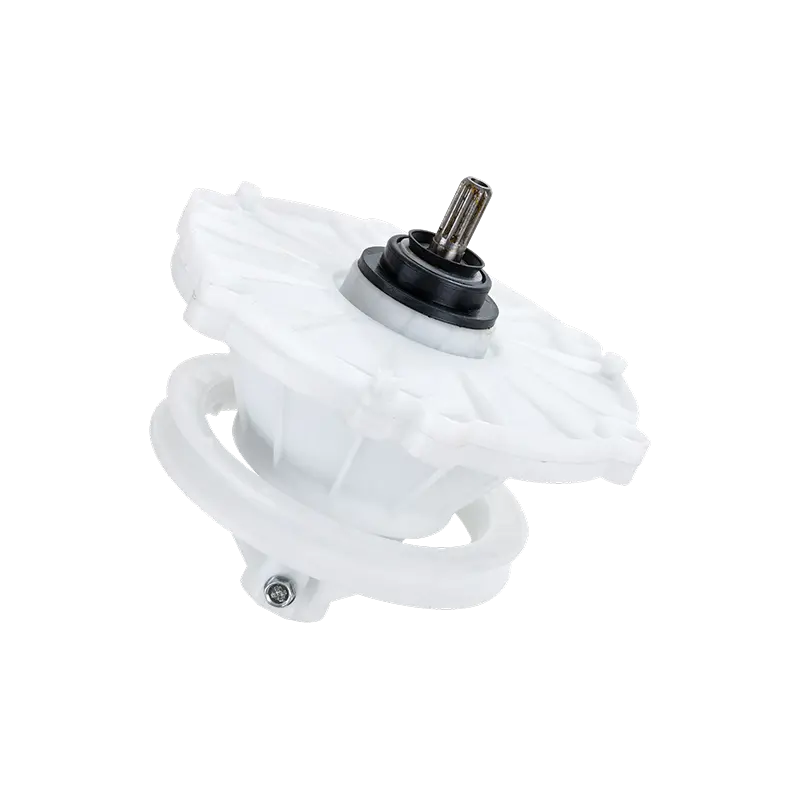
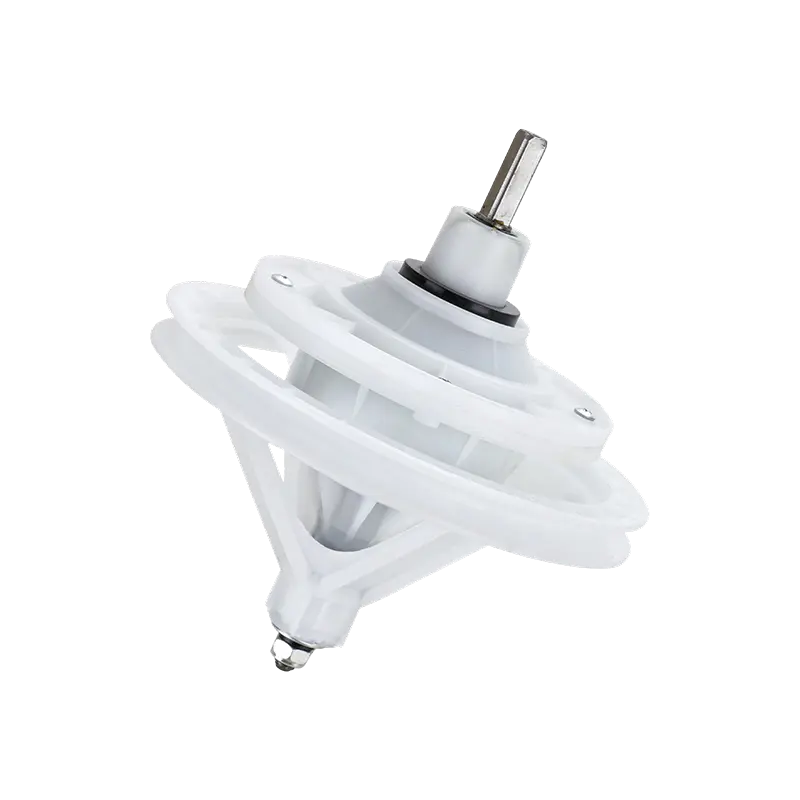
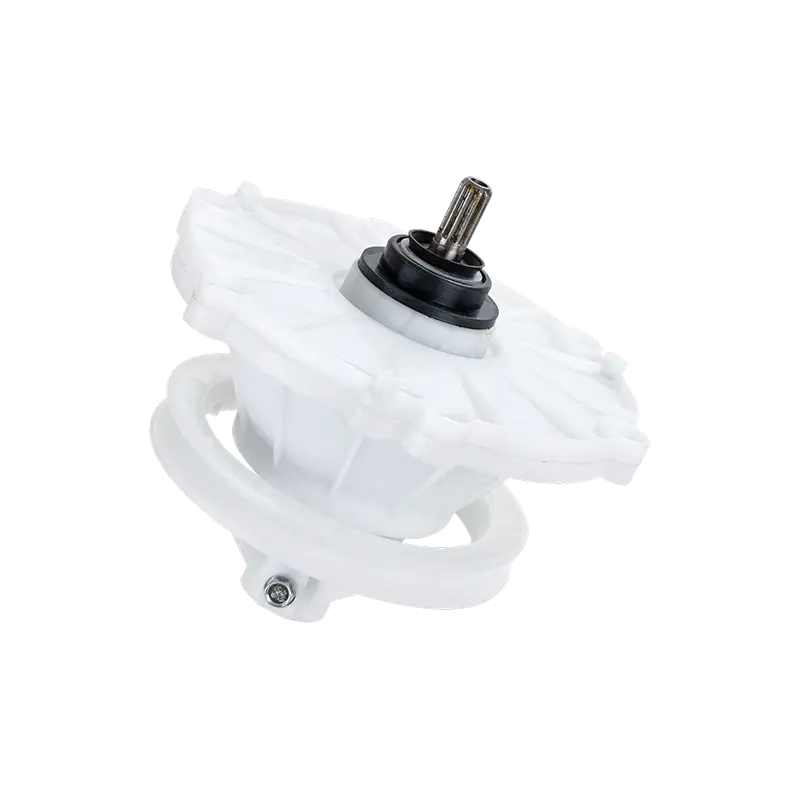 Washing Machine Gearbox Product RangeCompare belt-driven, direct-drive, planetary, and synchronizer gearbox types by torque, noise, mounting geometry, and shaft dimensions.View Product →
Component families, primary functions, and verification points for washing machine component buyers
| Component family |
Primary job in the machine |
Common buying concern |
What to verify before approval |
| Gearbox and gear case |
Transfers motor speed and torque to the wash system |
Noise, ratio match, seal life |
Mounting dimensions, ratio, lubricant, run-in check |
| Gear reducer unit |
Reduces speed and increases torque for agitation or drum movement |
Torque loss, heat, wear |
Gear material, backlash, load test, service life data |
| Synchronizer |
Coordinates engagement in the transmission sequence |
Engagement feel, wear, alignment |
Interface geometry, travel, surface finish, cycle test |
| Clutch assembly |
Engages or releases drive during wash and spin phases |
Slip, noise, mechanical or coil wear |
Torque holding, release response, corrosion protection |
| Drive shaft and P-shaft |
Carries rotation to the pulsator or drum assembly |
Runout, vibration, fit |
Shaft straightness, spline or thread fit, bearing seats |
A component family is only meaningful when its mounting interface, load path, and mating parts are defined together.
Why the Gearbox and Reducer Are the First Place to Look
The gearbox is usually the highest-value component in the transmission group, and it is also the part most likely to reveal a platform mismatch. Two gearboxes can look similar from the outside and still differ in ratio, gear tooth profile, bearing arrangement, lubricant, and housing strength. When a buyer sources a replacement gearbox for aftermarket use, the first check should be the complete model family, not just the machine's external appearance. A semi-automatic twin-tub washer may use a different reducer and clutch layout from a top-load or front-load machine, even when the wash capacity looks comparable.
Belt-driven and direct-drive gearboxes also deserve separate treatment. In a belt-driven system, the pulley and belt add their own alignment and tension variables. In a direct-drive system, the motor and transmission interface may be more compact, and the load path can be different. A gearbox that works in one system may not simply transfer to the other without a fresh review. Buyers should ask for the intended drive type, mounting orientation, ratio, rated torque, duty cycle, and service environment. If the supplier cannot answer those points in writing, the quotation is incomplete.
The reducer side deserves the same care. Planetary gear reducers are often chosen where compact size and torque density matter, while other reducer units are designed around a specific wash action or gear case layout. The purchase decision should not be based only on "metal looks thick" or "sample runs quietly." A short run-in test can miss lubrication starvation, seal misalignment, or gear contact patterns that appear only after repeated wash and spin cycles. A better approval process includes a run-in period, noise check, torque check, and a teardown review when the application is new.
For OEM programs, the gearbox drawing should connect to the housing, shaft, clutch, and control sequence. For aftermarket programs, the supplier should understand the range of machines the part is expected to serve. That does not mean every part must cover every model. It means the supplier should be honest about coverage and should provide a way to identify the correct component by drawing, sample, or machine family. A washing machine gearbox manufacturer that can explain those boundaries is usually easier to work with than one that claims universal fit without documentation.
The gearbox and reducer should be approved against drive type, ratio, load, and mating assembly, not against appearance alone.
P-Shaft and Pulsator Components: Small Parts, Big Influence
The P-shaft, sometimes discussed as a pulsator shaft component, connects the transmission output to the wash action inside the tub. It may look like a simple shaft, but it sits in a wet, loaded, and repetitive environment. A small error in length, spline angle, thread position, or surface finish can create pulsator wobble, noise, water leakage, or difficulty during service. In aftermarket work, this is especially important because the replacement P-shaft may be installed with a pulsator, bearing, or seal that was not part of the original assembly.
Buyers should treat P-shaft sourcing as an interface problem. The critical questions include the shaft diameter, step positions, thread specification, spline or keyway geometry, heat treatment, surface roughness, and corrosion protection. If the shaft is even slightly bent, the pulsator may not run true. If the thread is offset, the fixing nut may not seat correctly. If the bearing seat is too rough, the seal may wear faster. None of these issues are solved by using a thicker shaft or a lower price. They are solved by controlling the drawing and checking the part in the mating assembly.
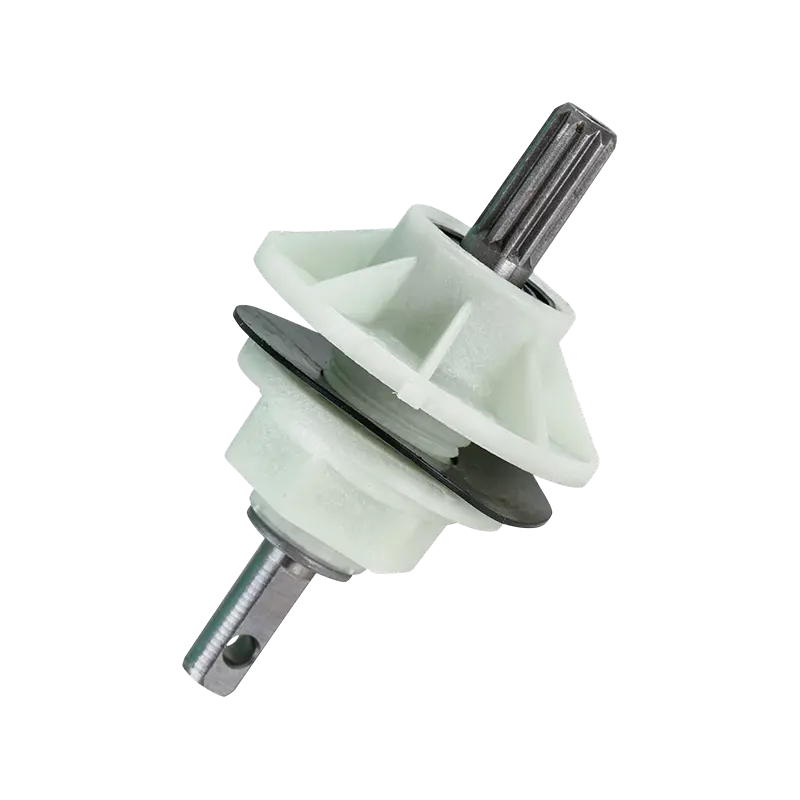
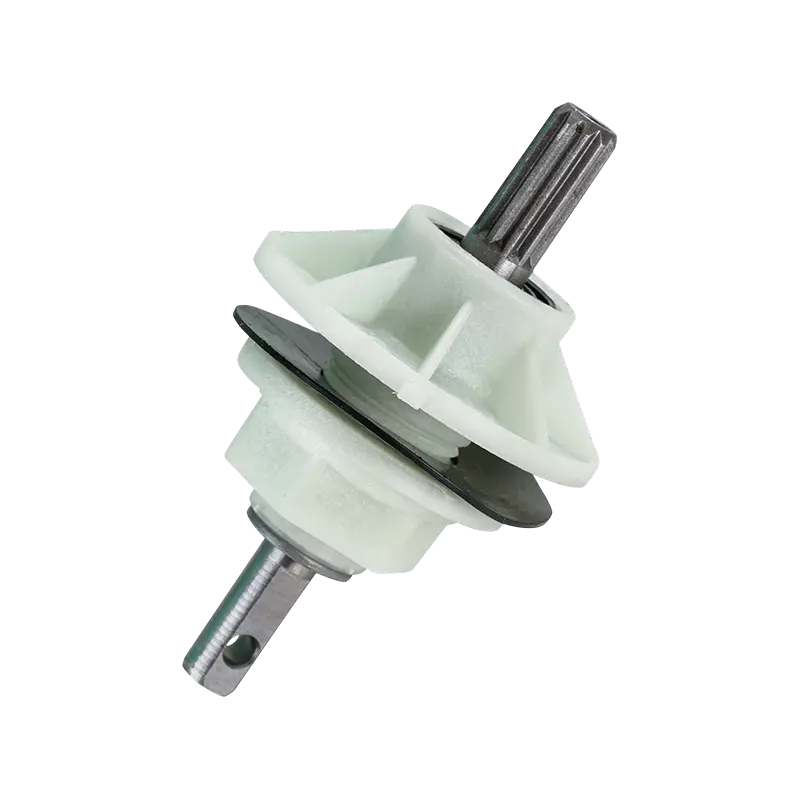 Washing Machine P-Shaft and Pulsator Shaft AssembliesReview shaft diameter, step positions, thread, spline geometry, heat treatment, and mating fit for twin-tub and semi-automatic spin systems.View Product →
For a washing machine components supplier, P-shaft programs often require a balance between OEM precision and aftermarket coverage. OEM buyers usually provide a drawing or a known assembly number. Aftermarket buyers may send a sample, a photo, and a machine model. The supplier then has to confirm whether the sample matches the production drawing and whether the replacement part should be supplied with related components such as the pulsator shaft assembly. Clear sample handling and measurement records reduce the risk of a wrong fit.
It also helps to separate inspection points by function. Shaft straightness and bearing-seat diameter are assembly-critical. Thread and spline features are service-critical. Surface finish and coating are life-critical. A buyer can use a simple first-article report to cover those points without turning every shipment into a full teardown. For ongoing orders, the supplier should keep the approved sample and drawing under revision control. If the process changes, the buyer should know before the next lot is shipped.
P-shaft quality is decided by the features that control alignment and wear, not by the shaft's overall size or finish alone.
Synchronizers, Clutches, and Drive Shafts in the Transmission Chain
A synchronizer, clutch assembly, and drive shaft are often bought as separate parts but judged together by the end user. The user does not know which component caused a stiff changeover, a slipping drive, or a noise at spin. The user only knows the machine does not feel right. That is why B2B buyers should review these parts as a chain. The synchronizer controls engagement. The clutch assembly holds or releases torque. The drive shaft transmits rotation. If one part is out of specification, the others may wear faster even if they were made correctly.
Clutch assemblies deserve particular attention in semi-automatic and twin-tub platforms because the wash-to-spin changeover creates repeated mechanical events. Buyers should confirm the release response, torque holding, corrosion protection, and mounting geometry. A clutch that works on a bench may behave differently when the shaft is slightly misaligned or when water exposure changes friction. The supplier should be able to explain the intended adjustment range and the assembly steps that affect performance. If the clutch is supplied as part of a larger gearbox or transmission unit, the buyer should still ask for the interface data.
Drive shafts and synchronizer-integrated gearboxes add another layer of alignment risk. Spline fit, shaft runout, bearing support, and housing concentricity all influence noise and wear. A buyer can reduce risk by requesting a stack-up review for new programs. This does not require a complex engineering study for every order. It does require the supplier to identify which dimensions control alignment and which dimensions are allowed to vary. That information can then be used in incoming inspection and supplier audits.
For OEM and ODM programs, component changes should be linked to revision records. If a synchronizer supplier changes a chamfer, or a clutch supplier changes a spring, the buyer should know whether the change affects the transmission. A small change may be harmless in one platform and significant in another. The review process should therefore include a change-notification clause and a sample re-approval trigger. This is the practical side of buying washing machine components as an industrial program rather than as a one-time parts purchase.
Synchronizers, clutches, and drive shafts should be approved as a transmission chain because their performance depends on each other.
Matching Washing Machine Components to the Right Platform
Platform matching is where many sourcing programs gain or lose money. A semi-automatic twin-tub machine has a different wash and spin sequence from a fully automatic top-load or front-load machine. The gearbox, reducer, clutch, and P-shaft may all be sized around that sequence. A part that is correct for one platform can be the wrong choice for another even if the mounting holes appear similar. Buyers should define the platform first: drive type, load size, tub design, control method, and service environment.
For semi-automatic and twin-tub platforms, the gearbox and reducer often need to support distinct wash and spin actions with a mechanical changeover. That makes the clutch and synchronizer interface important, and it makes the P-shaft and pulsator fit a frequent source of aftermarket complaints. For top-load and front-load platforms, the transmission may be integrated differently, and the drum or pulsator load path may call for a different shaft and bearing arrangement. Direct-drive and belt-driven systems also change the alignment and tension variables. A supplier who understands these differences can help the buyer avoid a costly trial-and-error process.
 Twin-tub Washing Machine Planetary Gear ReducerCheck the GT002 reducer’s planetary plastic-gear design, dimensions, and agitator drive role for semi-automatic twin-tub washer programs.View Product →
The chart below is an illustrative view of how B2B buyers often weigh component selection factors. It is not a market statistic. It is a practical way to show why the lowest quotation does not always win when transmission parts are being sourced for OEM or aftermarket programs.
What B2B buyers weigh when selecting washing machine components
Fit and interface compatibility
92
Transmission reliability
88
Material and compliance records
84
Illustrative buyer weighting, not a market statistic.
The chart supports a practical point: fit and interface compatibility usually outweigh price once a component enters a production or aftermarket program. A gearbox that does not match the mounting pattern creates assembly rework. A P-shaft that runs out of tolerance creates service returns. A reducer that loses torque or runs hot may damage the clutch and shaft over time. Cixi Gaite Electric's product structure reflects this component-level view, with separate paths for gearboxes, P-shafts, reducers, synchronizers, clutch assemblies, and drive shafts. Buyers can use those paths to narrow the discussion before requesting a sample.
Platform matching should also include packaging and service documentation. An OEM line may need bulk packaging with a clear part number and lot code. An aftermarket distributor may need individual packaging, model mapping, and a barcode that links to the correct machine family. These are not secondary details. A correct component in the wrong packaging can still create a wrong-part claim. The supplier should therefore ask how the part will be stocked, sold, and installed, not only how it will be manufactured.
Platform matching should be confirmed through drive type, load path, mating parts, and service model before a sample is approved.
OEM vs ODM vs Aftermarket Supply for Washing Machine Components
OEM, ODM, and aftermarket supply are not just commercial labels. They change how much design responsibility sits with the buyer and how much sits with the component manufacturer. In an OEM program, the buyer often provides the drawing, interface, and validation requirements. The supplier's job is to manufacture to that definition and control the process. In an ODM program, the supplier may contribute more to design, material selection, or platform adaptation. In the aftermarket, the supplier may need to map a component to a family of machines and support a distribution network rather than a single assembly line.
These differences affect the questions a buyer should ask. For OEM work, the buyer should confirm drawing revision, critical dimensions, inspection method, and change control. For ODM work, the buyer should confirm who owns the design, how samples are validated, and how the component will be protected if the program grows. For aftermarket work, the buyer should confirm model coverage, packaging, traceability, and return handling. A supplier that is strong in one mode may not be equally strong in another. That is why a washing machine components supplier should be evaluated against the actual supply mode, not a generic brochure.
Cixi Gaite Electric maintains OEM and ODM entry points across several product families, including clutch assemblies, drive shafts, gear reducers, gearboxes, and synchronizers. This structure is useful for buyers because it separates the conversation about design responsibility from the conversation about part type. A buyer can discuss a gearbox as an OEM build-to-print item or as an ODM adaptation, then move to the commercial terms. The important point is to make the supply mode explicit before quoting. Otherwise, the buyer may expect design support that is not included, or the supplier may assume a drawing that does not exist.
- OEM supply usually starts with a buyer drawing and a defined validation plan.
- ODM supply usually starts with an application brief and a joint review of design options.
- Aftermarket supply usually starts with machine family mapping, sample comparison, and packaging requirements.
- All three modes need revision control, traceability, and a clear approval record.
Define the supply mode before the quotation, because OEM, ODM, and aftermarket programs carry different design and validation responsibilities.
A Practical Supplier Evaluation Checklist for Washing Machine Components
Supplier evaluation should be specific to the component and the supply mode. A general factory audit is useful, but it does not replace a component-level review. The buyer should see how the supplier controls drawings, incoming material, machining or molding, assembly, lubrication, testing, and packing. For transmission parts, the review should also cover cleanliness, burr control, rust prevention, and measurement capability. A supplier that cannot show how it checks a shaft runout or a gearbox mounting pattern is not ready for a serious OEM conversation.
Certification is part of the picture, not the whole picture. Cixi Gaite Electric states that it holds ISO 9001 quality management system certification and ISO 14001 environmental management system certification, and that its products meet RoHS requirements. Those points are useful for buyers who need a baseline in quality management, environmental control, and restricted substances. The next step is to connect the certificate to the actual process. Ask which inspection records are kept, how nonconforming parts are handled, how material certificates are linked to lots, and how changes are communicated. A certificate on the wall does not answer those questions by itself.
For a more complete review, buyers can use the following checklist:
- Confirm the component family, drawing revision, and intended platform.
- Review critical dimensions, tolerances, material grade, heat treatment, and surface finish.
- Check the mating assembly, including gearbox, clutch, shaft, pulsator, seal, and bearing interfaces.
- Ask for first-article inspection records and a sample approval procedure.
- Confirm quality and environmental certifications, plus RoHS compliance where required.
- Review process control for machining, assembly, lubrication, and rust prevention.
- Check packaging, labeling, traceability, and aftermarket model mapping.
- Agree on change notification, re-approval triggers, and lot acceptance rules.
Cixi Gaite Electric describes a production base of about 10,000 square meters and a focus on core washing machine components, including gear reducers and synchronizers, for OEM manufacturers and the aftermarket. Those facts are useful starting points for a supplier review, but the buyer should still verify the specific component, process, and inspection plan. The best supplier conversation is concrete: a drawing, a sample, a target machine family, and a list of critical features. That is more valuable than a general claim of experience.
Evaluate a washing machine components supplier by its component-level control plan, not by certificates or sample photos alone.
Cost, Tolerance, and Delivery in Washing Machine Component Buying
Price is easy to compare and hard to interpret. A lower gearbox quotation may exclude lubricant, inspection, packaging, or tooling amortization. A lower P-shaft price may come from a faster machining cycle that leaves a rougher bearing seat. Those differences may not appear in the unit price, but they can appear in assembly yield, service returns, and customer complaints. Buyers should compare total landed cost with the same specification, the same inspection level, and the same packaging. If the quotations are based on different assumptions, the cheapest number is not meaningful.
Tolerance is another area where small decisions have large effects. A shaft diameter within tolerance can still cause vibration if the bearing seat and thread are not concentric. A gearbox mounting pattern within tolerance can still create noise if the housing face is not flat. A clutch assembly within tolerance can still slip if the release travel is outside the intended range. These are stack-up issues, and they are best handled by identifying the few dimensions that control alignment, torque, and sealing. The supplier should know which dimensions are critical and should measure them consistently.
Delivery stability matters as much as unit price in OEM and aftermarket programs. A buyer who runs out of a specific P-shaft or gearbox may face line downtime, expedited freight, or lost sales. A supplier that can show stable process control and clear production planning is often worth more than a supplier with a slightly lower quote and unpredictable lead times. For aftermarket distributors, delivery stability also includes model coverage and packaging consistency. A mixed carton or a missing label can create a wrong-part return even when the component itself is correct.
Risk can be reduced with simple commercial controls. Buyers can agree on a golden sample, a drawing revision, an inspection standard, a packaging standard, and a change-notification rule. They can also define what happens when a lot fails: who pays for sorting, who confirms the root cause, and how replacement stock is prioritized. These controls are not bureaucratic. They are the practical difference between a component purchase and a supply program. They also make it easier to compare suppliers on the same basis.
Compare washing machine component quotations on identical specifications, inspection levels, packaging, and delivery terms.
How Cixi Gaite Electric Supports Washing Machine Component Programs
Cixi Gaite Electric Co., Ltd. is based in Cixi, Ningbo, Zhejiang, and states that it was founded in 2002. The company focuses on the research and manufacturing of core washing machine components, including gear reducers and synchronizers, and serves OEM manufacturers and the aftermarket. Its product structure includes washing machine gearboxes, P-shafts, gear reducer units, synchronizers, clutch assemblies, and drive shafts. For B2B buyers, that focus is useful because the conversation can stay at the component and transmission-system level rather than spreading across unrelated product categories.
The company's site presents OEM and ODM paths across clutch assemblies, drive shafts, gear reducers, gearboxes, and synchronizers. It also lists application-oriented paths such as semi-automatic and twin-tub gearboxes, belt-driven and direct-drive gearboxes, dual-direction rotation gearboxes, high-torque transmission units, planetary gear reducers, and synchronizer-integrated gearboxes. These categories are helpful during the first sourcing review because they let a buyer narrow the discussion by drive type, platform, and component family. The next step should still be a drawing or sample review to confirm the actual interface.
Cixi Gaite Electric also states that it holds ISO 9001 and ISO 14001 certification and that its products meet RoHS requirements. Those claims are relevant to buyers who need a baseline in quality management, environmental control, and material compliance. The company describes a production base of about 10,000 square meters and a focus on stable manufacturing and customer-oriented partnership. For a buyer, the useful way to use that information is to request the specific component drawing, inspection plan, and sample approval route. A supplier's general profile can open the conversation, but the component records should carry the decision.
The company's location in Ningbo, Zhejiang, places it within a major appliance and component manufacturing region. That can be helpful for communication, sample logistics, and supply-chain coordination, but buyers should still confirm lead time, packaging, and documentation for their own market. A European aftermarket distributor may need different labeling from a domestic OEM line. A new ODM program may need more engineering discussion than a repeat OEM order. The supplier relationship works best when those differences are stated early and tied to the component plan.
Cixi Gaite Electric's component focus is most useful when it is matched to a drawing, platform, and supply mode from the first inquiry.
Frequently Asked Questions About Washing Machine Components
What are the most critical washing machine components for B2B buyers?
The critical components depend on the platform, but the transmission group usually deserves first attention. Gearboxes, gear reducers, synchronizers, clutch assemblies, drive shafts, and P-shafts all affect noise, wash action, spin performance, and service life. Buyers should identify which of these parts control the interface and load path in their machine, then set inspection points around those features. A generic parts list is less useful than a component map tied to the actual assembly.
How do I choose a washing machine gearbox manufacturer?
Start with the application, not the catalog. Confirm the drive type, ratio, mounting pattern, torque requirement, and mating parts. Ask the manufacturer to explain its inspection plan for the housing, gear set, shaft, seal, and lubricant. A supplier that can discuss those details and provide a sample approval record is usually a better fit than one that only quotes a price. For OEM and aftermarket work, also confirm change notification and packaging control.
Are P-shaft and pulsator shaft components the same?
In many discussions, the terms are used close together because the P-shaft connects the transmission to the pulsator or wash action. The exact naming can vary by machine design and supplier. What matters is the interface: shaft diameter, length, spline or keyway, thread, bearing seat, surface finish, and corrosion protection. Buyers should confirm the drawing and sample rather than rely on the name alone. A part with the same name can still have a different fit.
What is the difference between OEM and ODM washing machine components?
OEM supply usually means the buyer provides the drawing and specification, and the supplier manufactures to that definition. ODM supply usually means the supplier contributes more to design, adaptation, or material selection. The difference affects who owns the design, who validates the sample, and how changes are approved. Buyers should state the supply mode before requesting a quotation. This avoids confusion about engineering responsibility and commercial terms.
How do I evaluate a washing machine transmission parts supplier?
Review the supplier's process control, measurement capability, material traceability, and change management. Ask how it checks gearbox mounting, shaft runout, clutch release, synchronizer travel, and lubricant condition. Confirm the quality and environmental certifications, then connect them to actual inspection records. A supplier that can show a component-level control plan is easier to qualify than one that relies on general factory claims.
What certifications should I ask for?
ISO 9001 and ISO 14001 are common baseline certifications for quality and environmental management. RoHS compliance is also relevant when restricted substances are a concern. Buyers should ask for the current certificate, the scope, and the related material declarations where needed. Certification should be treated as a starting point. The buyer still needs to confirm that the specific component is produced under the controlled process described in the audit or certificate.
How can aftermarket buyers reduce returns?
Aftermarket returns often come from fit and model mapping, not from a completely defective part. Buyers should use a golden sample, a clear drawing, and a model-family list. Packaging should carry the correct part number and application note. The supplier should keep lot traceability and provide a route for sample comparison when a claim appears. A short installation check can also help: shaft runout, thread fit, pulsator seating, and clutch release should be reviewed before the part is stocked in large volume.
Can one component work across different washing machine platforms?
Sometimes a component can cover more than one model, but the buyer should not assume that from appearance. The drive type, load path, mounting pattern, and control sequence can change the requirement. A gearbox or P-shaft that fits one platform may create noise or wear on another. The safe approach is to confirm coverage through drawings, samples, and application notes. If coverage is broad, the supplier should explain the limits and the inspection points that keep the part reliable.
The best FAQ answer for washing machine components is usually the same: confirm the interface, the drawing, and the supply mode before approval.
Washing machine components are easy to buy as numbers and hard to buy as reliable systems. The gearbox, reducer, synchronizer, clutch, drive shaft, and P-shaft all sit in a chain where fit, alignment, lubrication, and process control decide the outcome. A buyer who starts with the platform, the mating assembly, and the critical dimensions will usually avoid the expensive surprises that appear later as noise, leakage, returns, or line downtime. A buyer who starts with unit price alone may save a little on the invoice and pay for it in service and rework.
Cixi Gaite Electric's position as a washing machine components manufacturer and supplier fits that practical view. The company focuses on core transmission parts and offers OEM and ODM paths for gearboxes, reducers, synchronizers, clutch assemblies, and drive shafts. For OEM buyers, the next step is a drawing and sample review. For aftermarket buyers, the next step is model mapping and packaging control. In both cases, the useful conversation is specific, documented, and tied to the component interface. That is how a component purchase becomes a supply program that holds up in production and in the field.
Buy washing machine components by interface, process control, and supply fit; those three points protect both the assembly line and the aftermarket.

 English
 عربى


 +86-574-63256717 /63267914
info@gaite.cn
 gaite@gaite.cn
 No. 208 Miaoshan Road, Shiyan Village, Henghe Town, Cixi City, Ningbo City, Zhejiang Province, China
