How to Identify a Reliable Washing Machine Parts Manufacturer
A dependable washing machine parts manufacturercan usually be identified during the first stage of supplier evaluation by checking three concrete points: documented in-house machining and tooling capability, verifiable cycle-test data for core components such as gearboxes and synchronizers, and a traceable production history with OEM appliance programs. When these three points are confirmed, the remaining evaluation work becomes a matter of matching capacity, lead time, and documentation standards to a buyer's specific program rather than testing whether the supplier is capable at all. This direct-answer approach is useful for procurement teams that need to shortlist a washing machine parts supplier quickly without sacrificing due diligence.
Buyers researching a washing machine parts manufacturer typically fall into three groups: OEM appliance programs that need custom washing machine parts built to their own drawings, aftermarket distributors that need standardized replacement stock, and independent repair networks that need consistent quality at the individual component level. Each group weighs supplier criteria differently, but all three depend on the same underlying manufacturing disciplines. Gearbox and synchronizer assemblies sit at the center of this evaluation because they directly control the sequencing of the wash, rinse, and spin cycle, and a fault in either component tends to stop the entire machine rather than degrade a single function.
Quantitatively, "reliable" is easier to define than it first appears. A production line that can show batch return rates held below one percent across multiple shipments, tooling records spanning more than one product generation, and material traceability down to the raw stock lot is demonstrating operational consistency rather than a one-time inspection result. Certificates and quality slogans are easy to produce; process documentation that ties a specific finished part back to its machining run and test record is much harder to fabricate, which is why sourcing teams increasingly ask for this level of detail before treating a candidate washing machine parts supplier as qualified.
Core Washing Machine Components Every Sourcing Team Should Understand
Before comparing suppliers, it helps to have a shared vocabulary for the components that make up a washing machine drive and control system. A washing machine parts manufacturer rarely produces only one part in isolation; most core components interact mechanically or electrically with at least one neighboring part, so a weakness in one area often shows up as a failure somewhere else in the assembly. The table below summarizes the components most frequently sourced by OEM and aftermarket buyers, along with the primary sourcing consideration for each.
Common washing machine components and their primary sourcing consideration
Component
Primary Function
Typical Construction
Key Sourcing Consideration
Gearbox & Clutch Assembly
Transfers motor torque and switches between wash and spin modes
Engineered plastic housing with steel gear train
Gear tooth wear resistance under repeated load cycling
Synchronizer / Timer Mechanism
Coordinates the timing sequence between wash and spin stages
Precision-molded cam and electrical contact set
Dielectric stability and contact durability
Drum Bearing & Seal
Supports drum rotation and prevents water leakage
Sealed ball bearing with rubber or PTFE seal
Moisture ingress resistance over long duty cycles
Door Lock / Interlock Switch
Prevents door opening while the drum is active
Thermal or electromagnetic actuator with microswitch
Actuation cycle life and fail-safe behavior
Drain Pump
Removes wash and rinse water between cycle stages
Impeller pump with sealed motor housing
Debris tolerance and impeller wear rate
Control Board (PCB)
Manages cycle logic and component signaling
Multi-layer PCB with relay and sensor circuitry
Thermal tolerance and firmware compatibility
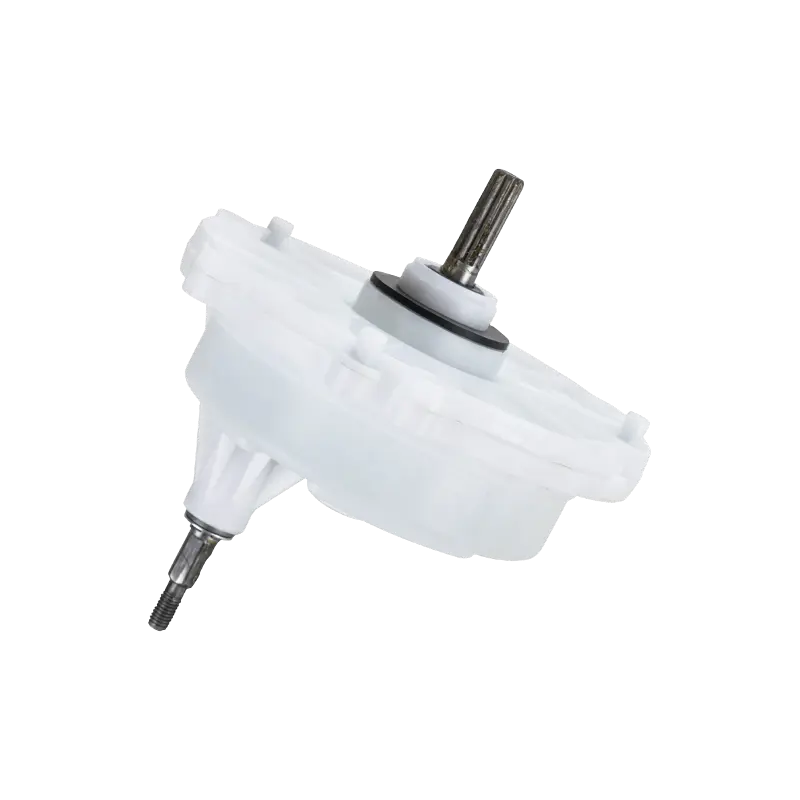
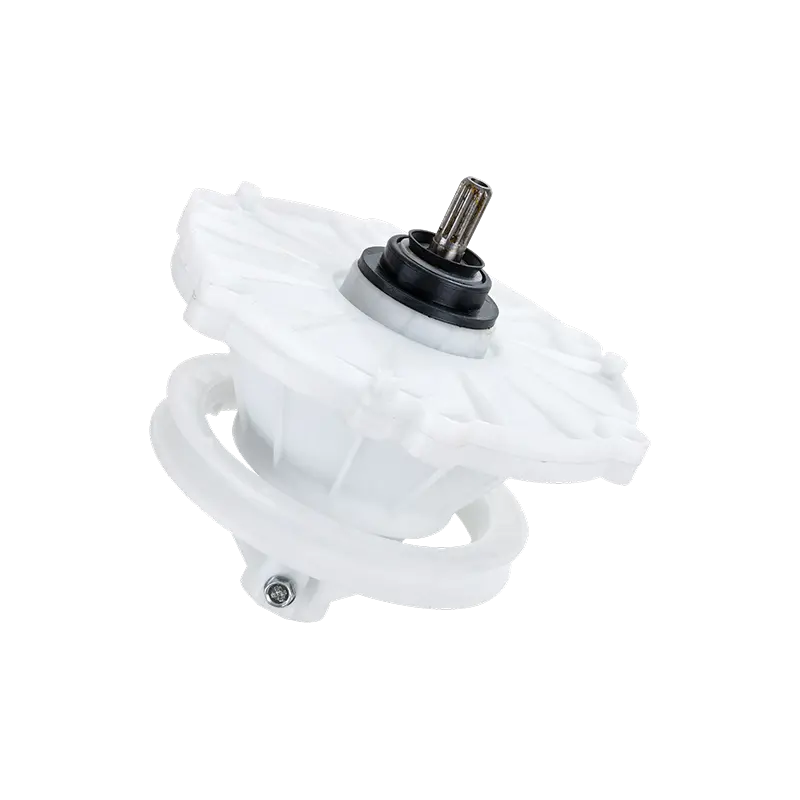
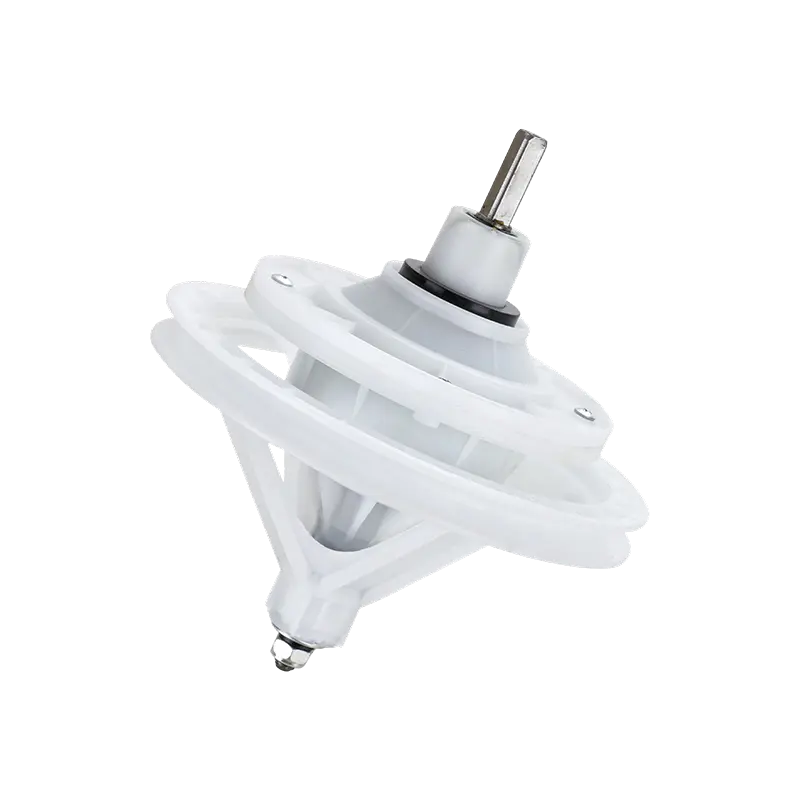
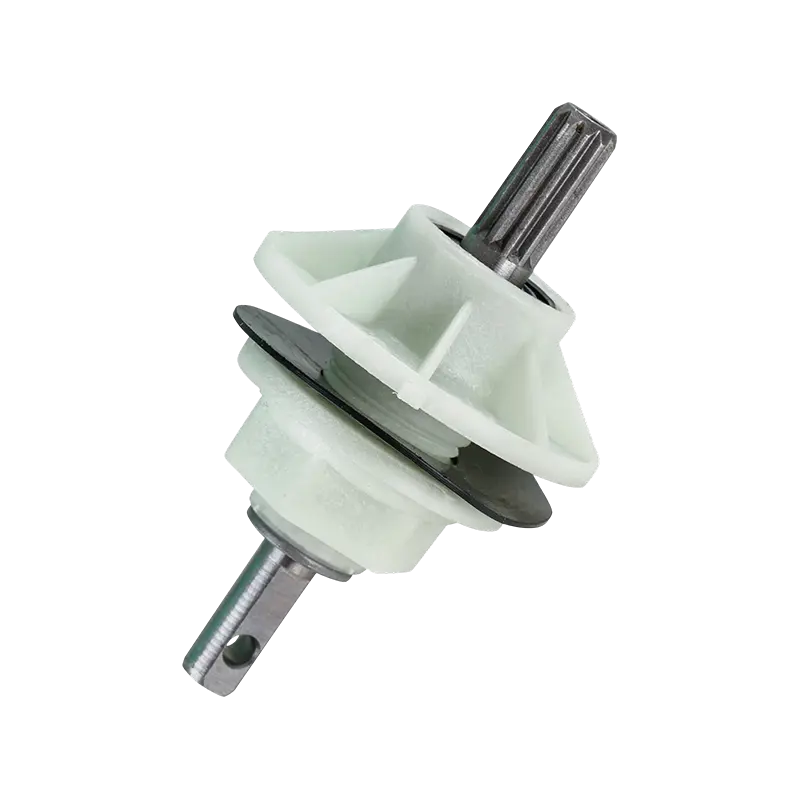
Of these components, the gearbox and synchronizer pairing generally receives the most sourcing attention because it is a mechanical-electrical hybrid: it must tolerate physical load like a mechanical part while also switching states reliably like an electrical component. A washing machine parts supplier that can produce both halves of this assembly under one quality system, rather than combining a machined gearbox from one source with a synchronizer from another, tends to offer more consistent fit and function across production batches.
Why Gearbox and Synchronizer Quality Defines Washing Machine Lifespan
Field failure data collected across washing machine repair and maintenance networks consistently shows that the gearbox and synchronizer assembly accounts for the largest single share of reported faults, ahead of the drain pump, door lock, motor bearing, and control board. The chart below presents an illustrative distribution of failure share by component category, based on typical field reporting patterns used by manufacturers and service networks to prioritize quality investment.
The pattern shown here is not surprising once the mechanical role of the gearbox and synchronizer is considered. Every wash cycle places the gearbox under repeated torque reversal as the machine shifts between agitation and spin, and the synchronizer's electrical contacts open and close thousands of times over a normal service life, so both components accumulate mechanical and electrical fatigue faster than parts that operate under steadier conditions. A combined 34 percent failure share for this single assembly category means that quality investment concentrated here produces a disproportionate reduction in overall service calls compared with spreading the same investment evenly across all components. This is also why many procurement teams ask a washing machine parts manufacturer for gearbox and synchronizer test records specifically, rather than relying on a single overall quality certificate for the whole component list. In practice, a supplier that can document cycle-test results at the individual gear-tooth and contact-point level is signaling that this failure category has already received targeted engineering attention rather than generic process control. Recognizing this concentration of risk is one of the more practical steps a buyer can take early in the sourcing process, since it directs due diligence toward the parts that matter most for long-term reliability.
Manufacturing Process Controls That Reduce Washing Machine Parts Defects
A washing machine parts manufacturer that applies inspection at every stage of production, rather than only at final packaging, is able to catch a much larger share of defects before they reach a customer. The line chart below traces a representative cumulative defect rate as material and sub-assemblies move through six typical inspection checkpoints, from incoming raw material to final packaging.
This downward trend illustrates a basic but often overlooked principle of component manufacturing: defect detection is far more effective and far less costly when it happens close to the point where the defect was introduced. An incoming material check that screens out an off-specification steel or resin batch prevents that material from ever reaching machining, whereas the same defect caught only at final quality control means an entire sub-assembly has already been built around a flawed input. The steep drop between the incoming material stage and the machining stage in the chart reflects the fact that dimensional and material defects are usually easiest to catch early, while the smaller drops later in the process reflect the more subtle issues, such as sub-assembly fit or electrical contact resistance, that only become visible once components are combined. A final defect rate under half a percent after six inspection stages is a realistic target for a washing machine parts manufacturer that treats each stage as an independent checkpoint rather than relying on one inspection near the end of the line. For a washing machine parts supplier working with multiple OEM programs at once, this staged approach also makes it easier to isolate which process step introduced a problem when a batch does show unexpected variation, since each stage's own pass rate is already being tracked separately.
OEM Versus Aftermarket Washing Machine Parts Sourcing: A Side-by-Side View
OEM programs and aftermarket sourcing place different demands on a washing machine parts manufacturer, and neither approach is universally preferable; the right choice depends on the buyer's product roadmap, order volume, and tolerance for lead time. The radar chart below compares six sourcing dimensions across both models, using a five-point scale where a larger area on a given axis indicates a greater degree of that characteristic, not necessarily a better or worse outcome.
The visual gap between the two shapes tells a fairly complete sourcing story on its own. OEM programs score higher on customization level, certification depth, tooling investment, and minimum order volume, which reflects the reality that a custom washing machine parts program usually requires dedicated tooling, a longer qualification process, and a larger initial commitment before the first mass-production batch ships. Aftermarket sourcing, by contrast, scores much higher on specification standardization, since aftermarket buyers generally need parts that match an established form factor across many machine models rather than a single proprietary design. New-part lead time also differs meaningfully between the two models, since an OEM program's lead time is driven by tooling and validation, while aftermarket lead time is driven mainly by production scheduling against an already-qualified design. Neither profile is inherently more demanding overall; a buyer launching a new appliance platform will naturally lean toward the OEM profile, while a distributor restocking service parts for machines already in the field will find the aftermarket profile a closer match to its actual needs. Understanding this trade-off in advance helps a buyer set realistic expectations with a washing machine parts supplier before contract discussions begin, rather than discovering a mismatch partway through the qualification process.
Quality Testing Procedures for Washing Machine Components
Testing coverage varies by component type, since each part fails in a different way and therefore needs a different verification method. The horizontal bar chart below shows a representative testing coverage rate applied by a well-run production line across six commonly sourced washing machine components.
Full coverage on gearbox load-cycle testing and synchronizer dielectric testing reflects the priority placed on these two components, consistent with their outsized share of field failures discussed earlier in this article. Door lock interlock testing also runs at full coverage because this component has a direct safety function, and an interlock that fails to hold the door closed during operation is treated as a critical defect rather than a minor one. Drain pump, motor bearing, and control board testing run at slightly lower but still substantial coverage rates, which is a normal and reasonable allocation of testing resources based on each component's relative failure impact and the practical cost of testing every single unit for every possible failure mode. A washing machine parts manufacturer that publishes coverage rates like these, rather than a blanket claim of full testing across every part, is generally giving a more accurate and more useful picture of its actual quality system. Coverage rates at or above 85 percent across all six categories shown here represent a testing program that most OEM and aftermarket buyers would consider adequate for ongoing supply, though buyers with unusually high-duty-cycle applications may reasonably request additional testing on specific components relevant to their use case.
Key Evaluation Criteria for a Washing Machine Parts Supplier
Once a buyer has narrowed a shortlist of candidates, a structured checklist helps keep the comparison consistent across suppliers rather than relying on impressions from a single sample or a single conversation. The following order of evaluation steps reflects a practical sequence many procurement teams use when qualifying a new washing machine parts manufacturer for an OEM or aftermarket program.
Request documented cycle-test results for the gearbox and synchronizer assembly, including the number of cycles tested and the observed failure point if any.
Ask for material certification and traceability records that connect a finished part back to its raw material lot.
Review the supplier's inspection checkpoints across the production line, not only its final quality control step.
Confirm in-house tooling capability, since suppliers that own their own tooling generally offer more control over dimensional consistency and faster response to design changes.
Evaluate documentation practices for engineering changes, so that any future specification revision can be tracked and validated properly.
Order and independently test a small sample batch before committing to a full production run, regardless of how strong the supplier's own reported data looks.
Following this sequence in order matters because each step depends on information gathered in the previous one. Cycle-test data establishes whether the core components meet a basic reliability threshold, material traceability confirms that this performance was not a result of an unusually good sample, and inspection checkpoint review confirms that the same standard is applied across ongoing production rather than only during a supplier audit. Independent sample testing remains the final and most important step, since it verifies the supplier's own claims using the buyer's own test methods and acceptance criteria rather than relying entirely on supplier-provided data.
Cycle Testing Benchmarks: How Long Washing Machine Components Should Last
Cycle-life expectations differ substantially depending on whether a component is manufactured to standard commercial tolerances or to tighter, precision-machined tolerances. The grouped column chart below compares average cycle-test life, measured in thousands of wash cycles, for gearbox, synchronizer, and drain pump assemblies built to each tolerance level.
The gap between the two bars in each category shows why tolerance control has a direct and measurable effect on component longevity rather than being a purely cosmetic manufacturing distinction. Precision-machined gearboxes in this benchmark reach roughly 95,000 cycles before the defined failure threshold, compared with around 60,000 cycles for standard-tolerance units, a difference large enough to matter for buyers whose end product is expected to run for many years of regular household or commercial use. The synchronizer and drain pump categories show a similar pattern, though the absolute cycle counts differ because each component wears through a different mechanism, electrical contact fatigue for the synchronizer and impeller and seal wear for the drain pump. These figures are useful as a planning benchmark rather than a guarantee for any specific batch, since actual results depend on water quality, load size, and usage frequency in the field. Even so, a washing machine parts manufacturer that can quote cycle-test results at this level of specificity, broken down by tolerance class and component type, is giving buyers a much more actionable basis for comparison than a single generic durability claim would provide.
Working With a Washing Machine Parts Manufacturer for Custom and OEM Programs
A custom washing machine parts program typically moves through a predictable sequence: technical drawing exchange, tooling development, sample validation testing, a pilot production batch, and finally mass production once the pilot batch passes acceptance criteria. Lead time at each stage depends on component complexity, with gearbox and synchronizer tooling generally requiring more development time than simpler stamped or molded parts because of the tighter dimensional tolerances involved. Buyers who plan for this sequence from the start, rather than treating tooling development as a formality, tend to avoid the schedule slippage that often results from underestimating validation time.
Cixi Gaite Electric Co., Ltd. was established in 2002 and is located in Ningbo, Zhejiang, China. As a China washing machine parts manufacturer and custom washing machine parts supplier, the company specializes in the research, development, and manufacturing of key washing machine components, including gearboxes and synchronizers, serving both OEM manufacturers and aftermarket customers. This combination of in-house component design and production experience across both OEM and aftermarket channels reflects the same evaluation criteria discussed earlier in this article: documented testing, traceable manufacturing, and a production history that spans more than a single customer relationship.
Beyond the initial qualification stage, an ongoing OEM relationship depends on consistent communication as order volumes change or as a buyer's product specification is revised over time. A washing machine parts supplier that maintains clear documentation for engineering changes, batch-to-batch test records, and defect tracking makes it much easier for a buyer's own quality team to manage the relationship without needing to repeat qualification work from scratch every time a minor specification adjustment is requested. This kind of documentation discipline is often what separates a supplier relationship that scales smoothly across multiple product generations from one that requires renegotiation and re-testing with every new order.
Frequently Asked Questions About Washing Machine Parts Manufacturing and Supply
Q1: What is the difference between a washing machine parts manufacturer and a washing machine parts supplier?
A washing machine parts manufacturer typically produces components in-house using its own tooling and machining equipment, while the term supplier can also describe a business that aggregates parts from several production lines to complete a broader product range. Many businesses in this space operate as both, manufacturing core components such as gearboxes and synchronizers in-house while sourcing supplementary parts to offer a fuller catalog to OEM and aftermarket customers.
Q2: Which washing machine components are most commonly reordered by OEM and aftermarket buyers?
Gearbox and synchronizer assemblies, drain pumps, door locks, motor bearings, and control boards are the components most frequently reordered, largely because they experience the highest mechanical or electrical cycling during normal machine operation. Reorder frequency for these categories is a useful indicator for buyers deciding which components deserve the most sourcing attention.
Q3: How is the quality of a washing machine gearbox and synchronizer typically verified?
Verification usually combines cycle-load testing to simulate years of mechanical wear, dielectric and contact-resistance testing for the synchronizer's electrical function, dimensional inspection against engineering drawings, and periodic destructive testing of sample units pulled from regular production batches. Together these methods confirm both mechanical durability and electrical reliability before a batch is approved for shipment.
Q4: What should a buyer request before placing a first OEM order with a washing machine parts manufacturer?
Buyers should request cycle-test reports and material certificates for the relevant components, a small sample batch for independent in-house testing, documentation of the production process flow, and historical defect rate data across inspection stages. This information allows a buyer's own quality team to confirm supplier claims rather than relying solely on the supplier's self-reported performance.
Q5: How does customization work when sourcing new washing machine parts for a specific appliance model?
Customization generally begins with an exchange of technical drawings, followed by sample tooling and a validation testing round to confirm fit and function, then a pilot production batch before full mass production begins. Lead time for this process varies with component complexity, and gearbox or synchronizer tooling typically requires more development time than simpler mechanical parts.
Q6: What ongoing support should a washing machine parts supplier provide after an initial order ships?
Ongoing support should include batch-to-batch consistency documentation, structured defect tracking and reporting, a clear process for managing engineering changes, and responsive communication when order volumes or specifications need to be adjusted. These practices help maintain quality and predictability across the full life of an OEM or aftermarket supply relationship.

 English
 عربى
عربى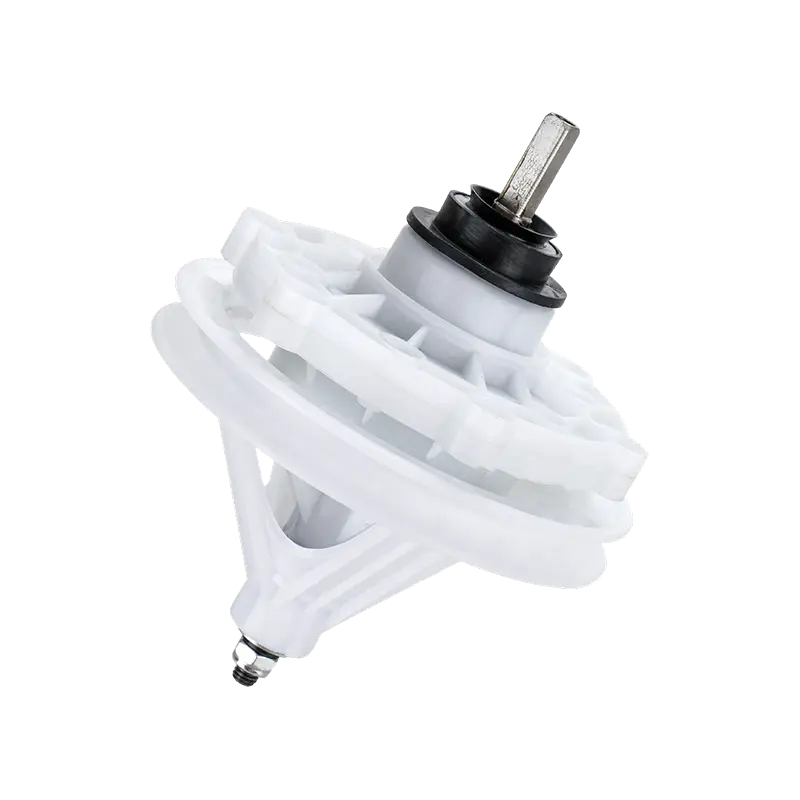


 +86-574-63256717 /63267914
info@gaite.cn
+86-574-63256717 /63267914
info@gaite.cn  gaite@gaite.cn
 No. 208 Miaoshan Road, Shiyan Village, Henghe Town, Cixi City, Ningbo City, Zhejiang Province, China