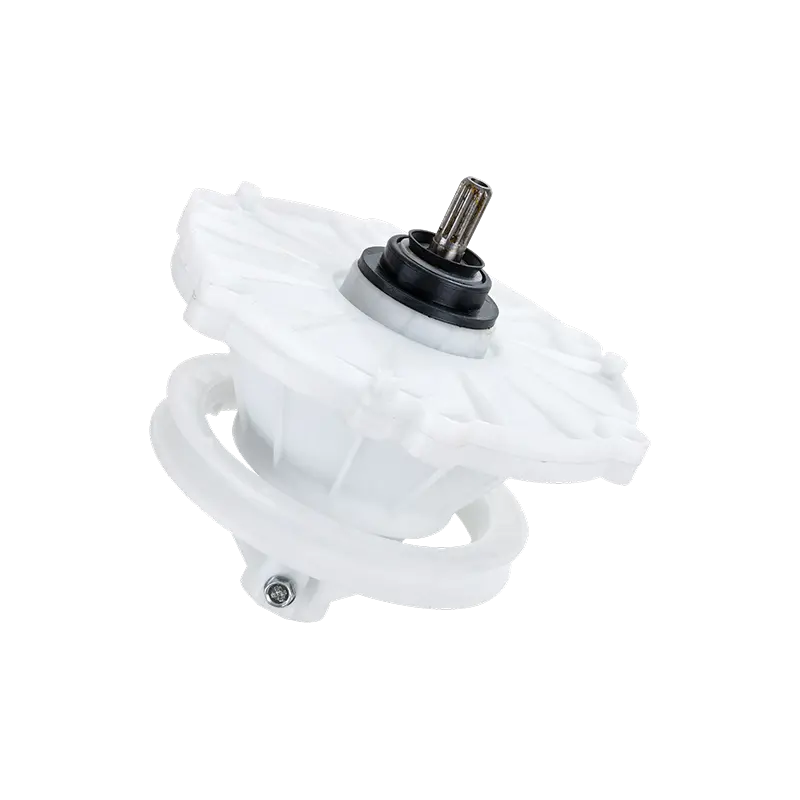
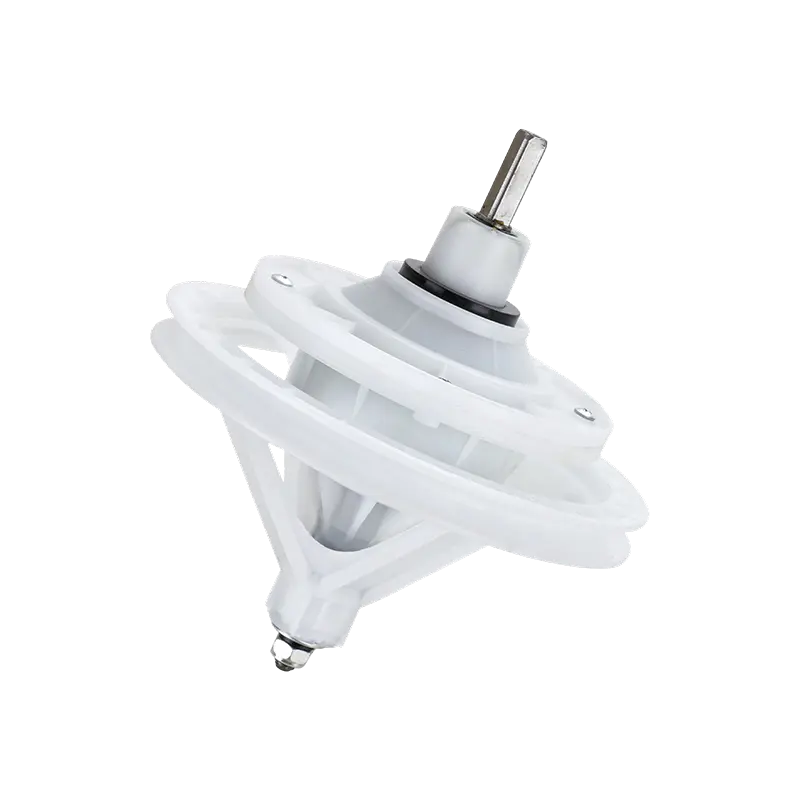
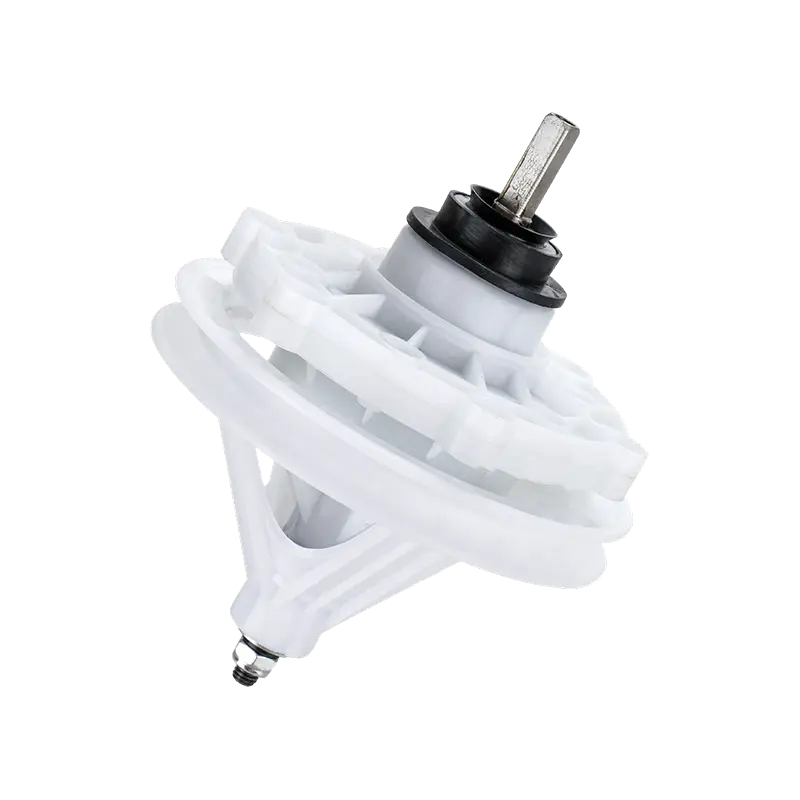
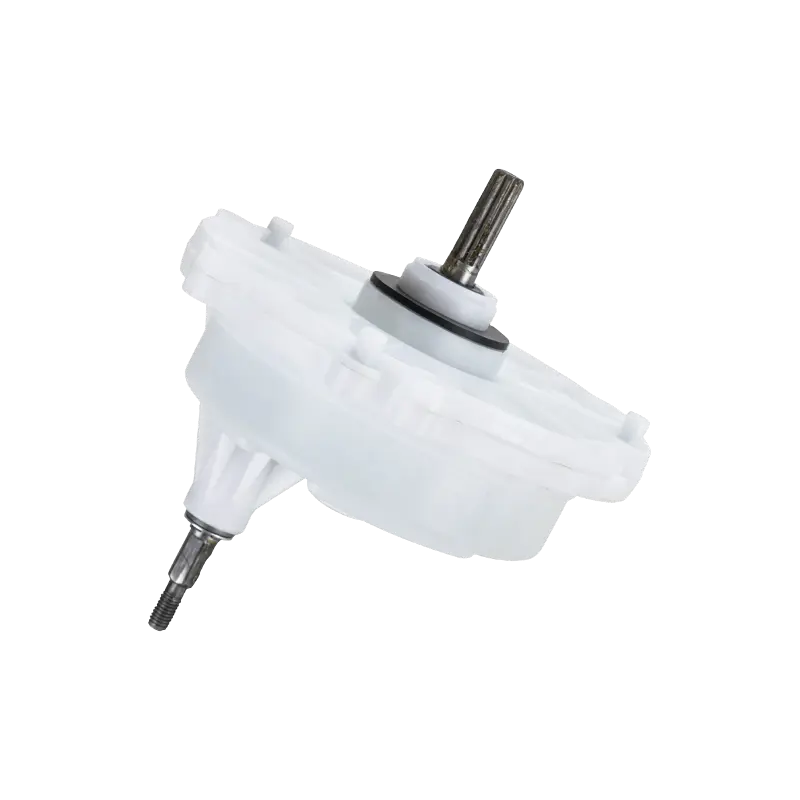
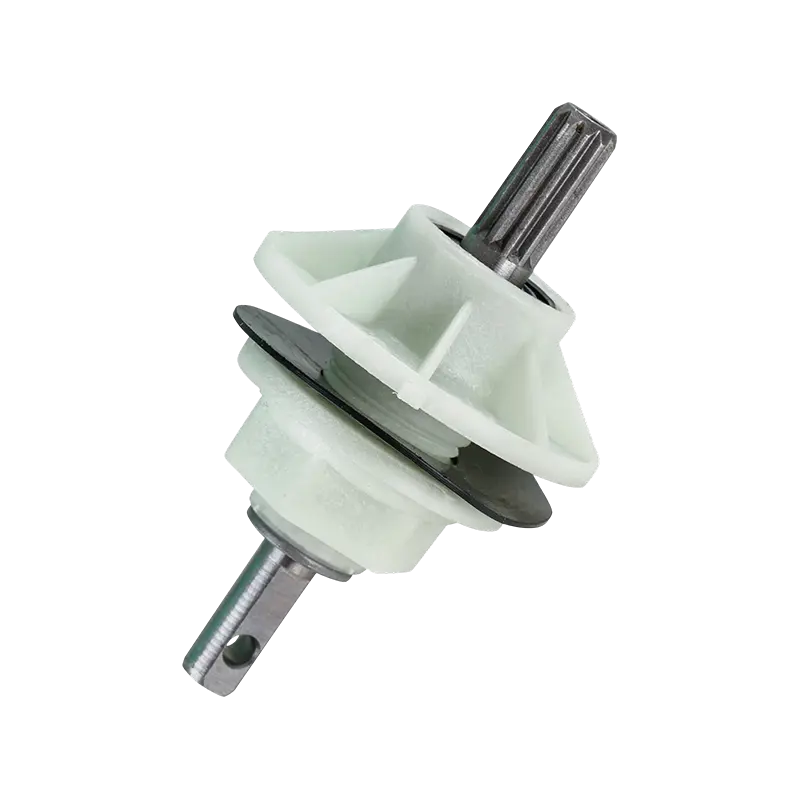
The Twin-tub Washing Machine Reducer is the core power device of semi-automatic twin-cylin...
Washing Machine Gearbox Manufacturer: The Straight Answer for B2B Buyers If you only read one parag...
READ MOREWhat Defines a Reliable Washing Machine Components Manufacturer A dependable Washing Machine Compon...
READ MOREHow to Identify a Reliable Washing Machine Parts Manufacturer A dependable washing machine parts ma...
READ MOREExhibition Name: Asia Consumer Sourcing Expo 2026 Indonesia (CSE ASIA)Exhibition Date: 16‑19 Septemb...
READ MOREThe global aftermarket for washing machine spare parts is seeing steady growth, driven by longer app...
READ MOREContinuous investment in product R&D and structural optimization is reshaping the quality standa...
READ MOREMature production infrastructure has become a core competitive benchmark in the washing machine comp...
READ MOREAs global demand for durable laundry appliances continues to rise, core component manufacturers are ...
READ MOREA washing machine parts manufacturer designs and produces the mechanical and electromechanical components that allow a washing machine to complete its wash, rinse, and spin functions. This category typically covers gear reducers, synchronizers, drum and bearing assemblies, motor components, suspension parts, and door locking mechanisms. Each part plays a distinct role within the overall appliance, and together they determine how consistently a washing machine performs across thousands of operating cycles. Buyers researching this category are usually appliance assemblers, repair parts distributors, or maintenance teams who need components that match specific drum sizes, motor outputs, or control system requirements.
A washing machine parts factory generally organizes its production lines by component family, since gear cutting, injection molding, and electrical assembly each require different equipment and skill sets. This structure allows a single facility to supply both standard catalog parts and components engineered for a particular appliance platform. The sections below walk through the common component types found in this category, how each one works, where they are typically applied, how they compare against one another on key performance attributes, and what routine maintenance generally involves. Several data visualizations are included to make the comparisons easier to follow at a glance.
Within a typical washing machine parts factory, production is usually divided into six recognizable component families. Understanding what distinguishes each family helps buyers identify which part is relevant to a given repair, replacement, or new appliance build.
A gear reducer lowers the rotational speed coming from the motor while increasing torque, allowing the drum to move slowly and forcefully during the wash cycle and quickly during the spin cycle. It usually houses a set of engineering plastic and metal gears inside a sealed casing, along with a shift mechanism that changes gear ratios between cycle phases.
A synchronizer coordinates the timing between different stages of the wash program, such as switching from wash rotation to spin rotation, or triggering water intake and drainage at the correct point in the cycle. It typically combines a small motor-driven cam mechanism with electrical contacts that signal the control system.
The drum holds the laundry load, while the bearing assembly supports smooth rotation and helps the drum withstand repeated exposure to water and detergent. These parts are usually made from stainless steel or coated metal to resist corrosion over long service periods.
Motor components generate the rotational force needed to turn the drum. This family includes windings, laminated cores, and mounting brackets, all of which must be balanced carefully to avoid vibration during high-speed spin cycles.
Suspension springs and friction dampers absorb the mechanical shock created when a laundry load becomes unevenly distributed during spinning. Without these parts, vibration would transfer directly to the appliance cabinet and floor.
Door locks keep the drum door closed and secured during operation, while rubber seals prevent water from leaking out around the door opening. These parts experience frequent manual contact and repeated open-close cycling over the life of the appliance.
Understanding how each component functions mechanically helps explain why certain materials and design choices are used, and why some parts wear differently from others over time.
Inside a gear reducer, a set of meshed gears converts the fast rotation of the motor shaft into a slower, higher-torque output suited to tumbling laundry. A shift fork or clutch mechanism typically switches between a low-speed wash ratio and a high-speed spin ratio depending on the program stage. Because the gears engage repeatedly under load, tooth geometry and material hardness directly affect how long the reducer maintains smooth, quiet operation.
A synchronizer uses a small internal motor to rotate a cam or contact plate at a fixed speed, opening and closing electrical contacts in a set sequence. These contacts tell the control system when to start draining water, when to begin spinning, or when to pause between cycle stages. Because timing accuracy is critical, even a slight mechanical drift in the cam mechanism can cause a washing machine to skip or repeat a stage.
The bearing assembly sits between the rotating drum and the stationary outer tub, allowing the drum to spin freely while remaining sealed against water intrusion. A sealed bearing design protects internal lubrication from washing detergent and moisture, which is one of the main factors influencing how long the assembly lasts before it needs replacement.
The motor drives the drum through a belt or direct coupling, while suspension springs and dampers absorb the resulting vibration, particularly during high-speed spin cycles when laundry is unevenly distributed. Proper coordination between motor output and suspension damping keeps vibration within a manageable range and reduces stress on surrounding components.
Component selection depends heavily on the appliance platform, drum capacity, and control system involved. Appliance assembly lines generally require components matched precisely to a specific model, while repair and maintenance teams need parts that are compatible across a range of similar models.
For new appliance production, engineering teams typically work with a washing machine parts manufacturer early in the design process to confirm gear ratios, synchronizer timing, and bearing dimensions that match the target drum size and motor output. In one common scenario, a mid-capacity drum design requires a gear reducer with a slightly different ratio than a compact model, since the larger drum mass changes the torque needed during the wash phase. For repair and aftermarket applications, technicians usually prioritize compatibility documentation and consistent dimensional tolerances, since a replacement gear reducer or synchronizer must fit into an existing appliance housing without modification.
The following list summarizes the main factors buyers typically weigh when selecting components from a washing machine parts factory.
Comparing components side by side across shared performance attributes makes it easier to understand why each part is designed the way it is. The table below summarizes six component families across their primary function and typical material choice, followed by several charts that compare specific performance figures in more detail.
| Component | Primary Function | Typical Material |
|---|---|---|
| Gear Reducer | Adjusts torque and speed between cycle phases | Engineering plastic, steel gears |
| Synchronizer | Times transitions between cycle stages | Reinforced polymer, contact plates |
| Drum and Bearing Assembly | Holds laundry and supports rotation | Stainless steel, sealed bearings |
| Motor Components | Generates rotational force | Copper winding, laminated steel |
| Suspension Parts | Absorbs vibration during spin cycles | Steel springs, friction dampers |
| Door Lock and Seal | Secures door and prevents leakage | Reinforced polymer, rubber gasket |
The chart below compares average rated service life across the six component families, measured in thousands of operating cycles. This comparison is useful because it shows which parts are engineered to last closer to the full appliance lifespan and which ones typically wear faster due to their mechanical role. Components that rotate continuously within a sealed housing tend to show longer rated life than parts exposed to repeated shock or manual contact. Reviewing this kind of figure helps maintenance planners anticipate which parts are more likely to need attention first. It also gives appliance engineers a reference point when setting internal testing targets during development.
As shown above, the gear reducer carries the highest rated service life at approximately 12,000 operating cycles, closely followed by motor components at around 11,000 cycles. Synchronizers and drum bearing assemblies fall in the middle range, which reflects their exposure to repeated timing shifts and continuous rotational load respectively. Suspension parts and door locks generally show a shorter rated lifespan, since they absorb repeated mechanical shock or frequent manual operation, both of which accelerate material fatigue compared to sealed rotating assemblies. This pattern is fairly consistent across appliance platforms of similar capacity, although exact figures vary depending on drum size and cycle frequency. Maintenance teams often use this kind of reference to schedule proactive inspection of shorter-life components before symptoms of wear become noticeable to the end user. From a manufacturing standpoint, understanding these differences also helps determine where additional material reinforcement or design refinement would provide the most meaningful improvement in overall appliance durability.
The line chart below tracks how reported defect rates for gear reducers and synchronizers typically change over successive production years as manufacturing processes mature. This kind of trend line is a common way to evaluate whether a factory is actively refining its tooling and testing procedures rather than keeping quality static. A declining trend generally indicates that feedback from field returns is being incorporated into ongoing process adjustments. Reviewing multi-year data also helps distinguish a temporary quality dip from a genuine long-term improvement pattern. This chart uses a five-year window to illustrate a typical improvement curve observed in gear and synchronizer production lines.
In this illustrative trend, the reported defect rate declines from roughly 4.8 percent in Year 1 to about 2.1 percent by Year 5, a reduction of more than half across the observed period. This type of improvement is usually driven by tighter machining tolerances, upgraded testing fixtures, and closer tracking of which specific sub-component contributes most to early failures. A steady downward trend over several years is generally more informative than a single point-in-time inspection result, since it reflects how a factory responds to real production feedback rather than a snapshot audit. Buyers comparing potential suppliers can use this kind of historical view to understand whether a factory treats defect reduction as an ongoing engineering effort. Gradual improvement patterns like this are also common across component categories beyond gear reducers and synchronizers, including bearing assemblies and motor windings, wherever process refinement is actively pursued. Tracking this data over time additionally supports better planning for warranty allowances and replacement part inventory, since a factory with a clear downward trend is less likely to produce sudden batches of inconsistent components.
The radar chart below compares three core components across five performance attributes rated on a scale of one to ten: durability, noise control, load capacity, corrosion resistance, and precision fit. This type of multi-attribute view is useful because no single component scores highest across every category, which reflects the fact that each part is engineered around a different mechanical priority. Readers can use this chart to understand where design trade-offs typically occur within a washing machine assembly. It also helps explain why replacing one type of component does not necessarily improve performance in an unrelated area. The comparison below is based on typical attribute patterns observed across standard component designs.
The overlapping shapes show that the gear reducer scores highest on load capacity and durability, which reflects its role in continuously transferring motor torque under varying laundry loads. The synchronizer instead scores highest on precision fit and noise control, since its main task is to coordinate timing without introducing vibration or audible clicking during cycle transitions. The drum bearing assembly stands out on corrosion resistance, a direct result of constant exposure to water and detergent residue during normal operation. None of the three components dominates across every attribute, which is expected given that each is designed for a distinct mechanical role rather than a general-purpose function. This kind of comparison is particularly useful for engineering teams deciding where to focus additional testing or material upgrades when refining an appliance platform. It also gives repair technicians a clearer sense of which component is more likely to be the source of a specific symptom, such as unusual noise pointing toward the synchronizer rather than the bearing assembly. Overall, the radar comparison reinforces the idea that a well-balanced washing machine depends on each component performing its specialized role rather than any single part carrying disproportionate responsibility.
Routine maintenance extends the working life of most washing machine components and reduces the likelihood of unexpected downtime. The guidance below outlines general upkeep points for each major component family.
Following a consistent inspection routine for these six areas generally reduces the frequency of unplanned component replacement and helps distributors and repair teams anticipate which parts to keep in stock based on the specific appliance models they service most often.
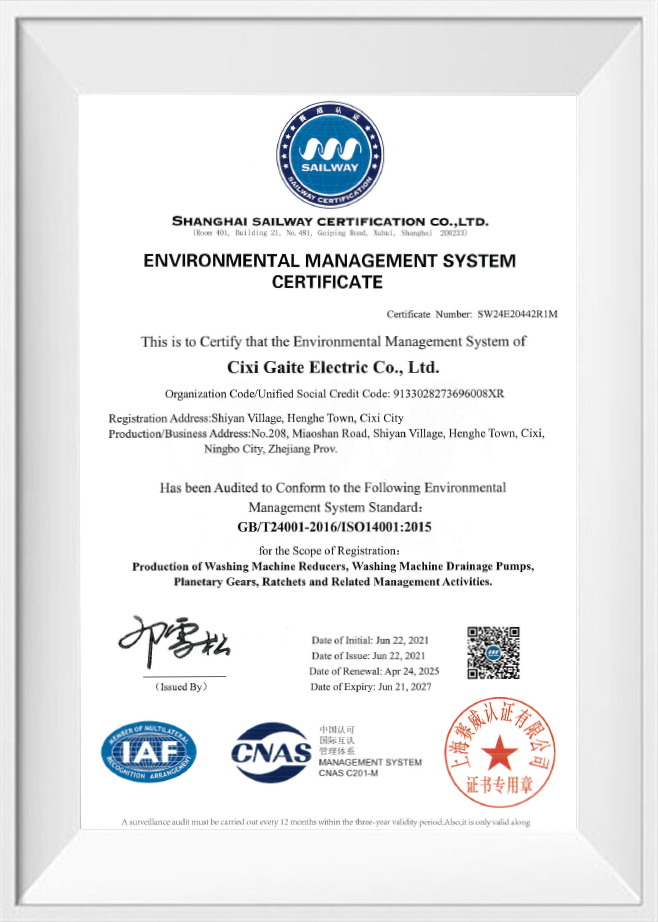
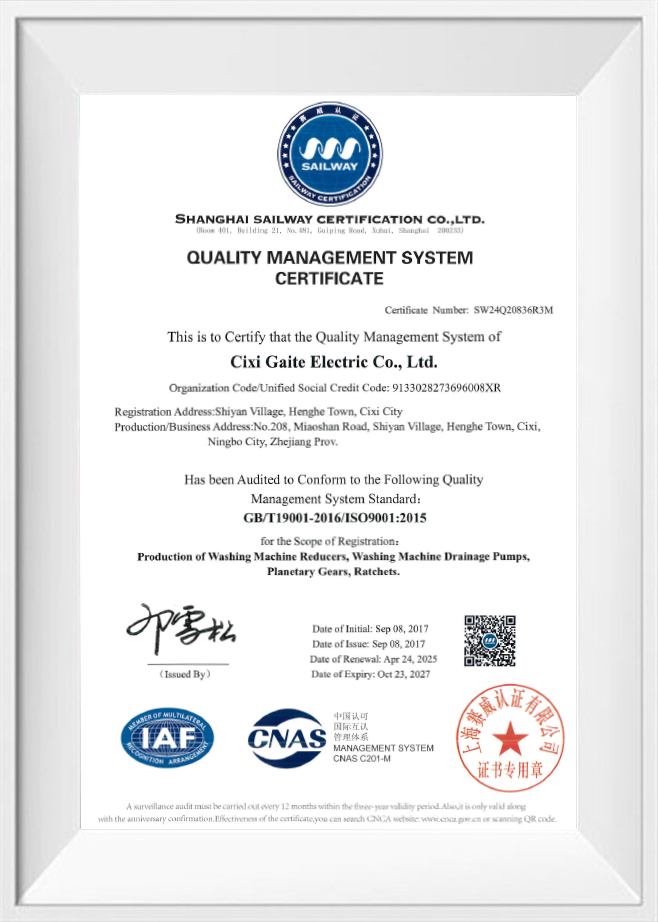
The component types described above are commonly produced together within a single facility, since gear reducers and synchronizers in particular require closely coordinated engineering between mechanical and electrical teams. Founded in 2002, Cixi Gaite Electric Co., Ltd. operates as a China Washing Machine Components Manufacturer and Custom Washing Machine Components Supplier based in Ningbo, Zhejiang, focusing its research and manufacturing on gear reducers and synchronizers for both OEM production lines and aftermarket replacement channels. The company runs a production base of approximately 10,000 square meters, supported by stable production capacity and established manufacturing processes that align with the component categories discussed throughout this page.
This kind of focused production background is relevant to buyers evaluating a washing machine parts factory, since specialization in specific component families, such as gear reducers and synchronizers, generally supports more consistent dimensional accuracy across large order volumes compared to a facility producing a broad and unrelated range of unrelated products. Continuous refinement of product performance and structural design remains a routine part of how this category of components is developed over time.
Q1: What is the difference between a gear reducer and a synchronizer?
A gear reducer adjusts the speed and torque delivered to the drum during wash and spin phases, while a synchronizer controls the timing sequence between different stages of the wash program, such as switching from washing to draining or spinning.
Q2: How can unusual noise during spinning be diagnosed?
Unusual noise during spinning is often linked to bearing wear within the drum assembly, though it can also result from loose suspension components or an imbalanced laundry load, so checking these areas in sequence usually narrows down the cause.
Q3: Why do suspension parts wear faster than gear reducers?
Suspension parts absorb repeated mechanical shock from uneven load distribution during spin cycles, which places more cumulative stress on springs and dampers compared to gear reducers that operate within a sealed, protected housing.
Q4: Can the same manufacturer support both OEM and aftermarket component orders?
Yes, many factories that specialize in gear reducers and synchronizers structure their production and packaging workflows to serve large-scale OEM assembly schedules alongside smaller, more frequent aftermarket restock orders.
Q5: What causes a washing machine to skip a cycle stage?
Skipped cycle stages are commonly related to a synchronizer timing issue, where the internal contact mechanism no longer signals the control system at the correct point in the wash program.
Q6: How often should door seals be inspected?
Door seals should be checked periodically for hardening or cracking, since detergent residue buildup over time can reduce the rubber gasket's flexibility and eventually allow minor water leakage around the door opening.