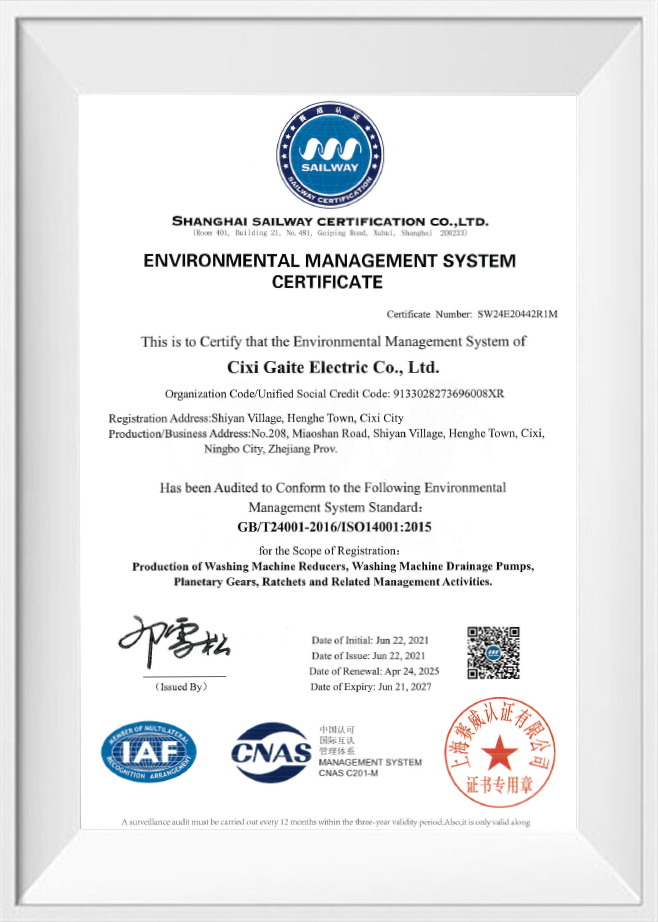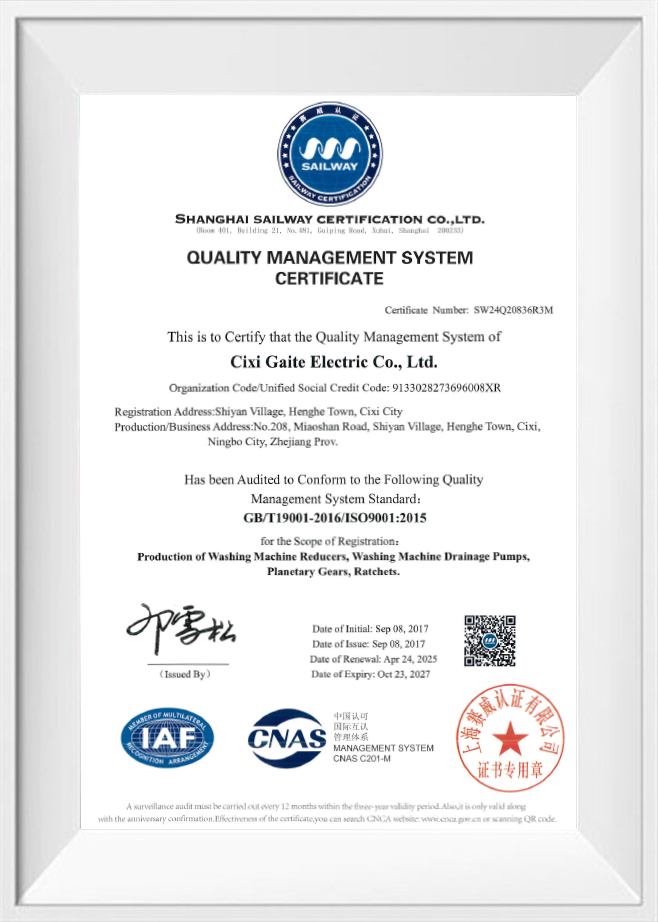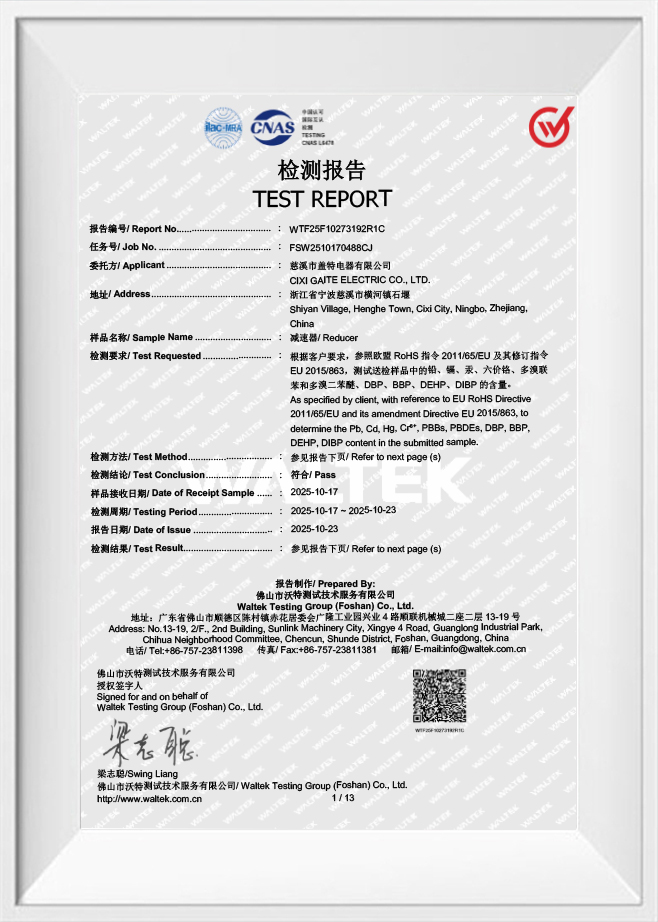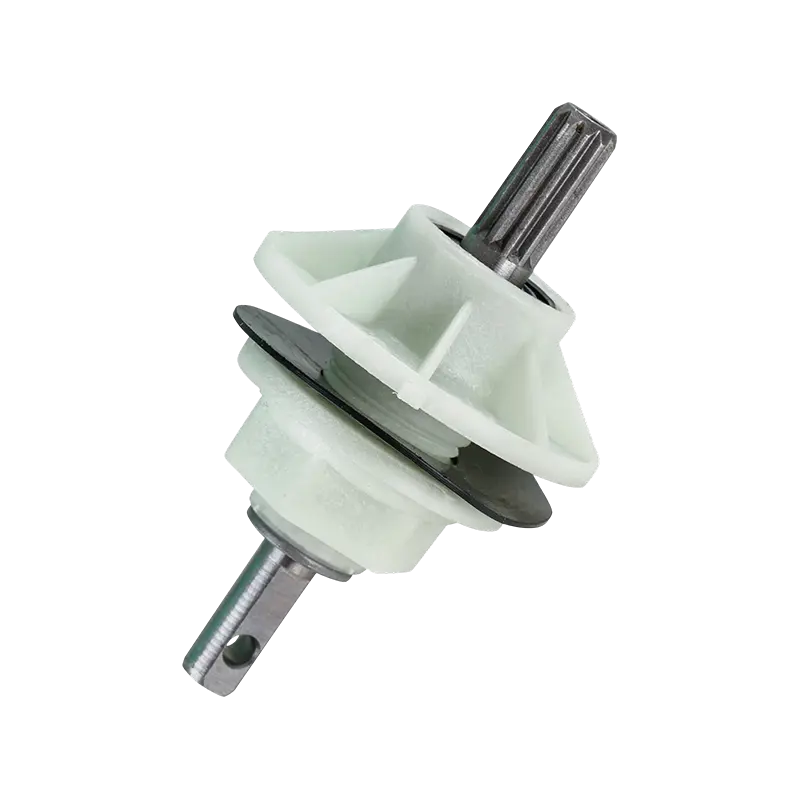
The Twin-tub Washing Machine Reducer is the core power device of semi-automatic twin-cylin...
Washing Machine Gearbox Manufacturer: The Straight Answer for B2B Buyers If you only read one parag...
READ MOREWhat Defines a Reliable Washing Machine Components Manufacturer A dependable Washing Machine Compon...
READ MOREHow to Identify a Reliable Washing Machine Parts Manufacturer A dependable washing machine parts ma...
READ MOREExhibition Name: Asia Consumer Sourcing Expo 2026 Indonesia (CSE ASIA)Exhibition Date: 16‑19 Septemb...
READ MOREThe global aftermarket for washing machine spare parts is seeing steady growth, driven by longer app...
READ MOREContinuous investment in product R&D and structural optimization is reshaping the quality standa...
READ MOREMature production infrastructure has become a core competitive benchmark in the washing machine comp...
READ MOREAs global demand for durable laundry appliances continues to rise, core component manufacturers are ...
READ MOREA washing machine P-Shaft, also referred to across the industry as a pulsator shaft or pulsator shaft assembly, is the rotating drive component that connects a washing machine's motor and gearbox output to the pulsator disc located at the bottom of the wash tub. The washing machine P-Shaft transmits rotational torque and, in many designs, an oscillating or reversing motion that agitates water and fabric to achieve mechanical cleaning action. Because this component sits at the mechanical interface between the drive system and the wash basket, its dimensional accuracy, material selection, and sealing performance directly influence washing efficiency, vibration levels, and long-term reliability of the appliance.
In practical terms, a pulsator shaft assembly is rarely a single machined part. It typically integrates a splined or keyed shaft body, a bearing or bushing interface, a rotary seal to prevent water ingress into the gearbox cavity, and in many configurations a mounting flange or retaining structure that secures the pulsator disc above the tub floor. The design of the washing machine pulsator shaft assembly must accommodate radial loads from spinning water and laundry mass, axial loads from vertical agitation strokes, and repeated start-stop torque cycles without excessive wear at the seal interface or spline contact points.
This category page brings together the common structural types of washing machine P-Shaft components, the working principles behind each configuration, typical selection considerations for OEM production lines and aftermarket replacement, and maintenance guidance intended to extend service life. The information here is organized to help engineers, procurement teams, and maintenance technicians identify the correct pulsator shaft assembly configuration for a given washing machine platform.
Washing machine P-Shaft designs vary according to the drive architecture of the appliance. The four configurations described below cover most top-load and twin-tub washing machine platforms currently produced for domestic and light commercial use.
This configuration is used on compact top-load washers where the pulsator disc rotates continuously in alternating directions to create a water current rather than a full agitation stroke. The shaft is generally shorter, with a simpler single-bushing support, and is paired with a lighter-duty gear reducer since torque demands are comparatively modest.
Found on mid-to-large capacity top-load machines, this shaft type is coupled to a gear reducer and synchronizer mechanism that converts continuous motor rotation into an oscillating agitation stroke. The shaft body carries a spline or serration profile at the pulsator interface to transfer reversing torque without slippage, and a reinforced bushing section to resist the higher radial loading generated by larger wash loads.
Direct-drive platforms couple the pulsator shaft directly to a motor rotor or a compact gearbox with minimal intermediate linkage. This reduces the number of wear points in the drivetrain and generally improves torque transfer efficiency, though it places greater precision requirements on shaft concentricity and bearing alignment to avoid vibration at higher spin speeds.
Twin-tub semi-automatic washers use a dedicated wash-tub pulsator shaft that is mechanically isolated from the spin-tub drive shaft. These shafts tend to operate at lower rotational speeds but experience frequent reversing cycles, so the seal and spline wear characteristics differ from single-tub automatic designs.
| Shaft Type | Typical Motion | Support Style | Common Platform |
|---|---|---|---|
| Impeller-Drive | Continuous reversing rotation | Single bushing | Compact top-load |
| Gear-Driven Agitator | Oscillating stroke | Reinforced bushing | Mid-to-large top-load |
| Direct-Drive Assembly | Direct rotor-coupled rotation | Precision bearing | Modern top-load |
| Twin-Tub Pulsator | Low-speed reversing | Isolated bushing | Semi-automatic twin-tub |
The working principle of a washing machine pulsator shaft assembly centers on converting steady motor rotation into the intermittent, load-bearing motion needed at the pulsator disc. In gear-driven and agitator-type designs, a reduction gear train lowers rotational speed while increasing torque, and a synchronizer or clutch mechanism periodically reverses the direction of rotation to create the back-and-forth agitation stroke that drives water and fabric movement inside the tub. In direct-drive and impeller-type designs, the shaft transmits a more continuous rotational profile with fewer intermediate mechanical stages. Across all configurations, the shaft must tolerate cyclical torque loading, momentary stall torque during startup with a full laundry load, and the radial force generated by water turbulence.
Understanding the relative torque demand of each shaft type is useful when specifying a replacement component or evaluating a new appliance platform for production. The chart below illustrates the general operating torque range associated with each of the four common pulsator shaft configurations described earlier in this page. These figures represent typical mid-range values observed across common domestic washing machine platforms and are intended as a general reference rather than a fixed specification for any single model. Reviewing this comparison helps clarify why gear-driven agitator shafts and direct-drive assemblies are generally built with more robust spline profiles and bearing support than lighter impeller-drive or twin-tub designs. It also explains why shaft material and heat-treatment decisions differ across appliance categories, since higher torque transfer concentrates more stress at the spline root and seal contact area. Engineers evaluating a washing machine P-Shaft for a new platform typically begin by estimating the expected torque range before finalizing shaft diameter and spline geometry.
As the chart indicates, direct-drive pulsator shaft assemblies generally operate at the upper end of the torque range among the four configurations, which is consistent with their use on larger-capacity, single-stage drivetrains that eliminate intermediate gear reduction. Gear-driven agitator shafts fall into a middle range, reflecting the mechanical advantage provided by the gear reducer stage even though the shaft itself experiences reversing loads at every stroke cycle. Impeller-drive shafts and twin-tub pulsator shafts sit at the lower end of the scale, which generally allows for a lighter shaft cross-section and a simpler single-bushing support without compromising expected service life. It is worth noting that torque demand is only one input among several when specifying a shaft; radial load from water and fabric mass, axial thrust during vertical agitation, and duty cycle frequency also factor into final material and dimensional decisions. Procurement teams sourcing a washing machine pulsator shaft assembly for a specific appliance platform should treat this chart as a starting reference point and confirm final torque requirements against the motor and gearbox specification of the target machine. Because torque and speed profiles differ even within a single shaft category depending on tub capacity and motor rating, working from actual drivetrain data during the design or sourcing phase remains the most reliable approach.
Material selection is one of the most consequential decisions in washing machine P-Shaft design because the shaft operates in a damp environment, under cyclical reversing torque, and in continuous contact with a rotary seal. Three material approaches are commonly used across the industry: plain carbon steel shafts, alloy steel shafts, and surface-hardened alloy steel shafts where the outer wear surface receives an additional hardening treatment while the shaft core retains toughness. Each approach carries a different wear progression curve as duty cycles accumulate, and understanding this relationship helps explain why higher-duty appliance platforms tend to specify hardened alloy shafts even though the base shaft geometry may be nearly identical to a carbon steel equivalent.
The line chart below presents an illustrative wear index across an increasing number of duty cycles for the three material approaches described above. The wear index reflects a general, relative measure of surface and spline wear rather than a guaranteed lifespan figure for any specific product, since actual results depend on water hardness, detergent chemistry, load frequency, and installation quality. This comparison is intended to help engineering and maintenance teams understand why material grade selection becomes increasingly important as appliance duty cycles rise, and why aftermarket replacement intervals often differ meaningfully between carbon steel and hardened alloy shaft variants. Reading the chart from left to right shows how the wear gap between material types widens progressively rather than staying constant, which is a pattern commonly observed in rotating shaft components subject to repeated reversing loads. This widening gap is one of the key reasons that mid- and high-duty washing machine platforms increasingly specify a hardened alloy pulsator shaft rather than a basic carbon steel equivalent.
The plain carbon steel line rises most steeply, reflecting faster surface and spline wear as reversing loads accumulate at the shaft-to-pulsator interface. The alloy steel line shows a moderated rise, consistent with improved base hardness and fatigue resistance compared to plain carbon steel. The surface-hardened alloy line remains flattest across the full cycle range, which corresponds to the added wear resistance at the outer contact surface while the shaft core retains sufficient toughness to resist fatigue cracking under repeated reversing torque. It is worth emphasizing that this chart represents a general relative comparison rather than a certified lifespan guarantee, since real-world wear also depends heavily on water quality, seal condition, and installation alignment. For OEM production lines specifying a new pulsator shaft assembly, material grade should be matched to the expected duty profile of the target appliance rather than defaulting to a single material across all product tiers. For aftermarket replacement, technicians working on higher-duty or commercial-adjacent machines often find that upgrading to a hardened alloy shaft, where the mounting interface allows for it, reduces the frequency of repeat seal and spline-related service calls compared to a baseline carbon steel replacement.
Selecting the correct washing machine P-Shaft for a given application involves weighing several engineering factors against the specific demands of the target platform. For OEM production, the shaft must be specified early in the drivetrain design process alongside the gear reducer and synchronizer, since spline geometry, shaft diameter, and seal seat dimensions are interdependent across these components. For aftermarket replacement, the priority shifts toward matching the exact mounting interface, spline count, and seal specification of the original component to avoid introducing vibration or leakage after installation.
The bar chart below presents a general selection priority scoring across five common evaluation factors for washing machine pulsator shaft components: torque capacity, wear resistance, sealing performance, dimensional accuracy, and cost efficiency. These scores reflect a generalized weighting commonly applied during component evaluation rather than a fixed formula, since actual priority ranking shifts depending on whether the shaft is intended for a compact domestic platform or a larger-capacity, higher-duty appliance. Reviewing this chart before finalizing a sourcing decision helps procurement and engineering teams align on which factors deserve the most scrutiny during supplier evaluation and sample testing. It also provides a useful framework for comparing quotations or technical proposals from different component sources on a like-for-like basis rather than focusing on a single attribute in isolation. For most washing machine platforms, sealing performance and dimensional accuracy tend to carry a disproportionately high weight relative to their apparent simplicity, because even minor deviations in these areas commonly lead to water ingress or vibration complaints after installation.
As shown in the chart, sealing performance and dimensional accuracy score at or near the top of the general priority ranking, closely followed by wear resistance and torque capacity, while cost efficiency, though still relevant, generally carries somewhat less weight than the four performance-related factors in a well-balanced evaluation. This pattern reflects the practical reality that a washing machine pulsator shaft assembly failing at the seal or spline interface tends to generate a service call or warranty claim well before the underlying material has reached the end of its expected fatigue life. Engineers and buyers evaluating a new shaft supplier commonly use a weighting framework similar to this one to structure sample testing, prioritizing leak testing and dimensional inspection alongside torque and endurance testing rather than treating cost as the primary differentiator. For appliance platforms operated in regions with harder water or higher mineral content, sealing performance often deserves even greater emphasis than shown in this general chart, since seal degradation tends to accelerate under these conditions. Ultimately, the relative weighting of these five factors should be adjusted to reflect the specific operating environment, duty cycle, and reliability expectations of the target washing machine platform.
Beyond individual metrics such as torque or wear resistance, it is often useful to view a pulsator shaft assembly's overall performance profile across several dimensions at once. The radar chart below compares a gear-driven agitator shaft against a direct-drive pulsator shaft assembly across five attributes: torque capacity, wear resistance, dimensional precision, corrosion resistance, and cost efficiency. This type of multi-attribute view helps engineering teams visualize trade-offs rather than focusing on a single specification in isolation, since no single shaft configuration scores highest across every category simultaneously. The scoring shown here is illustrative and intended to represent general tendencies observed across common appliance platforms, rather than a certified benchmark for any individual product. Comparing two shaft types on the same radar frame also makes it easier to communicate design trade-offs to non-technical stakeholders during a platform review or supplier discussion.
The overlapping polygons in the radar chart illustrate that the direct-drive pulsator shaft assembly generally scores higher on torque capacity and wear resistance, consistent with the more robust bearing support and reduced number of intermediate wear points discussed earlier in this page. The gear-driven agitator shaft, in comparison, tends to score somewhat more favorably on cost efficiency, largely because the overall drivetrain leverages an existing gear reduction stage rather than requiring a more complex direct-coupled bearing arrangement. Both configurations show broadly comparable dimensional precision and corrosion resistance scores, reflecting the fact that these two attributes are more closely tied to manufacturing process control and surface treatment than to the fundamental drive architecture itself. This comparison reinforces a recurring theme across this category page: no single pulsator shaft configuration is universally superior, and the correct choice depends on matching the shaft's performance profile to the specific duty cycle, capacity, and cost target of the appliance platform under consideration. Engineering teams reviewing a new washing machine platform, or evaluating a component supplier's proposed pulsator shaft assembly, can use a radar-style comparison such as this one to quickly identify which trade-offs are being accepted before committing to a final design.
To make the structural discussion above easier to visualize, the isometric diagram below outlines the general layout of a typical washing machine pulsator shaft assembly, including the splined shaft body, the seal seat, the support bushing, and the mounting flange that interfaces with the pulsator disc. This simplified structural view is intended for general reference and orientation rather than as a precise engineering drawing of any specific product. Viewing the assembly in this layered form helps clarify how torque travels from the gearbox output, through the shaft body, and up to the pulsator disc, while the seal and bushing sections manage water exclusion and radial support along the way. Understanding this layered structure also makes it easier to interpret the material and selection discussion covered in the previous sections, since each labeled zone in the diagram corresponds to a different engineering priority. For example, the spline zone is most closely associated with torque transfer and wear resistance, while the seal zone is most closely associated with the sealing performance priority discussed in Section 5.
Reading the diagram from top to bottom follows the physical path of the assembly as it would be installed in the appliance, beginning with the mounting flange that supports the pulsator disc above the tub floor and ending with the gearbox coupling end that engages the reduction gear train or motor output below. The splined shaft body occupies the central load-bearing section of the assembly and is the region most affected by the material and wear considerations discussed in Section 4. Directly below the shaft body, the rotary seal seat is a critical transition zone, since it must maintain a consistent sealing surface even as the shaft rotates and reverses direction thousands of times over the appliance's service life. The support bushing section beneath the seal manages radial loading and helps maintain shaft concentricity, which in turn affects vibration levels during the spin cycle. Finally, the gearbox coupling end is machined to match the specific gear reducer or synchronizer output on the target appliance platform, which is why aftermarket replacement parts must match this interface precisely to avoid installation issues. Viewing the assembly as a set of distinct functional zones, rather than as a single generic shaft, is a useful mental model when comparing sourcing options or diagnosing a field failure.
Consistent manufacturing process control has a direct bearing on how well a washing machine P-Shaft performs once installed, particularly with respect to dimensional accuracy at the spline and seal seat, and metallurgical consistency across production batches. OEM manufacturers generally require tight batch-to-batch consistency because even small dimensional shifts can affect fit with the mating gear reducer or synchronizer components sourced separately for the same platform. Aftermarket suppliers face a related but distinct challenge, since a replacement pulsator shaft assembly must match the original equipment interface closely enough to avoid introducing new vibration or leakage issues after installation, even when the original appliance model is no longer in current production.
Cixi Gaite Electric Co., Ltd., established in 2002 and based in Ningbo, Zhejiang, has focused its manufacturing activity specifically on core washing machine drivetrain components, including gear reducers, synchronizers, and related shaft assemblies, for both OEM manufacturers and aftermarket applications. Operating from a production base of approximately 10,000 square meters, the company has built its manufacturing processes around the specific dimensional and metallurgical requirements associated with washing machine pulsator shaft components, including the spline and seal seat considerations discussed throughout this page. This long-standing focus on a narrow, mechanically related product family, rather than a broad general-purpose component catalog, has supported consistent process control across production runs and allows for closer coordination with customers on structural and material specification during the sourcing stage.
For procurement teams evaluating a washing machine pulsator shaft assembly supplier, it is generally useful to request sample parts for dimensional inspection and functional testing before committing to a production order, regardless of which manufacturer is under consideration. Reviewing spline profile consistency, seal seat surface finish, and shaft concentricity across a small batch of samples provides a more reliable indication of expected field performance than reviewing a technical drawing alone.
Proper installation and periodic inspection help extend the service life of a washing machine pulsator shaft assembly and reduce the likelihood of premature seal or spline wear. The following practices are commonly recommended by maintenance technicians working on top-load and twin-tub washing machine platforms.
Following these steps does not eliminate the possibility of component wear over time, since all rotating shaft assemblies experience gradual wear under normal operating conditions, but consistent installation practice and periodic inspection generally help identify early warning signs before a failure disrupts appliance operation.
A washing machine P-Shaft is a specialized pulsator shaft designed specifically to interface with the pulsator disc at the base of the wash tub, incorporating a seal seat and spline profile tailored to that application. A general drive shaft, by comparison, refers more broadly to any rotating component transmitting torque between two mechanical stages and may not include the same sealing or reversing-motion features found in a pulsator shaft assembly.
Identifying the correct shaft type generally starts with the appliance model and drivetrain configuration, since impeller-drive, gear-driven agitator, direct-drive, and twin-tub pulsator shafts each correspond to a distinct drivetrain architecture as outlined in Section 2 of this page. Checking the original component's spline count, shaft length, and mounting interface against manufacturer reference data is the most reliable way to confirm an exact match before ordering a replacement.
Material grade is one of several factors affecting service life, alongside installation quality, water conditions, and duty cycle frequency. As illustrated in Section 4, surface-hardened alloy shafts generally show a slower relative wear progression compared to plain carbon steel shafts under similar operating conditions, though actual results vary by application.
In most cases, once wear has progressed to the point of seal leakage or spline slippage, replacement of the full pulsator shaft assembly is the more practical and reliable option compared to attempting a partial repair, since the shaft, seal seat, and bushing interface are engineered to work together as a matched set.
Useful information typically includes the appliance platform or model reference, shaft length and spline specification, expected duty cycle or capacity class, and any known environmental conditions such as water hardness, since these details help a manufacturer recommend an appropriate material grade and structural configuration.