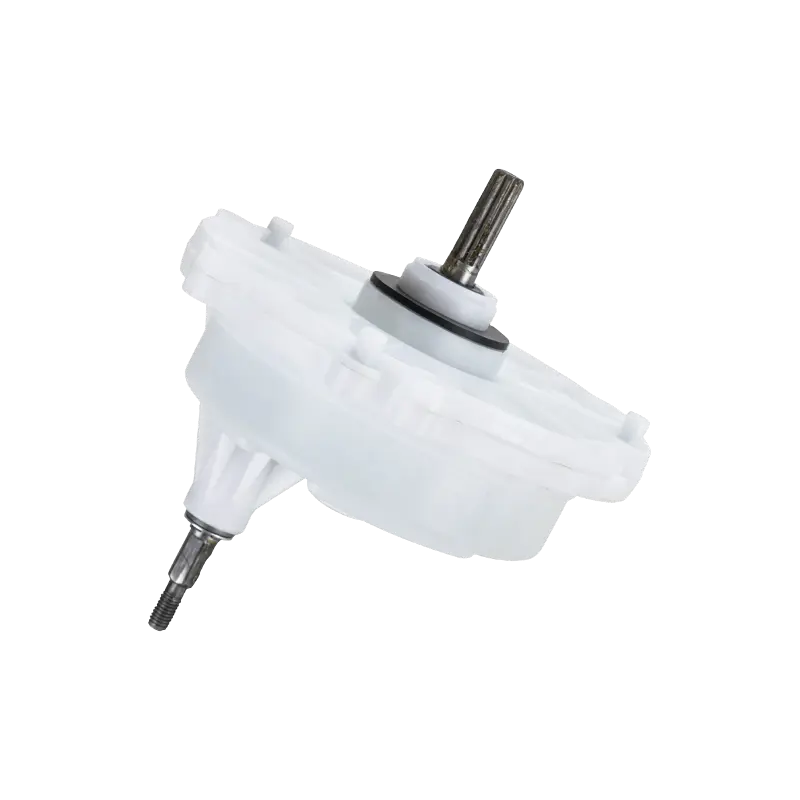
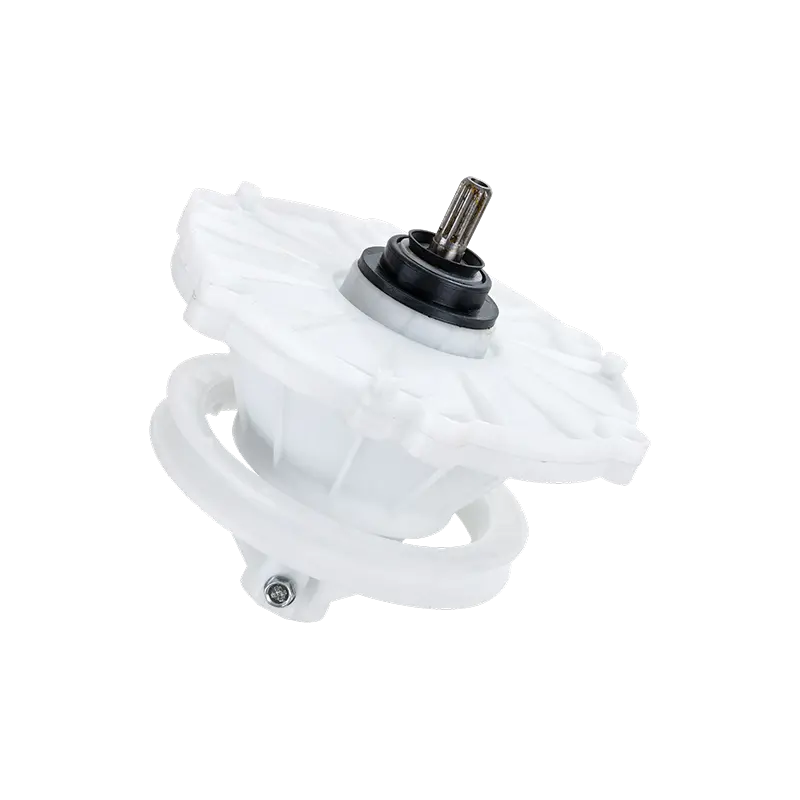
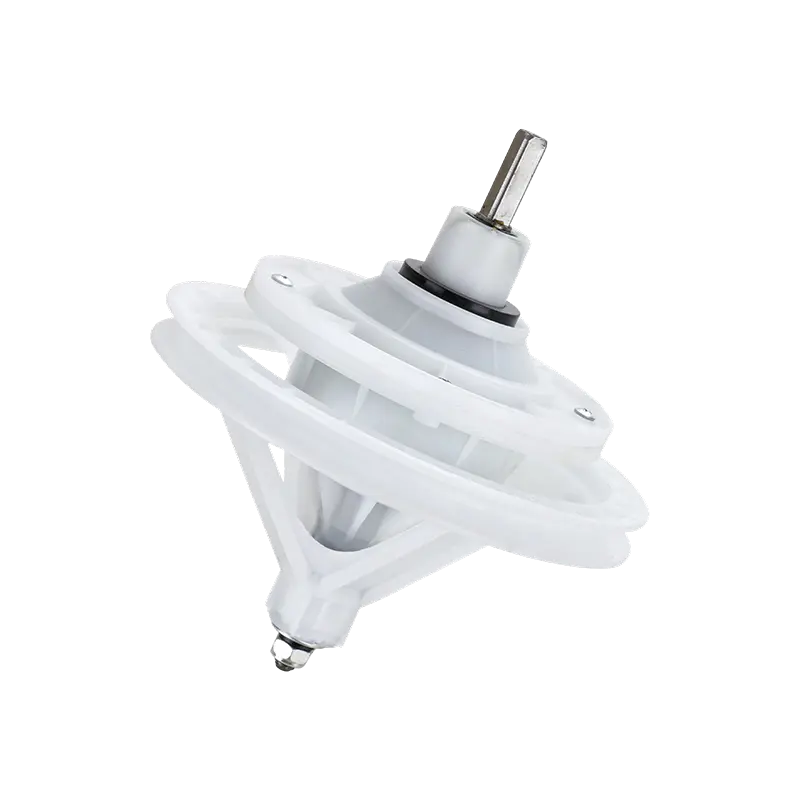
A washing machine transmission parts manufacturer supplies the gearboxes, clutch assemblies, synchronizers, and coupling components that convert motor rotation into the controlled agitation and spin actions a washer needs to clean and dry laundry. Choosing the right transmission part manufacturer and supplier directly affects product lifespan, noise levels, energy efficiency, and warranty costs for OEM production lines and aftermarket repair channels alike. The sections below walk through the common types of washing machine transmission parts, how they are engineered, where each configuration fits best, how the leading options compare, and how to keep them running reliably over time.
Common Types of Washing Machine Transmission Parts and Their Characteristics
A washing machine transmission parts manufacturer typically produces several distinct families of components, each built to manage a different part of the wash-and-spin cycle. Understanding these categories helps OEM engineers and aftermarket buyers match the correct part number to the correct chassis design rather than relying on generic substitutes that may not hold up under repeated cycles.
Gear Reducers
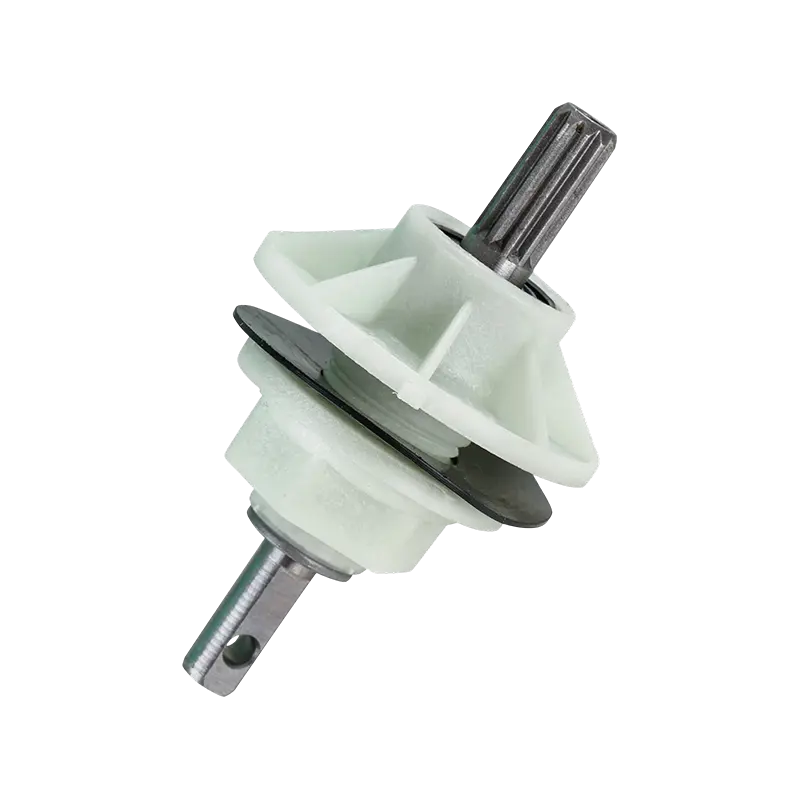
Gear reducers step down the high rotational speed of the drive motor into the lower, higher-torque output needed to turn the agitator or pulsator. In top-load agitator washers, the reducer is usually a planetary or worm-gear assembly housed in a sealed gearbox, lubricated internally to reduce wear on the meshing teeth. A well-manufactured reducer minimizes backlash, which in turn reduces the clicking or knocking noise that consumers commonly report as a transmission fault.
Clutch Assemblies
A clutch assembly engages and disengages torque transfer between the motor and the basket, allowing the machine to switch between the slower agitation phase and the faster spin phase without stalling the motor or damaging the belt. Clutches absorb a large share of mechanical shock during load imbalance, so their friction material and spring tension are engineered specifically for washing machine duty cycles rather than adapted from unrelated automotive parts.
Synchronizers
Synchronizers, sometimes called selector or shift mechanisms, coordinate the timing between the agitate and spin functions so the transmission shifts cleanly between modes as the control board signals a cycle change. In many top-load designs, the synchronizer works alongside the clutch and reducer as a single integrated transmission unit rather than as a standalone part, which is why manufacturers that engineer all three components together tend to produce more consistent shift behavior.
Belt and Pulley Systems
Belt-driven transmissions connect the motor pulley to the transmission input shaft using a reinforced rubber or polyurethane belt. This layout is common in mid-range top-load machines because it is relatively simple to manufacture and service, though belt tension and material composition need to be tightly controlled to avoid slippage under heavy wet-load conditions.
Direct-Drive Couplings
Direct-drive systems, increasingly common in front-load washers, connect the motor directly to the drum shaft through a coupling rather than a belt or multi-stage gearbox. This reduces the number of wear parts but places greater engineering demands on the coupling material and motor control electronics, since the coupling must absorb start-up torque and vibration without the buffering effect a belt or gear train would otherwise provide.
Gear Reducer
High torque output, sealed lubrication, common in agitator top-load models.
Clutch Assembly
Manages torque engagement between agitation and spin phases.
Synchronizer
Times the shift between wash and spin functions.
Belt and Pulley
Simple, serviceable layout for mid-range top-load washers.
Direct-Drive Coupling
Fewer wear parts, common in front-load designs.
Before looking at how these parts distribute across the installed base, it helps to see the relative share each transmission category tends to hold across current top-load and front-load production lines. The figures below are grouped from general industry component surveys rather than tied to any single brand, and they are meant to give a directional sense of scale rather than an exact market count. Reducer-and-clutch combinations still dominate agitator-style washers sold across many regions, while direct-drive couplings continue to gain ground in front-load categories. Belt-driven layouts remain a stable middle tier because they balance manufacturing cost against serviceability. Synchronizer units are counted separately here even though they are frequently bundled into a combined transmission housing.
Approximate distribution of transmission part categories across current household washer production, based on general component industry observation.
Transmission Category
Approximate Share
Gear Reducer
38%
Clutch Assembly
22%
Direct-Drive Coupling
20%
Belt and Pulley
12%
Synchronizer (standalone)
8%
The donut chart above shows that gear reducers still represent the single largest category, which reflects how many agitator-style top-load washers remain in production and in the installed base across various markets. Clutch assemblies come in second, largely because they are used alongside reducers in nearly every agitator design and also appear as a standalone replacement part in aftermarket repair channels. Direct-drive couplings hold a meaningful and growing share, consistent with the broader shift toward front-load and high-efficiency washer platforms in many regions. Belt and pulley systems occupy a smaller but stable slice, since this layout continues to be specified in cost-sensitive mid-tier models where simple servicing is valued. Synchronizers appear as the smallest standalone segment mainly because they are frequently integrated into a combined gearbox-clutch-synchronizer unit rather than sold or replaced separately. For a washing machine transmission parts manufacturer, this distribution suggests that maintaining strong engineering depth in both gear reducers and clutch assemblies covers the largest portion of OEM and aftermarket demand. At the same time, the rising share of direct-drive couplings signals that manufacturers who also invest in coupling material science and vibration-damping design are better positioned for platforms transitioning away from belt-driven layouts. Buyers sourcing components should weigh not only current model requirements but also which category their platform is likely to migrate toward over the next several product generations. This is especially relevant for OEMs planning multi-year platform roadmaps, where a supplier's breadth across categories can reduce the need to re-qualify a new vendor with each redesign.
Key takeaway: Gear reducers and clutch assemblies together account for roughly 60% of installed transmission components, making manufacturing depth in these two categories the most reliable indicator of a supplier's overall capability.
Working Principles and Structural Design of Washing Machine Transmission Systems
A washing machine transmission converts a single motor input into two distinct mechanical outputs: a slow, high-torque oscillating motion for washing and a fast, low-torque rotational motion for spinning. Understanding how this conversion happens structurally helps buyers evaluate whether a given transmission design is appropriate for their chassis and duty cycle.
Input Stage
The input stage receives rotational energy from the drive motor, either through a direct shaft coupling or through a belt-and-pulley reduction. In belt-driven designs, pulley diameter ratios provide an initial speed reduction before the power ever reaches the gearbox housing, which reduces the load the internal gear train needs to handle.
Reduction and Torque Multiplication
Inside the gearbox, a planetary gear set or worm-and-wheel arrangement steps the input speed down further while multiplying torque. Planetary designs distribute load across multiple planet gears simultaneously, which tends to produce smoother operation and longer gear-tooth life compared with a single-mesh gear pair carrying the full load alone.
Mode Selection
A shift fork or solenoid-actuated selector, coordinated by the synchronizer, determines whether output torque is routed to the agitator shaft for washing or to the outer basket for spinning. This mode-selection stage is mechanically one of the more failure-prone areas of a transmission because it experiences repeated engagement cycles, so materials with high fatigue resistance are typically specified here.
Output Stage and Sealing
The output shaft passes through a sealed bearing housing into the wash tub, and the seal quality at this junction determines how well the transmission resists water intrusion over years of operation. Manufacturers that control seal tolerances tightly tend to see fewer warranty claims related to gearbox lubricant contamination or leakage.
Structurally, the housing material also matters. Cast iron housings offer strong vibration damping and long-term dimensional stability under heat cycling, while engineered composite housings reduce weight and cost but require careful reinforcement around mounting points to avoid flexing under peak spin loads. Internal shaft alignment tolerances, bearing preload, and gear-tooth surface finish all interact to determine the noise signature a transmission produces, which is one of the most common quality metrics OEM engineering teams test for during component qualification.
Key takeaway: Consistent gear-tooth finishing, tight seal tolerances, and well-controlled mode-selection engagement are the structural factors that most directly determine a transmission's long-term reliability.
Application Scenarios and Selection Criteria for OEM and Aftermarket Buyers
Selecting the right transmission part depends heavily on the intended washer platform, load capacity, and the buyer's position in the supply chain. OEM production engineers, aftermarket repair distributors, and appliance refurbishers each weigh selection criteria differently.
OEM Production Buyers
Dimensional compatibility with an established chassis and mounting pattern
Consistent lot-to-lot tolerance for high-volume assembly lines
Documented torque and noise test data for design validation
Capacity for custom engineering to match a proprietary drive train
Aftermarket and Repair Buyers
Broad cross-model compatibility to serve multiple washer generations
Availability of individual sub-components rather than full assemblies only
Reliable packaging and labeling for distribution and inventory management
Consistent supply lead times to support repair turnaround commitments
Load capacity is one of the most important selection variables. High-capacity top-load machines designed for large families or commercial laundromat use place substantially higher torque and thermal demands on a gear reducer than a compact single-person unit, so a transmission rated for light residential duty should not be substituted into a heavier-duty chassis even if the mounting dimensions happen to match. Buyers should also account for water and detergent exposure patterns in different regional markets, since hard water conditions can accelerate bearing wear if seal quality is marginal.
Climate and installation environment matter as well. Machines installed in high-humidity coastal regions or in outdoor-adjacent utility spaces benefit from housings and fasteners with additional corrosion resistance, while units destined for high-altitude or cold-climate markets may need lubricants formulated for a wider viscosity range across temperature swings.
To illustrate how load requirements differ across washer categories, the chart below breaks torque demand into three duty bands for four common transmission configurations. This kind of segmentation is useful during the early sourcing stage, since it lets an engineering team quickly rule out mismatched part families before requesting detailed technical drawings. The bands are approximate and intended for directional comparison rather than as certified load ratings. Actual torque requirements will vary by drum size, motor specification, and regional load standards. Reviewing this alongside a platform's target duty cycle helps narrow the shortlist of transmission types worth evaluating in depth.
The stacked bar chart shows that direct-drive couplings carry the widest total torque range across the three load bands, which reflects their common use in larger-capacity front-load platforms designed to run at both gentle and heavy-duty spin speeds. Gear reducers show a fairly even split across light and medium bands, consistent with their traditional role in general-purpose agitator washers rather than at the extreme ends of the capacity spectrum. Belt-drive systems display a comparatively lower total torque ceiling, reinforcing why this layout is more often specified for compact or mid-tier residential units rather than heavy-duty commercial machines. Clutch-only configurations, where the clutch works with a simpler reduction stage rather than a full planetary gearbox, show the narrowest overall band, which lines up with their typical use in lighter washer segments. Reading across the medium-load band in particular is useful for sourcing teams, since most mainstream residential washers fall into this middle category and the chart shows all four transmission types have at least some presence there. This means the medium band is the most competitive zone for supplier comparison, while the light and heavy bands tend to favor a narrower set of specialized configurations. For OEM engineers evaluating a new platform, cross-referencing the expected duty cycle against these bands early in the design process can reduce the number of physical prototype iterations needed before settling on a final transmission family. Aftermarket buyers can use the same logic in reverse, identifying which transmission category a given washer model most likely uses based on its published capacity and spin speed rating when original documentation is unavailable.
Key takeaway: Direct-drive couplings and gear reducers both cover the widest practical torque range, making them the two categories most worth evaluating first for platforms spanning multiple capacity tiers.
Detailed Comparison of Washing Machine Transmission Part Configurations
Each transmission configuration involves trade-offs between manufacturing cost, mechanical complexity, serviceability, and noise performance. The table below summarizes these trade-offs across the four main categories discussed in this article.
General comparison of washing machine transmission configurations across common evaluation criteria.
Criteria
Gear Reducer
Belt Drive
Direct-Drive
Mechanical Complexity
Moderate to High
Low
Moderate
Typical Wear Points
Gear teeth, seals
Belt tension, pulley
Coupling, bearings
Serviceability
Moderate
High
Lower
Typical Application
Top-load agitator
Mid-tier top-load
Front-load, HE models
Noise Characteristics
Low to moderate hum
Moderate, belt slip risk
Low, motor-dependent
Durability testing over successive product generations offers another useful comparison lens, since manufacturing process improvements tend to show up as extended time-to-failure results in accelerated life testing. The chart below traces average tested operating hours across four generations of a representative gear reducer design, drawn from general accelerated-life testing practices reported across the appliance component industry rather than any single lab's proprietary results. Improvements in this kind of testing typically come from refinements in gear-tooth surface treatment, bearing selection, and lubricant formulation rather than a single breakthrough change. Reading the trend line helps illustrate how incremental manufacturing refinement compounds over multiple design cycles. It also gives buyers a frame of reference when comparing a supplier's stated testing hours against general industry norms.
The area chart shows a clear upward trend in average tested operating hours from Generation 1 through Generation 4, moving from roughly 3,000 hours to close to 8,500 hours in accelerated testing conditions. This kind of progression is consistent with what general industry reporting describes as steady rather than sudden improvement, since each generation typically incorporates a small number of targeted changes rather than a wholesale redesign. The steepest gain appears between Generation 2 and Generation 3, which often corresponds to a period where a manufacturer adopts an improved surface hardening process or upgrades bearing grade rather than changing the fundamental gear geometry. The gap between Generation 3 and Generation 4 narrows slightly in relative terms, suggesting that returns on further refinement can diminish once a design has already addressed its most significant wear points. For buyers, this trend underscores the value of asking a prospective supplier not just for a single durability figure but for a testing history that shows whether their manufacturing process has been improving consistently over time. A flat or declining trend across generations can be a signal worth investigating further, while a steady upward curve like the one shown here is generally viewed as a positive indicator of ongoing process investment. It is worth noting that accelerated testing hours are a laboratory proxy and do not translate directly into real-world years of service, since actual field life depends heavily on water quality, load patterns, and maintenance practices in the field.
Key takeaway: A supplier's multi-generation durability testing trend is often a more informative signal of manufacturing quality than a single durability figure taken in isolation.
Maintenance Guidance for Washing Machine Transmission Parts
Even well-manufactured transmission parts benefit from routine attention, and understanding the early signs of wear helps both service technicians and appliance owners avoid a full transmission replacement when a smaller repair would suffice.
Listen for changes in operating noise, since a shift from a smooth hum to grinding or clicking during the agitation phase often indicates early gear-tooth wear rather than a sudden failure.
Check belt tension and surface condition on belt-driven models regularly, as glazing or cracking on the belt surface reduces grip and can cause slower spin speeds before the belt fully fails.
Inspect for lubricant leakage around the gearbox output shaft seal, since a small amount of oil residue on the transmission housing is often the earliest visible sign of seal degradation.
Verify that the machine shifts cleanly between wash and spin modes, since a hesitant or incomplete shift usually points to wear in the synchronizer or shift-fork mechanism rather than the motor itself.
Confirm that mounting bolts and vibration dampers remain properly torqued, because excessive transmission movement during operation accelerates wear on every downstream component.
Avoid consistently overloading the drum beyond its rated capacity, since repeated overload cycles place cumulative stress on gear teeth and clutch friction surfaces well before their expected service interval.
For repair technicians working across multiple washer brands, keeping a small inventory of commonly replaced sub-components such as clutch friction bands, coupling inserts, and shift-fork springs can reduce turnaround time considerably compared with waiting on a full assembly replacement. Where a manufacturer offers individually packaged sub-components rather than only complete transmission units, aftermarket repair channels generally find it easier to match the right part to the specific failure mode observed during diagnosis.
Mechanical efficiency is another useful reference point when evaluating whether a transmission is performing within its expected range. The gauge below illustrates a general benchmark efficiency rating that well-optimized gear reducer designs tend to achieve in standard testing, factoring in friction losses through the gear mesh and seal drag. Efficiency figures like this are typically reported by component testing labs as a percentage of input torque successfully transferred to the output shaft under a defined load. A transmission operating meaningfully below this benchmark after a period of service may be signaling internal wear worth investigating during routine maintenance. This benchmark is intended as a general reference rather than a guaranteed specification for any individual product.
The gauge shows a typical mechanical efficiency benchmark of around 92% for a well-optimized gear reducer under standard load testing, meaning a small remaining share of input torque is lost to friction, seal drag, and minor internal clearances rather than being delivered to the output shaft. Efficiency in this range is generally considered strong for a multi-stage reduction system, since each additional gear mesh or bearing introduces a small incremental loss. Reaching this level consistently across a production run depends heavily on tight control of gear-tooth surface finish and correct lubricant viscosity, both of which are manufacturing process variables rather than one-time design choices. A drop in measured efficiency over time in a field unit is often one of the earliest quantifiable signs of internal wear, even before it becomes audible as noise. For OEM quality teams, tracking efficiency across incoming component batches can serve as an early warning system for manufacturing process drift at a supplier's facility. For repair technicians, a bench test showing efficiency well below this general benchmark on a returned unit can help confirm that a transmission replacement, rather than a more minor repair, is the appropriate next step. It is worth noting that efficiency benchmarks can vary somewhat by transmission type and load condition, so this figure should be treated as a general point of reference for gear reducer designs specifically rather than applied uniformly across belt-driven or direct-drive systems.
Key takeaway: Monitoring mechanical efficiency alongside noise and visual inspection gives technicians an earlier, more measurable signal of transmission wear than relying on audible symptoms alone.
Industry Trends in Washing Machine Transmission Part Manufacturing
Several broader trends are shaping how transmission components are designed and sourced across the appliance manufacturing industry. Understanding these trends helps buyers anticipate where their sourcing strategy may need to adapt over the coming product cycles.
First, the continued shift toward front-load and direct-drive platforms in many regional markets is gradually reducing reliance on belt-driven transmissions in new product development, even as belt-driven designs remain common in existing production lines and in cost-sensitive market segments. Second, motor control electronics are taking on a larger share of the work previously handled by purely mechanical shift mechanisms, with variable-frequency motor control allowing some direct-drive platforms to manage speed transitions electronically rather than through a mechanical synchronizer. This does not eliminate the need for precision mechanical components, but it does shift some engineering emphasis toward coupling durability and vibration management rather than gear-train complexity.
Third, sourcing teams are increasingly evaluating suppliers on manufacturing consistency and testing transparency rather than on price alone, particularly for OEM programs where warranty cost exposure over a multi-year product lifecycle can outweigh modest per-unit cost differences. Fourth, sub-component modularity, where a transmission is designed so that individual wear parts can be replaced without swapping the entire assembly, continues to gain relevance in markets where repairability and reduced service cost are valued by both distributors and end consumers.
These trends favor manufacturers with broad engineering capability across multiple transmission families rather than those specialized narrowly in a single legacy design. Founded in 2002, Cixi Gaite Electric Co., Ltd. is a China washing machine transmission parts manufacturer and custom washing machine transmission parts supplier based in Ningbo, Zhejiang. The company focuses on the research, development, and manufacturing of core washing machine transmission components, including gear reducers and synchronizers, supplying both OEM production programs and aftermarket repair channels. Operating a production base of approximately 10,000 square meters, the company has built stable production capacity supported by established manufacturing processes, and continues to refine product performance and structural design with the goal of providing cost-effective component solutions across its transmission part product range.
Key takeaway: Sourcing strategies that favor suppliers with broad transmission engineering capability and transparent testing practices are better positioned to adapt as washer platforms continue shifting toward direct-drive and electronically managed designs.
Frequently Asked Questions About Washing Machine Transmission Parts
What does a washing machine transmission parts manufacturer typically supply?
A washing machine transmission parts manufacturer typically supplies gear reducers, clutch assemblies, synchronizers, belt-and-pulley components, and direct-drive couplings, either as complete transmission assemblies for OEM production or as individual sub-components for aftermarket repair.
How do I know which transmission type fits my washer platform?
Matching the correct transmission type depends primarily on whether the platform is top-load or front-load, its rated load capacity, and its expected torque profile across wash and spin cycles, all of which should be cross-checked against a supplier's technical specifications before final selection.
What causes a washing machine transmission to become noisy over time?
Noise typically develops from gradual gear-tooth wear, reduced lubricant effectiveness, or increasing clearance in bearing surfaces, and it often appears before any complete mechanical failure, making it a useful early warning sign during routine inspection.
Can a custom washing machine transmission parts supplier engineer parts for a proprietary design?
Many manufacturers with in-house research and development capability can engineer transmission components to match a proprietary chassis or drive train specification, provided the buyer supplies detailed dimensional and load requirement documentation during the sourcing stage.
How often should washing machine transmission parts be inspected?
While transmission parts are generally designed for long service intervals without routine disassembly, a visual and audible inspection during any general appliance service call is a reasonable practice, and closer inspection is warranted whenever unusual noise, incomplete cycle shifts, or leakage is observed.
Why do direct-drive systems have fewer transmission parts than agitator washers?
Direct-drive systems connect the motor to the drum through a single coupling rather than a multi-stage gear train, which reduces part count and potential wear points, though it places greater engineering demand on the coupling material and the motor's electronic speed control.

 English
 عربى
عربى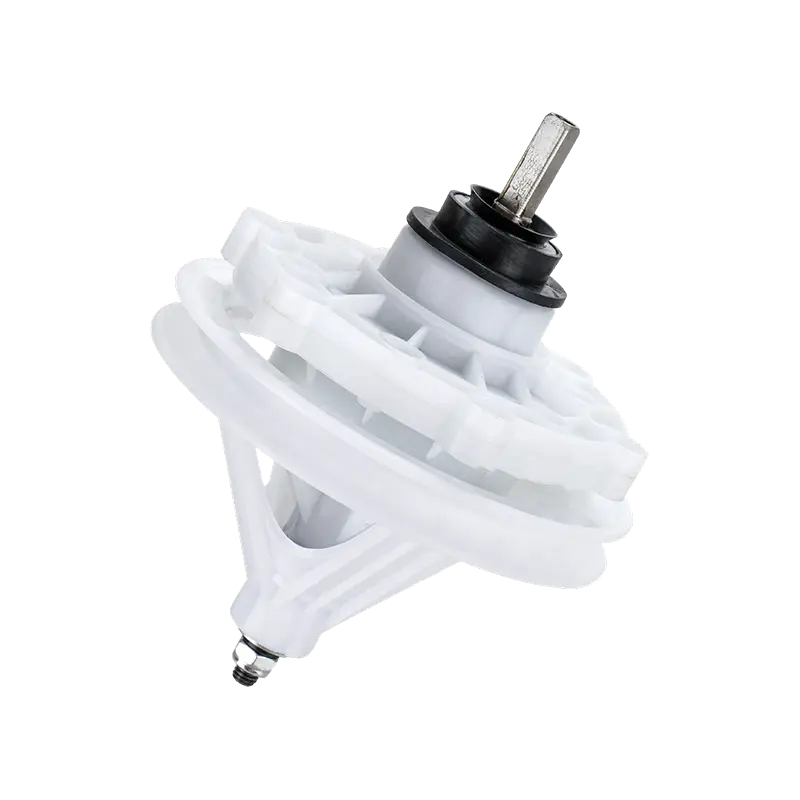


 +86-15867503650
+86-13884478959
+86-15867503650
+86-13884478959  gaite03@gaite.cn
gaite02@gaite.cn
gaite03@gaite.cn
gaite02@gaite.cn  No. 208 Miaoshan Road, Shiyan Village, Henghe Town, Cixi City, Ningbo City, Zhejiang Province, China