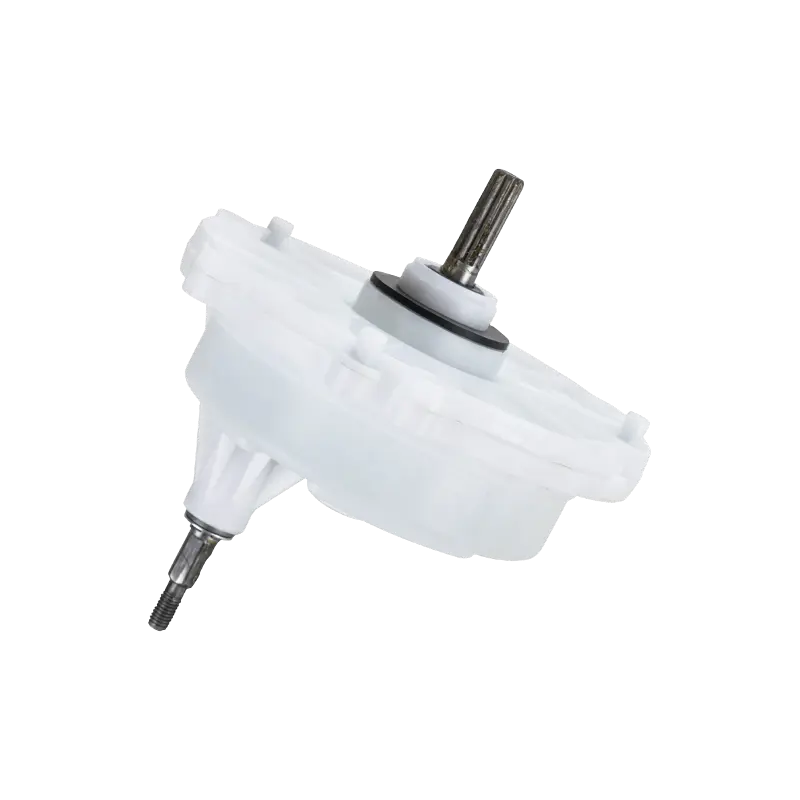
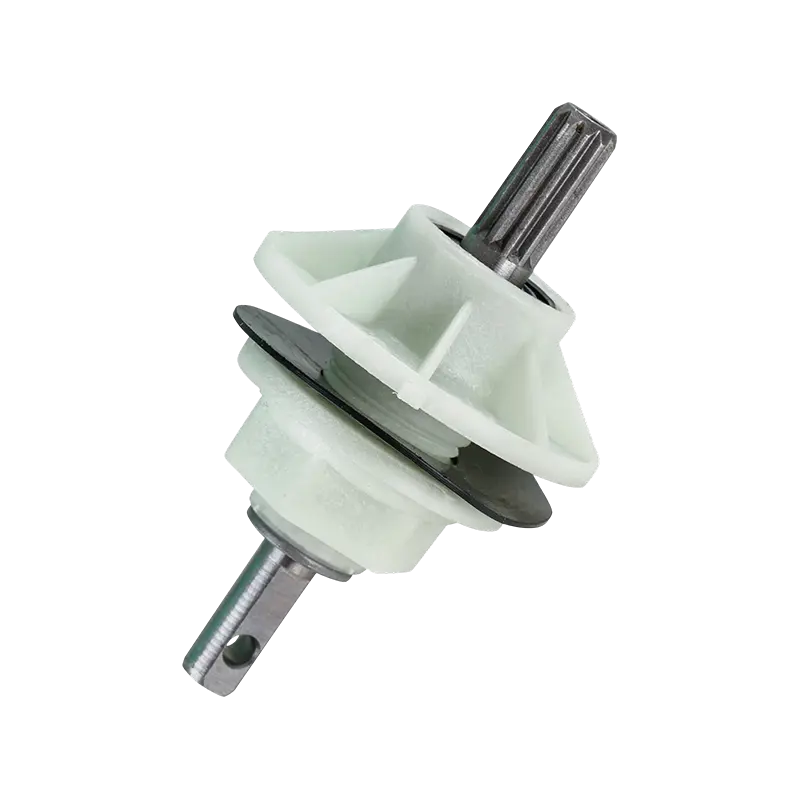
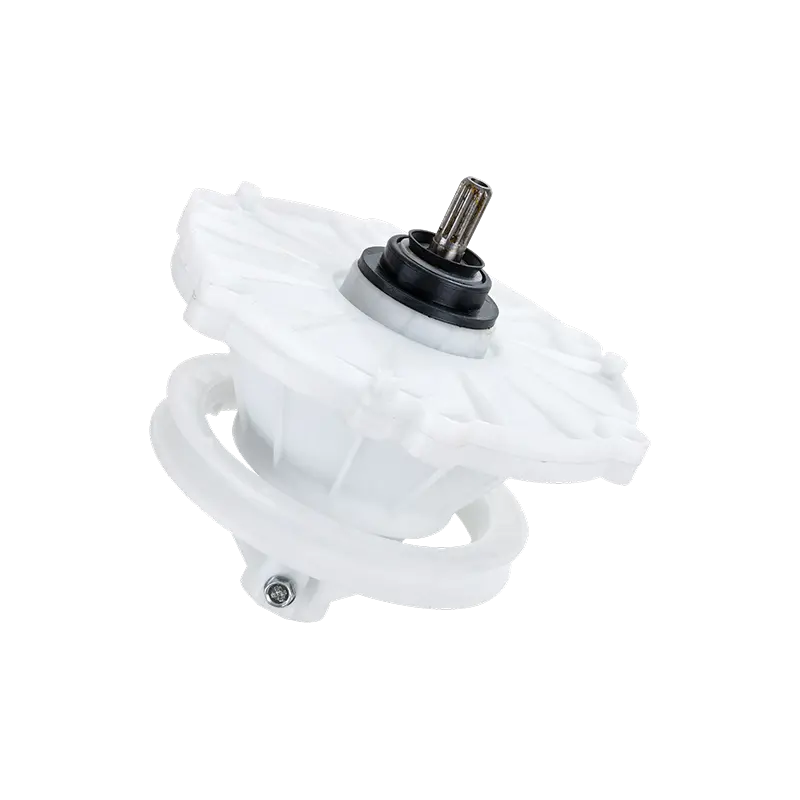
A washing machine gearbox manufacturer supplies the sealed gear reduction unit that converts a motor's high-speed rotation into the slower, higher-torque motion needed to turn an agitator or pulsator, and choosing the right gearbox manufacturer and supplier depends primarily on gear type, torque rating, and sealing quality rather than on price alone. The right gearbox directly affects wash performance, noise level, and long-term reliability, which is why OEM engineering teams and aftermarket distributors both evaluate gearbox suppliers on manufacturing consistency as much as on unit specifications. The sections below cover the common gearbox types on the market, how they are structurally built, where each type fits best, how they compare against one another, and how to keep a gearbox running reliably through its service life.
Common Types of Washing Machine Gearboxes and Their Characteristics
A washing machine gearbox manufacturer typically produces several gear-train configurations, each suited to a different balance of torque output, noise level, and manufacturing cost. Recognizing these categories helps buyers avoid specifying a gearbox that is mechanically mismatched to its target chassis.
Planetary Gearboxes
Planetary gearboxes distribute load across three or more planet gears meshing simultaneously with a central sun gear, which spreads torque evenly and reduces stress concentration on any single tooth contact point. This configuration is widely used in mid-to-large capacity top-load agitator washers because it delivers strong torque density in a compact housing while maintaining relatively smooth, low-vibration operation.
Worm Gearboxes
A worm gearbox uses a screw-shaped worm gear meshing with a wheel gear to achieve a large single-stage reduction ratio, making it useful where a compact gearbox needs to deliver a significant speed reduction in one mesh rather than through multiple gear stages. Worm gearboxes also offer a degree of self-locking behavior, which can help prevent back-driving of the output shaft when the motor is not powered.
Helical Gearboxes
Helical gear teeth are cut at an angle rather than straight across the gear face, which allows more teeth to remain in contact at any given moment compared with a spur gear. This gradual tooth engagement reduces impact loading and produces a noticeably quieter operation, which is one reason helical gear stages are frequently specified in the input stage of a multi-stage washing machine gearbox where noise reduction matters most.
Spur Gearboxes
Spur gearboxes use straight-cut teeth and represent the simplest and most cost-efficient gear configuration to manufacture. While they tend to generate more operating noise than helical designs at comparable load, their straightforward geometry makes them easier to manufacture to tight tolerance and easier to service, which keeps them relevant in cost-sensitive gearbox segments.
Combination Multi-Stage Gearboxes
Many washing machine gearboxes on the market are not built from a single gear type but combine stages, for example, a helical input stage feeding into a planetary output stage. This layered approach lets a manufacturer tune noise, torque, and size independently at each stage rather than compromising all three properties within a single gear type.
Planetary
High torque density, compact housing, smooth load distribution.
Worm
Large single-stage reduction, natural self-locking behavior.
Helical
Gradual tooth engagement, quieter running under load.
Spur
Simple geometry, cost-efficient, easier to service.
Multi-Stage Combination
Blends stages to tune noise, torque, and size independently.
Torque capacity is one of the clearest ways to differentiate these gearbox types when narrowing a sourcing shortlist. The chart below lays out an approximate maximum continuous torque range for each gearbox category based on general mechanical component references rather than any single manufacturer's proprietary rating. These ranges are meant to guide early-stage comparison rather than serve as a certified specification for any particular unit. Reviewing torque range alongside expected drum capacity is one of the fastest ways to eliminate poorly matched gearbox categories before requesting detailed engineering drawings. It also helps explain why certain gearbox types cluster around specific washer segments rather than appearing evenly across the entire market.
The horizontal bar chart shows planetary and multi-stage combination gearboxes sitting at the higher end of the approximate torque range, which lines up with their common use in larger-capacity top-load washers designed for heavier wet-load conditions. Worm gearboxes occupy a medium-to-high band as well, reflecting how a single large-ratio mesh can deliver substantial torque multiplication even without the multi-planet load sharing found in a planetary design. Helical gearboxes cluster in the middle of the range, which is consistent with their frequent role as a quieter input stage rather than as the sole torque-carrying element in a design. Spur gearboxes sit at the lower end of the comparison, matching their common use in smaller-capacity or lower-cost washer segments where a simple straight-cut gear pair provides sufficient reduction without added manufacturing complexity. This pattern generally aligns with how the industry segments gearbox specification by washer capacity tier, with entry-level machines favoring simpler, lower-torque gear trains and larger-capacity or commercial-adjacent machines favoring planetary or multi-stage designs. For an OEM sourcing team, this comparison is a useful first filter, since it narrows the realistic gearbox category options before torque calculations specific to a given drum size and motor rating are performed. Aftermarket buyers can use a similar logic when trying to identify a probable gearbox category for an unfamiliar washer model based on its published capacity rating. It is worth remembering that actual torque delivery also depends on gear material, heat treatment, and manufacturing tolerance, so two gearboxes in the same category from different manufacturers will not necessarily perform identically under sustained load.
Key takeaway: Planetary and multi-stage combination gearboxes generally offer the highest torque capacity, making them the primary categories worth evaluating for larger-capacity or heavy-duty washer platforms.
Working Principles and Structural Design of Washing Machine Gearboxes
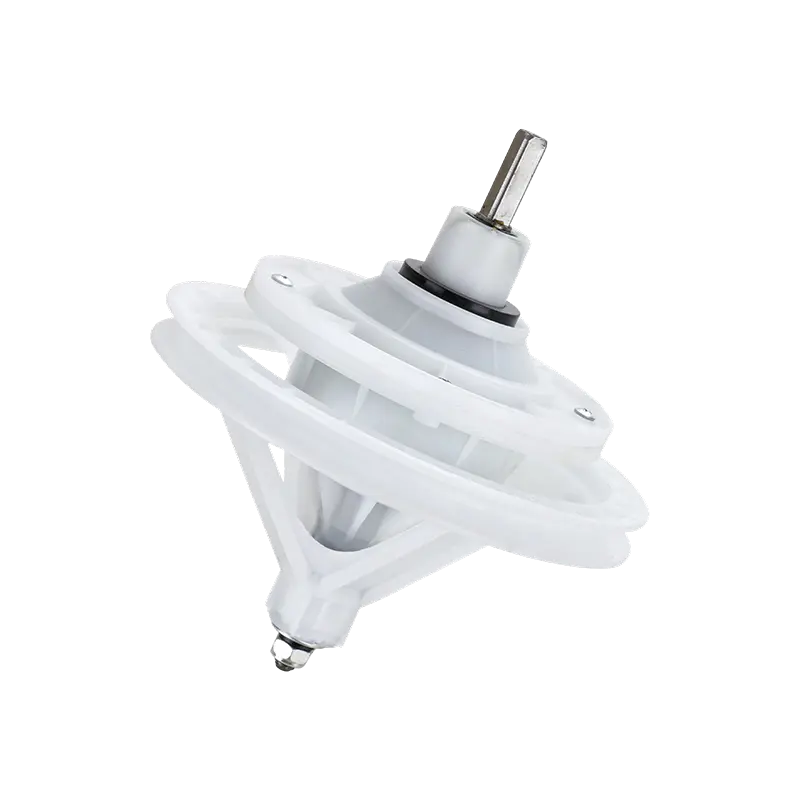
A washing machine gearbox performs its reduction function through a sealed housing containing one or more meshing gear stages, a lubricant reservoir, and an output shaft that connects to the agitator or basket drive. Understanding the internal structure clarifies why certain manufacturing tolerances matter more than others.
Housing and Sealing
The gearbox housing is typically cast from a durable polymer composite or metal alloy and is designed to hold internal lubricant in place while resisting water ingress from the wash tub side. The output shaft seal is one of the most critical structural elements, since a compromised seal allows either lubricant to escape or water to enter the gear cavity, both of which accelerate wear significantly.
Gear Train Arrangement
Depending on the gearbox category, the internal gear train may consist of a single meshing pair, as in a basic worm or spur design, or multiple stages arranged in series, as in a multi-stage combination gearbox. Each additional stage introduces a further speed reduction and torque increase, but also adds another point of potential backlash and another bearing surface that must be lubricated and aligned correctly.
Bearing and Shaft Support
Input and output shafts are supported by bearings pressed into the housing, and the precision of this bearing seat directly affects shaft alignment across the gear mesh. Even small misalignment can cause uneven load distribution across gear-tooth width, leading to localized wear and premature noise development well before the gearbox reaches its rated service life.
Lubrication System
Most washing machine gearboxes use a semi-fluid or grease-based lubricant sealed within the housing for the unit's expected service life rather than a serviceable oil-fill system. The lubricant's viscosity grade and thermal stability need to be matched to the gearbox's expected operating temperature range, since lubricant breakdown under sustained heat is one of the more common root causes of premature gear wear identified during failure analysis.
Manufacturing process control plays a large role in how consistently these structural elements come together across a production run. Gear-tooth surface finish, achieved through hobbing, shaving, or grinding processes depending on the required precision grade, determines how smoothly two gears mesh together and how much heat is generated through friction during operation. Housing dimensional consistency, particularly around bearing bores and seal seats, needs to be controlled within tight tolerance bands to ensure that every unit off the line performs consistently rather than only the units that happen to fall within a favorable tolerance stack-up.
Key takeaway: Seal integrity, bearing alignment precision, and consistent gear-tooth surface finish are the structural factors that most reliably separate a durable gearbox from one prone to early wear.
Application Scenarios and Selection Criteria for Washing Machine Gearbox Buyers
Gearbox selection differs meaningfully depending on whether the buyer is an OEM production engineer specifying a component for a new platform or an aftermarket distributor sourcing a replacement part for an existing installed base.
OEM Selection Priorities
Torque and speed ratio matched precisely to motor output and drum load design
Mounting geometry compatible with the target chassis without redesign
Documented noise and vibration data for design validation testing
A gearbox manufacturer capable of custom engineering for a proprietary platform
Aftermarket Selection Priorities
Cross-model compatibility across multiple washer generations
A gearbox supplier with consistent lead times to support repair schedules
Clear part identification to reduce mismatched replacement errors
Packaging suited to distribution and warehouse handling at volume
Duty cycle intensity is another major selection factor. A gearbox destined for a household machine that runs a handful of cycles per week experiences a very different cumulative load profile than one destined for a shared-laundry or light commercial setting running multiple cycles per day, and specifying the same gearbox for both applications without adjusting for duty cycle can shorten service life considerably in the higher-use scenario. Regional water hardness is also worth factoring into gearbox seal material selection, since mineral buildup around a seal interface can accelerate wear in hard-water regions compared with softer-water markets.
Buyers should also weigh how a gearbox integrates with the rest of the transmission system. A gearbox that pairs cleanly with an existing clutch and synchronizer assembly reduces the integration risk of a platform redesign, which is why many OEM programs prefer working with a gearbox manufacturer that also has engineering familiarity with the broader transmission system rather than one that only produces the gearbox in isolation.
Adoption patterns for different gearbox types have also shifted over recent washer generations as manufacturing processes and platform designs have evolved. The line chart below traces the approximate relative adoption trend of planetary gearboxes against simpler spur gearboxes across four general washer product generations, based on broad industry observation of component specification trends rather than a single company's sales data. These figures are directional and intended to illustrate a trend rather than serve as a precise market count. Viewing the two trend lines together helps explain why gearbox manufacturers with strong planetary gear manufacturing capability have become increasingly relevant to OEM sourcing decisions over time.
The line chart illustrates a steady upward trend in relative planetary gearbox adoption across the four generations shown, moving from a smaller starting share to a clear majority position by the most recent generation, while spur gearbox adoption follows a corresponding downward trend over the same period. This crossover pattern is consistent with broader appliance industry commentary describing a gradual shift toward higher-torque-density, quieter-running gear trains as consumer expectations around noise and washer capacity have increased. The two lines cross somewhere between Generation 2 and Generation 3, suggesting that this was a period when planetary designs moved from a premium or high-capacity niche into more mainstream specification. Spur gearboxes have not disappeared from the trend, and their continued presence in the more recent generations reflects their ongoing relevance in cost-sensitive or compact washer segments rather than a wholesale replacement across the entire market. For a gearbox manufacturer, this trend supports continued investment in planetary gear manufacturing precision, since demand in this category appears to be the more durable growth direction rather than a short-term shift. For OEM sourcing teams evaluating a new platform, this trend is a useful data point when deciding whether to specify a legacy spur gearbox for cost reasons or to plan a transition toward planetary designs to align with where the broader market has been moving. It also suggests that a supplier maintaining strong capability across both categories is better positioned to serve a diverse customer base spanning multiple washer tiers simultaneously.
Key takeaway: Planetary gearbox adoption has trended steadily upward relative to simpler spur designs across recent washer generations, making planetary manufacturing capability an increasingly important supplier evaluation criterion.
Detailed Comparison of Washing Machine Gearbox Types
The table below summarizes how the four primary gearbox categories compare across the criteria most relevant to sourcing decisions, followed by a visual comparison across four performance dimensions.
General comparison of washing machine gearbox types across common sourcing criteria.
Criteria
Planetary
Worm
Helical
Spur
Noise Level
Low
Moderate
Low
Moderate-High
Torque Density
High
Medium-High
Medium
Low-Medium
Manufacturing Complexity
Higher
Moderate
Moderate
Lower
Typical Application
Mid-large top-load
Compact reduction needs
Quiet input stage
Entry-level washers
To compare these gearbox types across several performance dimensions at once, the radar chart below plots noise control, torque density, serviceability, and manufacturing simplicity for planetary and spur gearboxes side by side. These two categories were selected for the radar comparison because they represent the widest practical contrast in design philosophy among the four gearbox types discussed. The scoring shown is a general directional rating drawn from typical mechanical characteristics of each gear type rather than a certified test result for any specific product. Viewing multiple dimensions together, rather than a single torque or noise figure in isolation, gives a more complete picture of the trade-offs a sourcing team is actually making. It also highlights that no single gearbox type scores highest across every dimension simultaneously, which is precisely why gearbox category selection depends on which dimension matters most for a given platform.
The radar chart shows planetary gearboxes extending further along the noise control and torque density axes, reflecting their multi-planet load-sharing design and generally smoother running characteristics, while pulling back somewhat on the manufacturing simplicity axis because the additional gear components and precision alignment requirements add process steps compared with a single gear pair. Spur gearboxes show the opposite pattern, extending further along manufacturing simplicity and serviceability while scoring lower on noise control and torque density, consistent with their straightforward tooth geometry and easier disassembly for repair. Neither shape fully encloses the other, which visually reinforces that gearbox selection is a trade-off exercise rather than a search for a single universally superior category. For platforms where washer noise rating is a key marketing and compliance consideration, the chart supports leaning toward planetary designs despite their added manufacturing complexity. For platforms where cost control and field serviceability are the dominant priorities, the chart supports a continued role for spur gearboxes, particularly in markets where local repair technicians value straightforward disassembly. Reading the two shapes together also suggests that a hybrid approach, using a multi-stage gearbox that borrows favorable characteristics from more than one gear type, can be a reasonable middle path for platforms that cannot fully commit to either extreme. This is part of why combination gearboxes have grown as a distinct category rather than remaining a rare configuration.
Key takeaway: Planetary gearboxes lead on noise control and torque density while spur gearboxes lead on manufacturing simplicity and serviceability, making the choice between them a direct trade-off rather than a clear-cut default.
Maintenance Guidance for Washing Machine Gearboxes
Because most washing machine gearboxes are sealed units rather than field-serviceable assemblies, maintenance generally focuses on early detection of wear signs rather than routine internal servicing.
Monitor for a shift from smooth operating hum to grinding, whining, or clicking noise, which often signals early gear-tooth wear or bearing degradation before a complete failure occurs.
Check the exterior of the gearbox housing periodically for lubricant seepage around the output shaft seal, since even minor residue can indicate a developing seal leak.
Watch for reduced agitation force or inconsistent spin speed, which can point to internal gear slippage or wear rather than an unrelated motor or control board issue.
Ensure the washer is level and properly mounted, since excessive vibration transmitted through an unstable installation accelerates bearing and gear-tooth wear over time.
Avoid habitually overloading the drum beyond its rated capacity, as sustained overload cycles place cumulative stress on the gear train well before the gearbox reaches its expected service interval.
When a replacement becomes necessary, match the gearbox not only by physical dimension but also by torque and speed rating to avoid introducing a mismatch that shortens the life of the new unit.
For repair technicians and aftermarket distributors, working with a gearbox supplier that provides clear failure-mode documentation alongside replacement units can meaningfully shorten diagnostic time, since technicians can compare observed symptoms against known common failure patterns for a specific gearbox family rather than relying solely on trial-and-error replacement.
Different usage conditions place different amounts of stress on a gearbox, and visualizing this relationship helps explain why the same gearbox model can show very different service lives across installations. The heatmap below illustrates a general relative wear-risk pattern across three usage intensity levels and three water hardness conditions, based on broad mechanical wear principles rather than a specific laboratory dataset. This kind of visualization is useful for maintenance planning because it highlights combinations of conditions that warrant more frequent inspection rather than treating every installation identically.
The heatmap shows relative wear risk increasing along two directions at once, moving toward the bottom-right corner as both usage intensity and water hardness rise, with the combination of heavy use and hard water showing the highest relative risk category among the nine combinations charted. The top-left cell, representing light use paired with soft water, shows the lowest relative risk, which aligns with general expectations that a gearbox operating under gentle load and cleaner water conditions experiences the fewest total wear-inducing cycles combined with the least mineral-related seal stress. Moving across any single row from light to heavy use shows a clear stepped increase in relative risk, reinforcing that duty cycle intensity alone is a meaningful predictor of gearbox wear independent of water quality. Similarly, moving down any single column from soft to hard water shows a comparable stepped increase, indicating that water hardness contributes its own independent wear pressure primarily through accelerated seal and bearing surface degradation. The middle band of the heatmap, covering moderate combinations of use and water hardness, represents the situation most residential installations likely fall into, which is why this middle band is often the most useful reference point for setting a general inspection interval recommendation. Installations falling into the higher-risk cells, such as shared-laundry settings in hard-water regions, may benefit from more frequent listening and visual inspection checks than the general guidance would suggest for a typical single-household installation. This kind of visualization also supports a practical sourcing conversation with a gearbox manufacturer, since buyers operating in known hard-water or heavy-use markets can specifically request seal materials or lubricant formulations suited to those elevated-risk conditions rather than defaulting to a standard specification designed around average use.
Key takeaway: Gearbox wear risk rises with both usage intensity and water hardness, so installations combining heavy use with hard water conditions warrant more frequent inspection than average residential use.
Industry Trends in Washing Machine Gearbox Manufacturing
Several developments are shaping how washing machine gearboxes are designed and sourced across the appliance manufacturing industry, and understanding them helps buyers plan ahead rather than reacting to supplier availability alone.
As noted in the adoption trend discussed earlier in this article, planetary gear architecture has been steadily gaining specification share relative to simpler spur designs, driven largely by consumer expectations around quieter operation and by washer platforms trending toward larger drum capacities that demand higher torque density in a similarly sized housing. This shift has pushed gearbox manufacturers to invest further in precision gear-cutting processes such as shaving and grinding, since planetary designs are more sensitive to tooth-form accuracy across multiple simultaneously meshing gears than a simpler single-pair gear stage.
Material science is another active area of development, particularly around seal compounds engineered to resist a wider range of water hardness and detergent chemistry without sacrificing sealing flexibility over years of thermal cycling. Manufacturers are also increasingly asked to provide structured durability and efficiency testing data rather than a single headline specification, reflecting a broader shift among OEM sourcing teams toward evaluating suppliers on demonstrated manufacturing consistency rather than marketing claims alone.
Founded in 2002, Cixi Gaite Electric Co., Ltd. is a China washing machine gearbox manufacturer and custom washing machine gearbox supplier based in Ningbo, Zhejiang. The company concentrates on the research, development, and manufacturing of core washing machine transmission components, including gear reducers and synchronizers, supplying both OEM production programs and aftermarket repair channels. Operating a production base of approximately 10,000 square meters supported by stable production capacity and established manufacturing processes, the company continues to refine gearbox performance and structural design with the aim of delivering cost-effective component solutions across its product range.
Key takeaway: Continued movement toward planetary gear architecture and more rigorous supplier testing transparency are the two trends most likely to shape gearbox sourcing decisions over the next several product generations.
Frequently Asked Questions About Washing Machine Gearboxes
What does a washing machine gearbox manufacturer typically produce?
A washing machine gearbox manufacturer typically produces planetary, worm, helical, spur, and multi-stage combination gearbox units, supplying either complete gearbox assemblies for OEM production or individual replacement units for aftermarket repair.
How do I choose between a planetary and a spur gearbox?
The choice generally comes down to priorities: planetary gearboxes offer higher torque density and quieter operation, while spur gearboxes offer simpler manufacturing and easier field servicing, so the better fit depends on whether noise performance or cost and repairability matter more for a given platform.
What are the early warning signs of a failing washing machine gearbox?
Common early signs include a shift from smooth hum to grinding or whining noise, lubricant residue near the output shaft seal, reduced agitation force, or inconsistent spin speed, any of which warrant closer inspection before a complete failure occurs.
Can a custom washing machine gearbox supplier engineer a unit for a proprietary chassis?
Manufacturers with in-house research and development capability can generally engineer a gearbox to match a proprietary mounting pattern, torque requirement, and speed ratio, provided the buyer supplies detailed dimensional and load specifications during the sourcing process.
Does water hardness really affect washing machine gearbox lifespan?
Water hardness can contribute to accelerated seal and bearing surface wear over time through mineral buildup around sealing interfaces, which is why gearboxes installed in hard-water regions may benefit from more frequent inspection compared with soft-water installations under otherwise similar usage.
Are washing machine gearboxes designed to be repaired internally or only replaced as a unit?
Most washing machine gearboxes are sealed at manufacture and are not designed for internal servicing, which is why maintenance generally focuses on early symptom detection and, once meaningful wear is confirmed, full unit replacement rather than internal repair.

 English
 عربى
عربى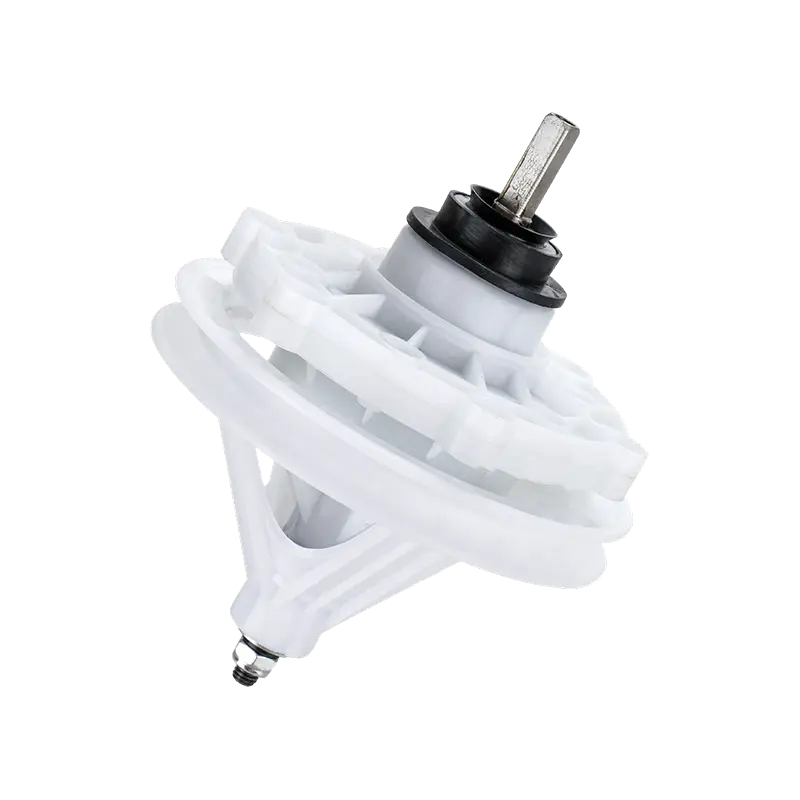


 +86-15867503650
+86-13884478959
+86-15867503650
+86-13884478959  gaite03@gaite.cn
gaite02@gaite.cn
gaite03@gaite.cn
gaite02@gaite.cn  No. 208 Miaoshan Road, Shiyan Village, Henghe Town, Cixi City, Ningbo City, Zhejiang Province, China