A service technician hears a low hum, sees a drum that will not turn, and hears the customer say the motor is dead. The washing machine stator is often the first suspect, and it deserves attention, but it is rarely the only part to check. The practical conclusion is simple: test the stator and its control signal first, then verify the mechanical drive path, including the gearbox, P-shaft, synchronizer, clutch assembly, and drive shaft, before approving a replacement. A stator that tests within specification can still sit in a machine that fails because the load side is binding, misaligned, or worn.
For OEM buyers and aftermarket distributors, that conclusion changes the sourcing brief. A washing machine stator supplier may deliver a perfectly good electrical assembly, but the machine still needs a washing machine parts manufacturer who can hold tolerances on the mechanical parts that receive the motor torque. Cixi Gaite Electric Co., Ltd., based in Ningbo, China, works on that mechanical side of the drive system: washing machine gearboxes, gear reducers, synchronizers, P-shafts, clutch assemblies, and drive shafts for OEM and aftermarket programs. This guide explains how to match stator decisions with drivetrain decisions so that fit, noise, life, and service risk are reviewed together rather than in isolation.
The stator starts the drive, but the gearbox, P-shaft, clutch, and synchronizer decide how that drive behaves under load.
Why the Washing Machine Stator Matters Before You Compare Gearboxes
In a washing machine, the stator is the stationary electromagnetic part of the motor. It creates the magnetic field that interacts with the rotor, and in many washer designs it is closely tied to speed control, direction changes, and starting torque. If the stator winding, insulation, connector, or position sensing is faulty, the machine may hum, hesitate, jerk, lose spin, or stop under load. Those symptoms are real, but they are not exclusive to the stator. A binding gearbox, a worn clutch assembly, a dry or damaged P-shaft bearing, or a misaligned drive shaft can produce similar customer complaints.
The sourcing lesson is to avoid treating the stator as a standalone purchase. A washing machine stator manufacturer may quote electrical data such as voltage, frequency, power, insulation class, and lead configuration. The drivetrain supplier must then confirm the mechanical interface: mounting holes, shaft diameter, shaft length, spline or flat details, axial clearance, and the torque path through the reducer or gearbox. When those two quotations are reviewed separately, the buyer often discovers a mismatch only after tooling is cut or after the first pilot run.
A useful first step is to build a single drive-system drawing pack. Put the stator outline, rotor or motor interface, gearbox ratio, P-shaft dimensions, clutch or synchronizer location, and drum or pulsator connection on one review sheet. This does not require sharing confidential motor design details with every supplier. It does require enough interface data to answer one question: if the stator delivers its rated torque, which mechanical part receives that torque first, and which tolerance protects the next part in line?
For purchasing teams, the risk is not only technical. A stator supplier may be selected on electrical performance and price, while the gearbox supplier is selected on casting cost and lead time. If no one owns the interface review, the program can carry hidden cost in rework, sample iteration, and after-sales returns. A drivetrain manufacturer who regularly works with OEM and aftermarket customers can usually spot these interface gaps early, because the same mounting and load questions appear across semi-automatic, twin-tub, belt-driven, and direct-drive platforms.
Review the stator and the mechanical drive path on one interface drawing; separate quotations often hide the fit and load risks that matter most.
What a Washing Machine Stator Does in the Drive System
The stator is part of the motor assembly, not part of the gearbox. It generates the magnetic field that turns the rotor, and the rotor then connects to the mechanical transmission. In a belt-driven washer, the motor pulley or drive coupling transfers power to the gearbox or transmission through a belt. In a direct-drive design, the motor is integrated more closely with the drum or transmission, so air gap, concentricity, and bearing condition become even more important. In a twin-tub or semi-automatic washer, the motor may drive a pulsator shaft or a gearbox that shifts between wash and spin functions.
Because the stator is electrical and the gearbox is mechanical, buyers sometimes assume the two can be sourced independently. That assumption works only when the interface is fully standardized. When the motor mounting, shaft end, or torque curve changes, the gearbox and P-shaft assembly may need a new bearing seat, a different reduction ratio, or a revised clutch engagement point. A stator that produces higher starting torque may improve wash performance, but it can also expose a weak synchronizer or an undersized clutch if the mechanical side was not reviewed.
Factory tests should therefore reflect the complete drive path, not just a no-load motor spin. A practical validation plan includes no-load current, locked-rotor current where applicable, direction change, start-stop cycling, and a loaded run with the intended gearbox or reducer. Noise should be checked at low speed and during reversal, because some stator faults appear as electrical hum while some gearbox faults appear as mechanical knock. The technician needs a clear separation between the two, and the buyer needs a supplier who can support that separation with drawings and test data.
Treat the stator as the electrical input and the gearbox, P-shaft, and clutch as the mechanical load path; test them together before release.
Stator, Motor, and Gearbox Matching: Where Sourcing Problems Start
Most sourcing problems begin with a drawing that is technically correct but commercially incomplete. The stator drawing may show the winding and lead length. The gearbox drawing may show the housing and ratio. Neither drawing may show the shaft runout, the mounting face flatness, or the axial end play that determines whether the assembly is quiet after installation. For B2B buyers, the fix is to add a short interface checklist to the RFQ and require each supplier to confirm the dimensions that cross the boundary between motor and transmission.
The first item is shaft compatibility. Confirm the shaft diameter, length, keyway or flat, thread, and end support. The second item is mounting geometry. Confirm hole pitch, boss height, pilot diameter, and fastener access. The third item is load direction. Confirm whether the gearbox sees radial load from a belt, axial load from a pulsator, or combined load during spin. The fourth item is the control strategy. If the stator is driven by a variable-frequency controller, the starting ramp and reversal profile may affect clutch and synchronizer wear. The fifth item is service access. Aftermarket buyers need to know whether the replacement part can be installed with common tools and whether the stator connector is keyed to prevent wrong connection.
A mechanical drivetrain supplier can help by reviewing the gearbox, reducer, or transmission drawing against the motor interface rather than quoting in isolation. This is especially useful when a washing machine stator supplier changes the motor frame or when an OEM buyer wants to localize the motor without redesigning the entire transmission. The goal is not to force one supplier to make every part. The goal is to make the boundary dimensions visible before purchase orders are issued.
For purchasing teams comparing a washing machine stator manufacturer, a gearbox manufacturer, and a plastic or die-cast housing supplier, the RFQ should include a single “interface responsibility” table. It can be simple: who owns the shaft tolerance, who owns the mounting hole position, who owns the running test, and who signs the first article inspection report. When those answers are clear, the price comparison becomes meaningful because each quote covers the same scope.
Make one supplier responsible for the motor-to-gearbox interface review, even if the stator and gearbox are purchased from different companies.
Drive Layout: Belt-Driven, Direct-Drive, and Twin-Tub Realities
The same washing machine stator can behave differently depending on the drive layout. In a belt-driven machine, the belt absorbs some shock and allows more flexibility in motor placement, but it also adds pulley alignment, belt tension, and bearing load to the diagnosis. In a direct-drive machine, the motor is closer to the drum or transmission, so air gap, rotor concentricity, bearing noise, and shaft alignment become more critical. In a twin-tub or semi-automatic machine, the gearbox may switch between wash and spin, and the P-shaft or pulsator shaft carries a different load profile than a front-load drum drive.
For belt-driven platforms, the buyer should confirm the motor pulley interface and the gearbox input shaft. A small pulley runout can create a vibration that looks like an electrical fault. The gearbox or transmission should be checked for input shaft end play, bearing seat condition, and belt tension recommendation. If the stator is replaced without checking pulley alignment, the new motor may run correctly on the bench and still produce noise in the machine.
For direct-drive platforms, the mechanical review should focus on concentricity and bearing condition. The stator and rotor air gap is sensitive to shaft movement, so a worn bearing or a bent drive shaft can cause rubbing, intermittent current spikes, or speed feedback errors. The gearbox or reducer should be checked for axial clearance and lubrication condition. If the machine has a synchronizer or clutch assembly, confirm that engagement and release are smooth after the motor is installed, because a direct-drive motor can expose a sticking clutch more quickly than a belt-driven motor.
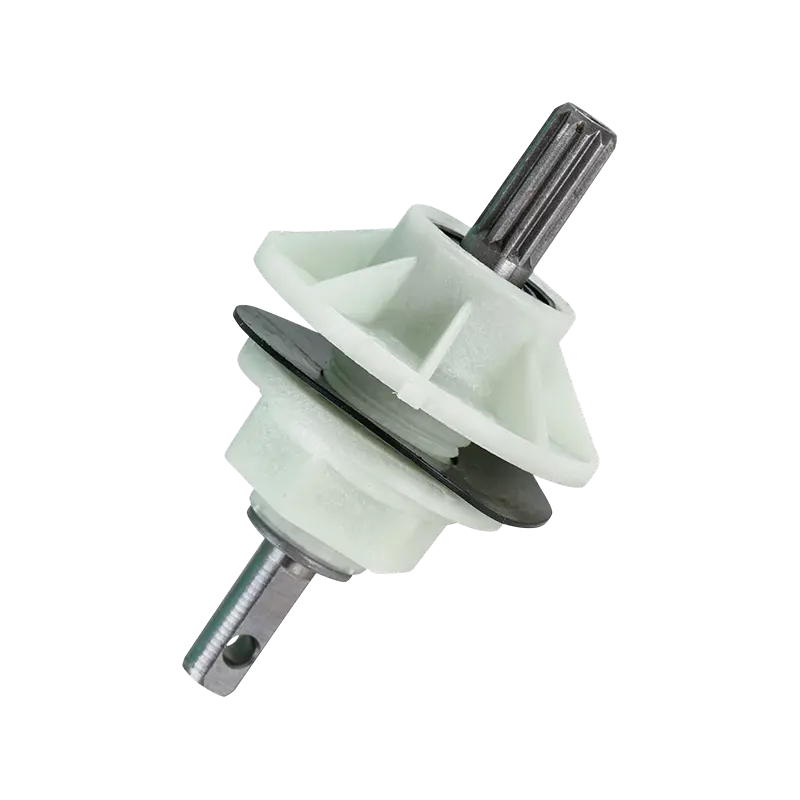
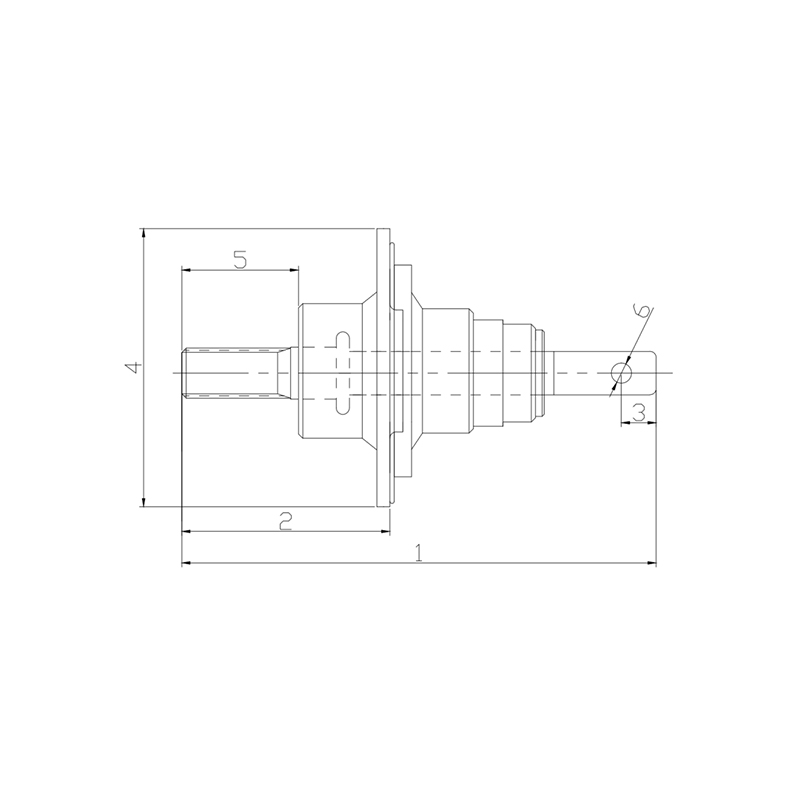 GT078 Semi-Automatic Twin-Tub Washing Machine Pulsator Shaft AssemblyStraight-through pulsator shaft assembly for twin-tub washers, with integrated shaft, bearings, mechanical seal, and 1:1 ratio for external pulley reduction.View Product →
For twin-tub and semi-automatic platforms, the P-shaft and gearbox are central to the customer complaint. A worn P-shaft seal can allow water ingress, which may damage the bearing and create noise that the user associates with the motor. A gearbox with the wrong ratio can make the pulsator turn too fast or too slow, and the user may describe the result as a motor problem. The service technician should check the P-shaft for play, the gearbox for oil leakage or abnormal sound, and the clutch or synchronizer for proper engagement before replacing the stator.
Match the stator review to the drive layout: belt-driven machines punish pulley alignment, direct-drive machines punish concentricity, and twin-tub machines punish P-shaft and gearbox wear.
A Practical Comparison Table for Stator-to-Drivetrain Checks
The table below is written for OEM buyers, aftermarket distributors, and service teams who need a short review sheet. It does not replace a full engineering drawing. It does help a purchasing team ask the right questions before a sample is approved or a replacement part is shipped. The most useful columns are the drivetrain part to confirm and the procurement risk, because those two columns turn a technical check into a commercial decision.
Illustrative stator-to-drivetrain verification points for OEM and aftermarket buyers.
| Check area |
Why the stator matters |
Drivetrain part to confirm |
Procurement risk |
| Winding and insulation |
Electrical faults can cause hum, no-start, or intermittent stop. |
Motor connector, lead routing, and terminal protection |
Misdiagnosis may lead to unnecessary gearbox replacement. |
| Air gap and concentricity |
Affects torque, noise, and speed feedback in direct-drive designs. |
Drive shaft, bearing seat, and rotor fit |
Rubbing or vibration may appear only after full assembly. |
| Mounting geometry |
Controls alignment between motor, gearbox, and housing. |
Gearbox housing, mounting boss, and fastener access |
Pilot samples may fit on the bench but fail on the line. |
| Torque and starting profile |
Starting torque loads the clutch, synchronizer, and reducer. |
Gearbox ratio, clutch assembly, and synchronizer |
Higher torque may improve wash performance but shorten part life. |
| Speed and direction change |
Reversal profiles affect wear on engagement parts. |
Clutch, synchronizer, and transmission control |
Aggressive ramps can increase aftermarket comebacks. |
| Water and heat exposure |
Insulation class and protection affect reliability. |
Seals, breathers, P-shaft, and housing drainage |
Water ingress can damage both motor and mechanical parts. |
| Service fitment |
Aftermarket replacement must match existing connectors and mounts. |
Drive shaft, P-shaft, and gearbox service kit |
One small dimension change can create a non-returnable stock issue. |
The table is deliberately practical rather than exhaustive. In a real RFQ, each row should become a drawing dimension, a test method, or a sample inspection point. For example, “mounting geometry” should be supported by a hole position tolerance and a flatness requirement. “Torque and starting profile” should be supported by a start-stop cycle count and a loaded running test. “Water and heat exposure” should be supported by seal material, drainage path, and insulation class. When those details are attached to the RFQ, the buyer can compare suppliers on the same technical basis.
For a washing machine parts manufacturer serving OEM and aftermarket customers, this table also helps separate product scope. The stator belongs to the motor assembly. The gearbox, P-shaft, synchronizer, clutch assembly, and drive shaft belong to the mechanical drivetrain. A supplier should be clear about which parts it makes and which interfaces it can review. That clarity protects the buyer from assuming that one quotation covers the whole drive system when it actually covers only one side of the boundary.
Use the table as an RFQ attachment, not a general brochure; every row should become a dimension, a test, or an inspection record.
P-Shaft, Synchronizer, and Clutch Assembly: The Mechanical Load Path
If the stator is the electrical input, the P-shaft, synchronizer, and clutch assembly are where the customer feels the result. A P-shaft, sometimes called a pulsator shaft, transfers motion to the pulsator in many top-load and twin-tub designs. It must resist torque, water exposure, and repeated direction changes. A synchronizer helps control engagement timing in designs that shift between functions. A clutch assembly manages the transition between wash and spin or between motor drive and drum drive. When any of these parts is worn, the machine may sound like a motor fault even when the stator is healthy.
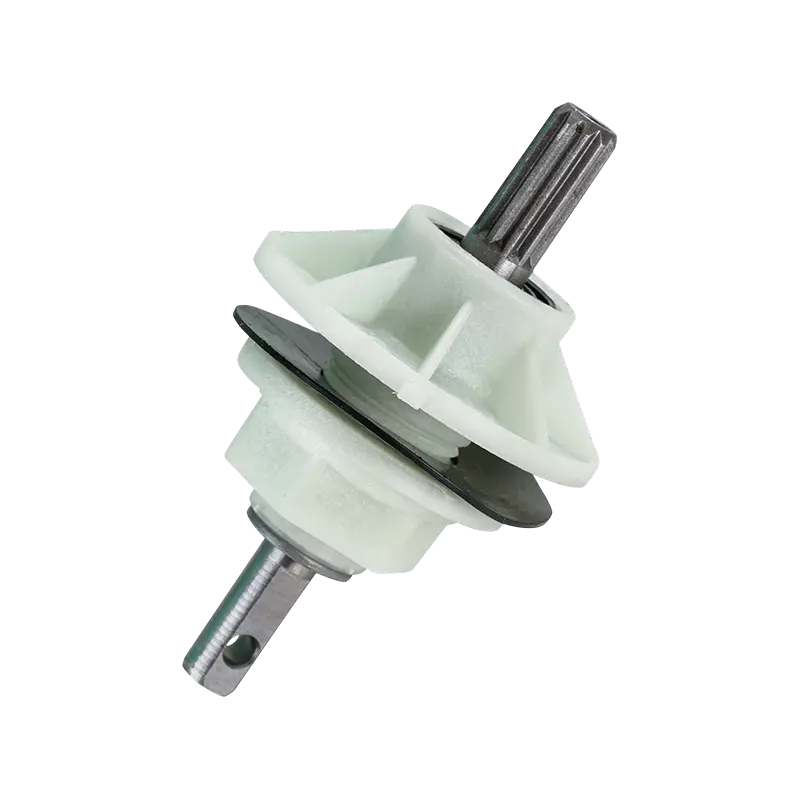 Washing Machine P-Shaft and Pulsator Shaft AssembliesOverview of P-shaft and pulsator shaft assemblies for top-load and twin-tub washers, covering configurations, materials, sealing, torque, and service selection factors.View Product →
The P-shaft deserves particular attention in aftermarket service because it is often replaced together with the gearbox or seal kit. Check shaft diameter, spline or flat position, thread length, and seal contact surface. A shaft that is dimensionally close but not identical can fit during assembly and still leak or vibrate in use. The same logic applies to the synchronizer and clutch assembly: the engagement angle, spring force, and friction material must match the intended load. If a buyer changes the stator or motor controller without reviewing those parts, the new motor may expose a weak engagement system.
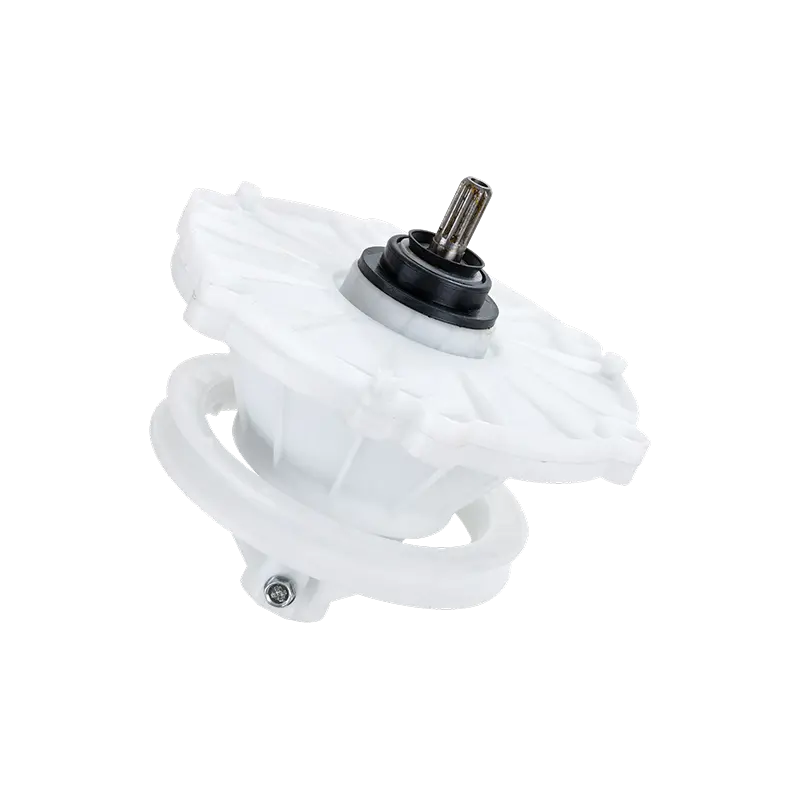
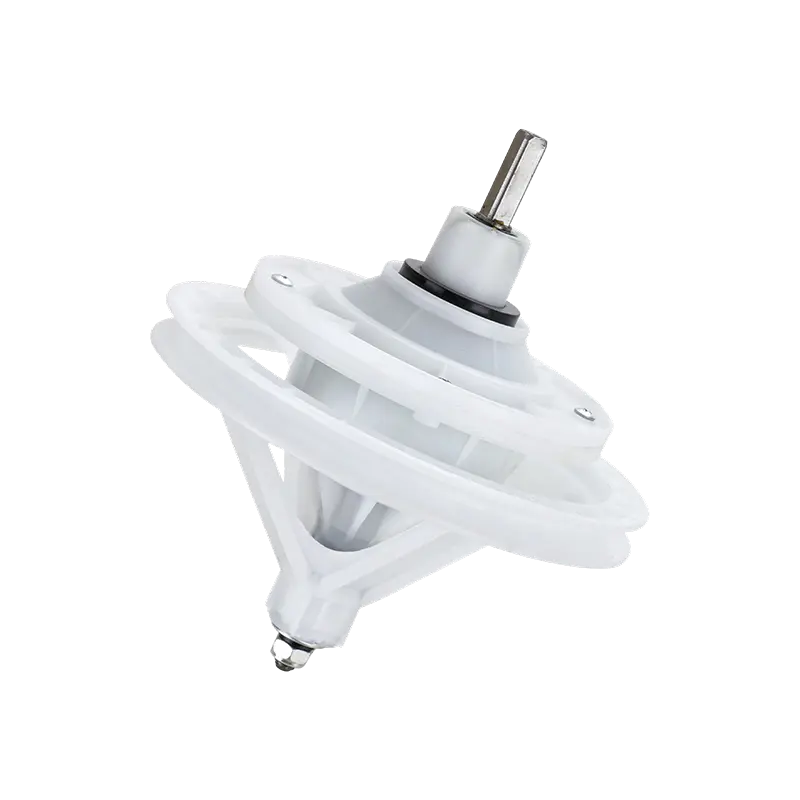
In a twin-tub gearbox, the P-shaft and gearbox are often reviewed as one functional unit. The wash side and spin side may use different speed and torque conditions, so the gearbox ratio and shaft strength must be confirmed together. A semi-automatic twin-tub gearbox may be sold as a service part, but the installer still needs to confirm the pulley, coupling, and mounting interface. For OEM buyers, the better approach is to define the functional unit rather than a list of loose parts. That unit can include the gearbox, P-shaft, seal, and clutch or synchronizer where applicable.
Quality checks should include rotation torque, axial play, seal condition, noise at low and high speed, and a direction-change cycle. If the part is intended for a wet environment, the test should include a representative water exposure or at least a seal integrity check. These checks do not prove field life, but they catch the common failures that create early service returns. They also give the buyer a common language with the supplier when a complaint arrives from the field.
Check the P-shaft, synchronizer, and clutch as a load path, not as minor accessories; they often explain symptoms blamed on the stator.
Quality Checks for a Washing Machine Stator Supplier and Drivetrain Manufacturer
When buyers evaluate a washing machine stator supplier, they often ask for insulation resistance, withstand voltage, and winding resistance. Those checks are necessary, but they do not cover the mechanical interface. A drivetrain manufacturer should be asked for dimensional reports, material certificates, running noise checks, and assembly fit records. The two sets of evidence should meet at the interface drawing. If the stator supplier reports a shaft runout and the gearbox supplier reports a bearing bore, the buyer needs to know that the combined clearance is still within the design target.
For the mechanical parts, a practical quality plan can include first article inspection, critical dimension sampling, housing flatness, shaft hardness, seal groove inspection, and functional running tests. For gearboxes and reducers, check rotation torque, backlash where applicable, oil or grease fill, and noise at the intended speed. For clutch and synchronizer assemblies, check engagement force, release force, and wear surface condition. For drive shafts and P-shafts, check straightness, thread, spline, and surface finish at the seal area.
Documentation matters as much as the test itself. A supplier that can provide an inspection report with traceable lot numbers is easier to manage than one that provides only a pass stamp. ISO 9001 and ISO 14001 certification, plus RoHS compliance where required, are useful baseline indicators for a washing machine parts manufacturer, but the buyer should still confirm that the specific production line and product family are covered. The certificate opens the conversation; the control plan and inspection record answer the real questions.
For aftermarket buyers, the quality question shifts slightly. Field returns are often caused by fitment, installation damage, or a mismatch between the replacement part and the installed base. A supplier who understands aftermarket service can help by grouping parts by platform, providing clear identification, and avoiding small changes that make a previous stock obsolete. That service capability is often as valuable as the unit price, especially for a wholesaler or distributor carrying multiple product generations.
Ask for interface evidence, not only component certificates; the combined fit and running test is where most sourcing risks are exposed.
Cost, Tooling, and OEM or ODM: What Buyers Should Ask a Wholesaler or Supplier
Cost discussions often start with unit price and end with tooling, minimum order quantity, and lead time. For a washing machine stator program, the buyer should also ask about the cost of changing the motor interface later. If the stator mounting changes, the gearbox housing, P-shaft length, or clutch position may need revision. Those changes can be more expensive than the stator price difference that started the discussion. A good supplier will flag this early, even if it means quoting a slightly higher mechanical part to protect the interface.
For OEM programs, ask for a sample schedule that includes the stator, gearbox or reducer, P-shaft, and clutch or synchronizer as a set. Confirm who provides the motor drawing, who approves the interface, and who signs the first article inspection. For ODM programs, clarify how much design responsibility the supplier takes. A drivetrain manufacturer can propose a gearbox ratio or shaft design, but the motor and control strategy still need to be confirmed by the motor supplier. Clear scope prevents the common problem where each side assumes the other has validated the full drive.
For aftermarket programs, ask about part identification and packaging. A wholesaler needs labels that match the application, not just the factory part number. If two similar gearboxes differ only by shaft length or ratio, the packaging and catalog data must make that difference obvious. Ask whether the supplier can provide photos, dimension drawings, and application notes for the service counter. These materials reduce wrong orders and returns, which are often a larger cost than the part itself.
A factory visit or video audit can also be useful. Look for incoming material control, assembly line organization, test stations, and final packing. The size of the building is less important than the control of critical dimensions and the discipline of the test records. A supplier that can show how it handles a nonconforming shaft or a noisy gearbox is usually better prepared than one that shows only a catalog and a certificate wall.
Compare total change cost, not only unit price; the cheapest stator quote can become expensive if it forces a gearbox or P-shaft redesign.
Aftermarket Replacement: Matching a Stator Without Creating Comebacks
Aftermarket replacement is where stator and drivetrain matching becomes very practical. A distributor may stock a stator that fits several machine families, but the installed base may include different gearbox ratios, P-shaft lengths, and clutch versions. If the catalog does not distinguish those versions, the customer may receive a part that runs but does not perform correctly. The result is a comeback that looks like a motor problem but is actually an application mismatch.
The first defense is a clear identification process. Use machine model, serial range, original part number, and photos of the mounting and shaft. The second defense is a dimensional check at the service counter or in the repair shop. Measure the shaft, mounting holes, and connector type before installation. The third defense is a post-installation test: low-speed run, direction change, spin cycle, and noise check. If the machine is noisy only under load, the problem may be in the gearbox, P-shaft, or clutch rather than the stator.
Aftermarket buyers should also ask the supplier about revision control. If a gearbox housing or P-shaft changes, the catalog and packaging should reflect the change. A supplier that serves OEM and aftermarket channels can often provide cross-reference data and application notes, but the buyer should still verify the fit for the specific platform. The goal is to avoid a situation where a technically correct part is sold into the wrong application and then blamed for a field failure.
Another practical point is tooling access. Aftermarket volumes may be lower than OEM volumes, so the supplier needs a production plan that keeps critical dimensions stable without requiring a new mold for every variation. A flexible machining or assembly setup can support small batches, but the buyer should confirm the inspection plan for each batch. Stable dimensions matter more than a long list of optional features.
Prevent aftermarket comebacks with model and shaft identification before shipment, then confirm the full drive with a loaded running test.
How to Read the Sourcing Priority Chart
The chart below is not a market survey. It is an illustrative view of how cross-functional sourcing teams often divide attention when a washing machine stator change affects the mechanical drive path. The purpose is to show that electrical approval and mechanical approval should move together, even when they sit with different suppliers.
Stator drawing and electrical rating
High
Gearbox ratio and torque match
High
P-shaft and seal interface
High
Clutch and synchronizer wear
Medium
Aftermarket fitment data
Medium
Packaging and catalog clarity
Lower
The chart suggests that the stator drawing receives the most attention, which is natural because it is the electrical starting point. The gearbox ratio and P-shaft interface should receive nearly the same level of review when the motor torque or speed profile changes. Clutch and synchronizer wear deserve a medium-to-high priority in machines that reverse frequently or shift between wash and spin. Aftermarket fitment data is often treated as a sales task, but it directly affects return rates and should be part of the sourcing review.
For a washing machine gearbox supplier, the chart is a reminder that a quotation should not stop at the housing and gear set. The quotation should identify the shaft interface, the expected load, the test condition, and the service application. For a buyer, the chart is a reminder to invite the drivetrain supplier into the stator review before the motor drawing is frozen. That early involvement is usually cheaper than a late correction.
Give the gearbox ratio, P-shaft interface, and clutch wear nearly the same review priority as the stator drawing itself.
FAQ About Washing Machine Stator and Drivetrain Matching
What does a washing machine stator do?
The stator is the stationary part of the motor. It creates the magnetic field that turns the rotor, and the rotor then drives the mechanical transmission. In washing machines, the stator is closely related to starting, direction change, and speed control, but it does not replace the gearbox, clutch, or P-shaft.
Can a bad washing machine stator cause a gearbox-like noise?
Yes, an electrical fault can produce a hum, buzz, or uneven rotation that sounds mechanical. However, a worn gearbox bearing, a dry P-shaft, or a sticking clutch can also create noise and vibration. The technician should isolate the motor from the load and then check the mechanical path before replacing parts.
How do I check whether the stator or the gearbox is at fault?
Start with the stator electrical checks and the control signal. Then disconnect or isolate the load where the design allows and run the motor. If the motor is quiet without load but noisy with the gearbox connected, inspect the gearbox, P-shaft, clutch, and alignment. A loaded running test with the intended drivetrain is more useful than a bench spin alone.
What should OEM buyers include in a stator and drivetrain RFQ?
Include the stator drawing, motor rating, speed and torque profile, mounting dimensions, shaft interface, gearbox ratio, P-shaft dimensions, clutch or synchronizer requirements, and the intended test method. Ask each supplier to confirm the boundary dimensions and state who owns the interface validation.
Are stator and drivetrain tolerances different for aftermarket replacement?
The drawing tolerances should not become looser just because the part is for aftermarket use. The difference is usually in identification and application coverage. Aftermarket buyers need clear model mapping, shaft dimensions, connector type, and packaging data so that the correct part reaches the correct machine.
Can a drivetrain manufacturer support a stator change even if it does not make the stator?
Yes. A drivetrain manufacturer can review the gearbox, reducer, P-shaft, synchronizer, clutch assembly, and drive shaft against the motor interface. Cixi Gaite Electric Co., Ltd. focuses on those mechanical washing machine parts for OEM and aftermarket customers, so the practical support is in interface review, sample matching, and production control rather than stator manufacturing.
Use the FAQ to separate electrical faults from mechanical load faults, then confirm the boundary dimensions with both suppliers in writing.
Next Step: Send Drawings, Not Just Part Numbers
A part number is useful for repeat orders, but it is a weak starting point for a stator-related change. Send the motor interface drawing, the gearbox or reducer drawing, the P-shaft dimensions, and the clutch or synchronizer requirements. State the machine type, the drive layout, the load condition, and the target market. That information lets the supplier review fit, torque, and service risk before quoting.
For OEM teams, the next step can be a sample set with a first article inspection report. For aftermarket distributors, the next step can be a platform review that maps the existing stock against the most common gearbox, P-shaft, and clutch versions. In both cases, the goal is the same: make the electrical and mechanical interfaces visible before the order is placed.
Start with a drawing pack and a loaded running target; that is the shortest path to a reliable stator-to-drivetrain match.

 English
 عربى


 +86-574-63256717 /63267914
info@gaite.cn
 gaite@gaite.cn
 No. 208 Miaoshan Road, Shiyan Village, Henghe Town, Cixi City, Ningbo City, Zhejiang Province, China
