Your washer finishes a spin cycle and the cabinet has crept a finger's width away from the wall. Nothing has broken yet, but the machine is telling you something: either it is standing on four feet that do not share the same plane, or something inside the transmission is out of balance. The first possibility is free to fix. The second one costs parts.
Learning how to level a washing machine comes down to three things — a flat floor, four feet that actually carry weight, and lock nuts tightened hard against the frame. Everything else, from the drum suspension to the gearbox, the P-shaft and the clutch assembly, only becomes worth investigating once those three are confirmed. This guide walks through the leveling routine first, then explains how to read the symptoms that leveling cannot cure, which is where most repeat service calls actually begin.
How to Level a Washing Machine: The Short Answer First
Put a spirit level on the cabinet top, not on the lid. Adjust the front feet until the bubble sits between the lines in both directions, then adjust the rear pair, then tighten every lock nut against the base frame while holding the foot still. Finish by pressing diagonally on opposite top corners: if the machine rocks, one foot is not touching the floor and the job is not done.
Three mistakes account for most failed attempts:
- Leveling against a slanted lid or a curved top panel instead of a straight machined edge.
- Leaving the lock nuts finger-tight, so the feet creep back down within a few wash cycles.
- Leveling on a floor that is itself out of flat, which means the machine is only level in one direction.
Level the machine with the drum empty and the feet locked, then re-test with a real load — a washer that passes the empty test can still walk once water and laundry shift the center of gravity.
Telling a Leveling Problem From a Drivetrain Problem
Not every shake is a leveling problem. Spending an hour on the feet when a reducer is failing wastes time and hides the real fault. The split is usually easy to see once you know what to listen for: a machine that is merely out of level rocks when you push it and stays quiet when it stands still, while a machine with a transmission fault often stands rock solid and still makes noise that rises with drum speed.
Working rule: clear the cheapest, most likely cause first, run a spin test, and only then move inward to suspension and transmission parts.
| Symptom |
Most likely source |
First check |
| Cabinet walks forward or sideways during spin |
Floor slope or feet not locked |
Spirit level on the cabinet top; lock nut torque |
| Rocks corner to corner when pushed by hand |
One foot carrying no load |
Diagonal hand test on all four corners |
| Violent shaking from the very first spin |
Transit bolts still fitted |
Rear panel bolts and shipping hardware |
| Drum strikes the cabinet at high spin only |
Worn suspension springs or dampers |
Press down diagonally on the drum, feel for bounce |
| Whine or grind that tracks drum speed |
Gearbox, reducer or drive shaft bearing |
Listen with an empty drum, then with a load |
| Weak agitation but normal spin |
P-shaft play, clutch assembly or synchronizer |
Lift the pulsator and check for lateral movement |
If the table points to the first three rows, the fix is mechanical and costs nothing but patience. If it points to the last three, the leveling routine will make the machine quieter but will not remove the noise, because the source is downstream of the feet.
Judge by behaviour under load, not by appearance: a machine can look perfectly level and still be out of balance internally, and a slightly tilted machine can run smoothly if all four feet carry equal weight.
What You Need Before You Start
Tools that actually help
- A 250 mm torpedo level or a 400 mm spirit level. A magnetic version sticks to the cabinet and leaves both hands free.
- An adjustable wrench that grips the lock nut, typically somewhere between 17 mm and 24 mm depending on the model.
- A flat-blade screwdriver and slip-joint pliers for hose clips and rear panels.
- Work gloves, a flashlight and a dry rag.
- A sheet of 12 mm plywood cut slightly larger than the machine footprint, for timber floors.
- Unplug the machine, close both taps, and drain the inlet and outlet hoses before moving anything.
- Confirm the transit bolts have been removed; on a new installation these are the single most common cause of violent shaking.
- Sweep the level across the floor in two directions and note the slope. A floor that falls away by more than a couple of millimetres across the footprint needs a shim or a plywood pad, not more foot adjustment.
- Check that inlet hoses, the drain hose and the power cable are not stretched tight or pinched behind the machine.
- Clear anything stored underneath. A detergent bottle touching the base transmits noise straight into the floor.
Five minutes of preparation saves a second callout: transit bolts, floor slope and hose tension explain a large share of complaints that look like leveling failures.
How to Level a Washing Machine in Six Steps
- Move the machine to its final position with roughly 50 to 75 mm of clearance at the back, leaving enough room to reach the rear feet with a wrench. Adjustment happens in place, so the position you level in is the position it must stay in.
- Loosen all four lock nuts by turning them counterclockwise with the wrench, just enough that the foot thread turns freely by hand. Do not remove the nuts; they are the only thing stopping the foot from drifting once set.
- Set the front pair first. Turn each foot to raise or lower the front edge until the bubble sits comfortably between the lines on the front-to-back axis.
Then check across the front edge.
- Set the rear pair with the same method, then cross-check the side-to-side axis at the front, the middle and the rear of the cabinet. Small differences show up more clearly near the corners.
- Tighten each lock nut firmly against the base frame while holding the foot so it cannot rotate. Re-check the bubble afterwards; tightening often shifts a foot by half a turn, which is enough to matter.
- Press diagonally on opposite top corners. Any rocking means a foot is still short of the floor. Run a short spin cycle with two or three towels, listen from a metre away, and re-check the level after the first week of use.
As a working target, aim for the bubble to sit within its centre markings on both axes, and for no more than about 2 to 3 mm of gap under any foot once the machine is standing. Those numbers are practical guides rather than a manufacturer specification, but they catch the cases that cause walking in normal domestic use.
Level front to back, then side to side, then lock the nuts and re-check — the lock nut step is where most do-it-yourself jobs quietly fail.
Leveling a Top-Load Washer When the Lid Looks Slanted
Top-load machines are the most common source of confusion, because the lid is frequently moulded at a slight angle or sits on a hinge with visible clearance. A lid that looks crooked tells you almost nothing about the machine's stance. Use the flat machined rim at the top of the cabinet, or the horizontal seam on the side panel, as your reference surface instead.
Place the level across the cabinet opening from left to right, then front to back along the side seam. On a twin-tub or semi-automatic model, the wash tub and the spin tub sit above a transmission assembly, and the balance of the machine changes noticeably once the wash tub is filled. Level it empty, then fill the tub to the normal line and check again — a foot that was marginal when dry can lift once 30 or 40 litres of water settle into the tub.
Twin-tub machines also have a specific failure mode worth knowing: the gearbox and P-shaft hang below the tub, and worn shaft bushes let the pulsator knock against the tub base. That knock is rhythmic and appears at the start of agitation rather than during spin, which is the opposite pattern to a leveling fault. If the machine is level, the feet are locked and the noise still comes in time with the wash action, the transmission is the place to look.
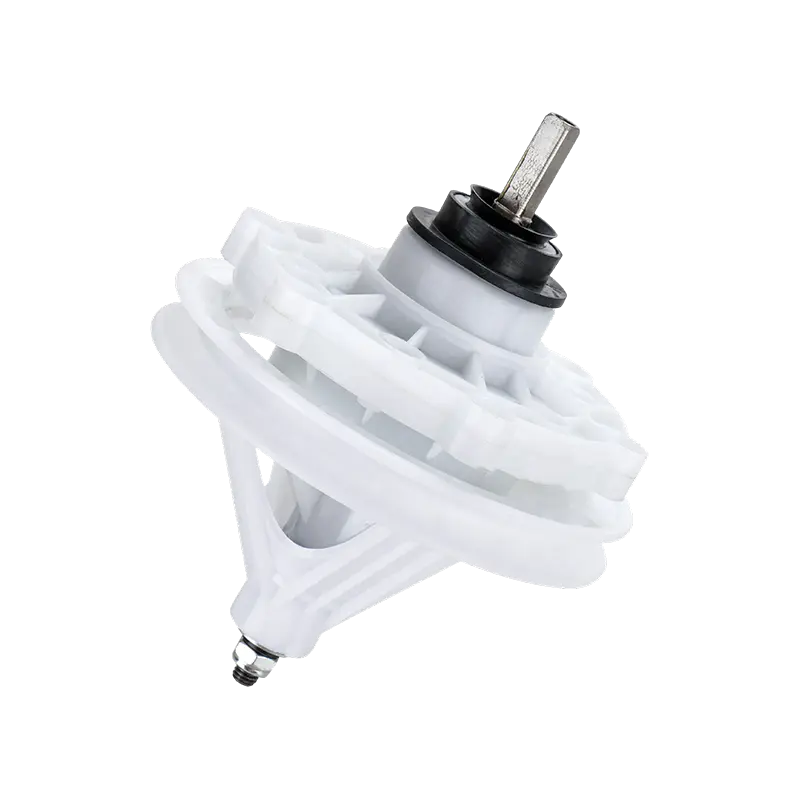
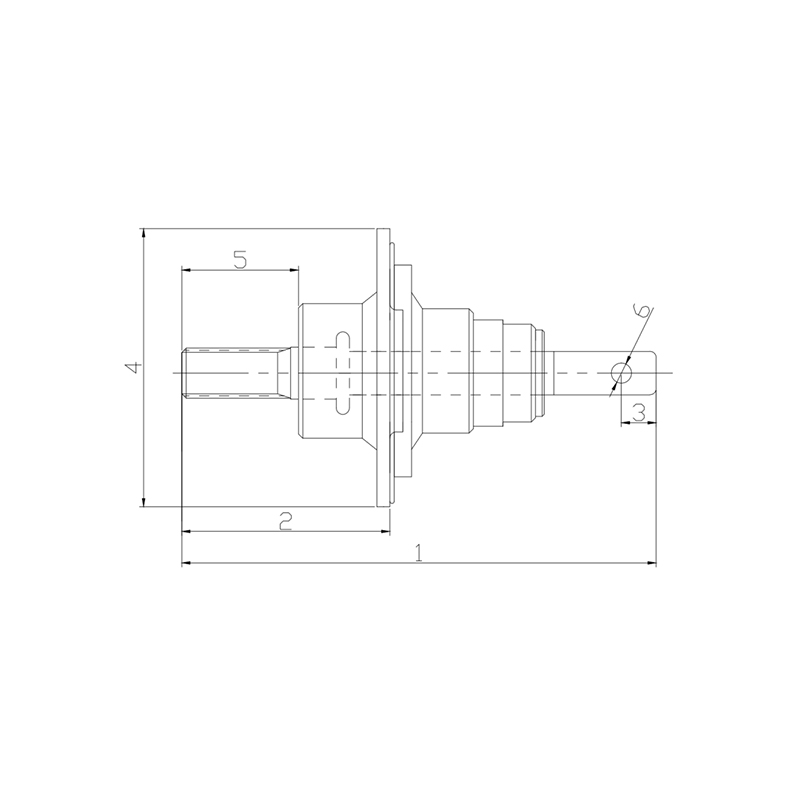 GT078 Semi-Automatic Twin-Tub Washing Machine Gearbox AssemblyA GT078 straight-through pulsator shaft assembly for twin-tub washers, using external pulley reduction and a waterproof mechanical seal for wash-tub power transmission.View Product →
Never trust the lid as a level reference — use the cabinet rim or side seam, and re-check the stance with the tub filled.
Leveling a Front-Load Washer and Stopping the Walk
Front-load machines are heavier and spin faster, often between 1000 and 1600 rpm, so small errors get amplified. The routine is the same six steps, with two additions. First, front-loaders usually offer only a narrow adjustment range of roughly 10 to 20 mm at each foot, so a badly sloped floor needs a plywood pad rather than more thread. Second, the drum counterweights make the machine reluctant to slide; if it walks anyway, the cause is almost always an unlocked foot or a floor that is not flat.
Anti-vibration pads are useful, but they are not a substitute for leveling. A pad changes the height of the machine at each corner, so the level must be re-checked after fitting. Rubber pads on a hard floor reduce transmitted noise well; thick foam pads on a timber floor can allow movement and make walking worse.
After the final adjustment, run a spin cycle with a mixed load rather than an empty drum. An empty drum is evenly balanced and hides small errors. A load of towels and a couple of shirts reveals whether the machine stays put when the load redistributes.
Test with laundry, not with an empty drum — a front-loader that survives an empty spin can still shift position under a real load.
Where a Vibration Diagnosis Usually Leads
When a service technician arrives with a shaking machine, the hour that follows is rarely spent evenly. Some checks take a couple of minutes and eliminate whole categories of fault; others need the machine pulled out and the drum inspected. The chart below shows how that diagnostic time is best split on a typical callout.
Recommended split of a 60-minute vibration diagnosis
Planning guide for inspection time, not a failure-rate statistic
Transmission: gearbox, P-shaft, clutch, drive shaft
33%
Floor flatness and machine stance
25%
Feet, threads and lock nuts
17%
Drum suspension, springs and dampers
17%
Transit bolts and shipping hardware
8%
The bar for the transmission is the largest single block because that is where the parts with the longest wear cycle live. A gearbox or reducer that has run for years on tired lubricant develops backlash, and backlash turns into a low-frequency knock at the start of every spin. A worn P-shaft turns a smooth pulsator stroke into a rattle. A slipping clutch assembly lets the drum lag behind the motor, which the user experiences as poor extraction rather than as noise.
For buyers and service partners working on semi-automatic and twin-tub platforms, it helps to know which of those parts are consumable on a given model before the callout rather than after. Having a reducer or synchronizer in stock shortens the second visit considerably, and matching the shaft diameter and spline count correctly the first time avoids the situation where a new part fits but introduces a new vibration of its own.
Time spent confirming the floor and the feet is never wasted, but once those are cleared, the transmission deserves the largest share of attention.
When Leveling Fails: Drivetrain Faults That Feel Like an Uneven Floor
A machine that is perfectly level and still shakes is handing you a diagnosis. The four components below account for most of the cases where the feet are correct and the complaint continues.
P-shaft and pulsator wear
The P-shaft, sometimes called the pulsator shaft, carries motion from the gearbox up through the tub base to the pulsator. Its bushings and sealing surfaces wear with every cycle. Early symptoms are subtle: a faint rattle at the start of agitation, a pulsator that feels loose when lifted by hand, and a wash action that looks weaker than it used to. Because the play is small, the machine still looks level and still completes a cycle, so the fault is easy to miss until it becomes a knock.
Gearbox and reducer noise
A healthy gearbox is quiet enough that you notice the motor and the water long before you notice the gears. A worn one produces a whine or a rhythmic knock that tracks drum speed and changes pitch when the load changes. On twin-tub platforms the reducer drives the pulsator directly, so worn teeth show up as a regular beat during wash rather than during spin. Listen with the machine empty first, then loaded; a noise that is present in both states is mechanical rather than a balance issue.
Clutch assembly and drive shaft
The clutch assembly governs the handover between wash and spin. When the friction surfaces glaze, spin speed drops and the drum may hesitate before accelerating, which users often describe as a machine that has lost power. A worn drive shaft shows up differently, with lateral play that lets the pulley or drum hub shift slightly under load, producing a vibration that appears only at higher speeds and disappears at low ones.
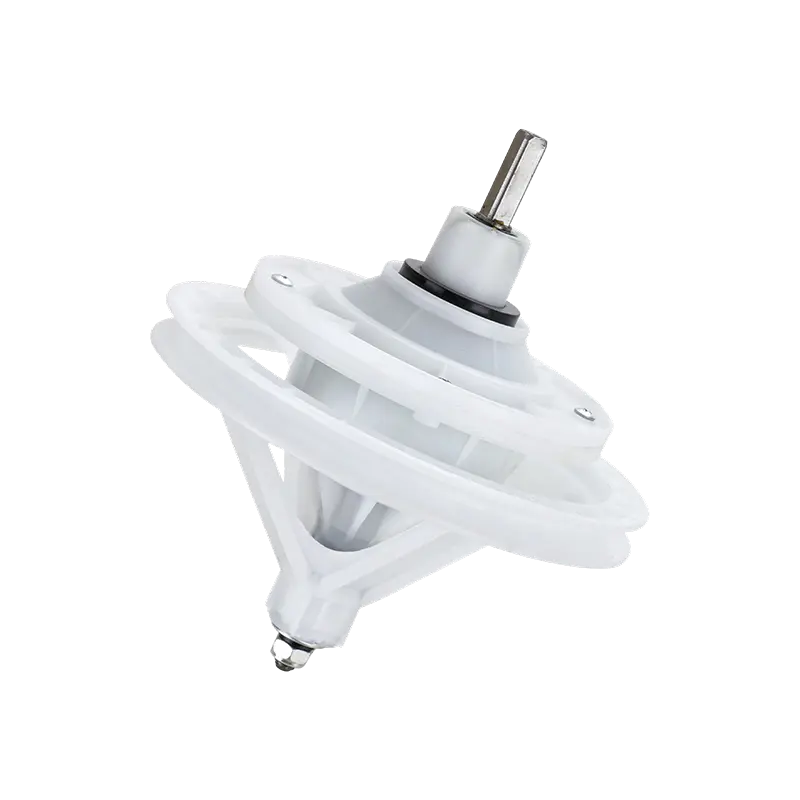
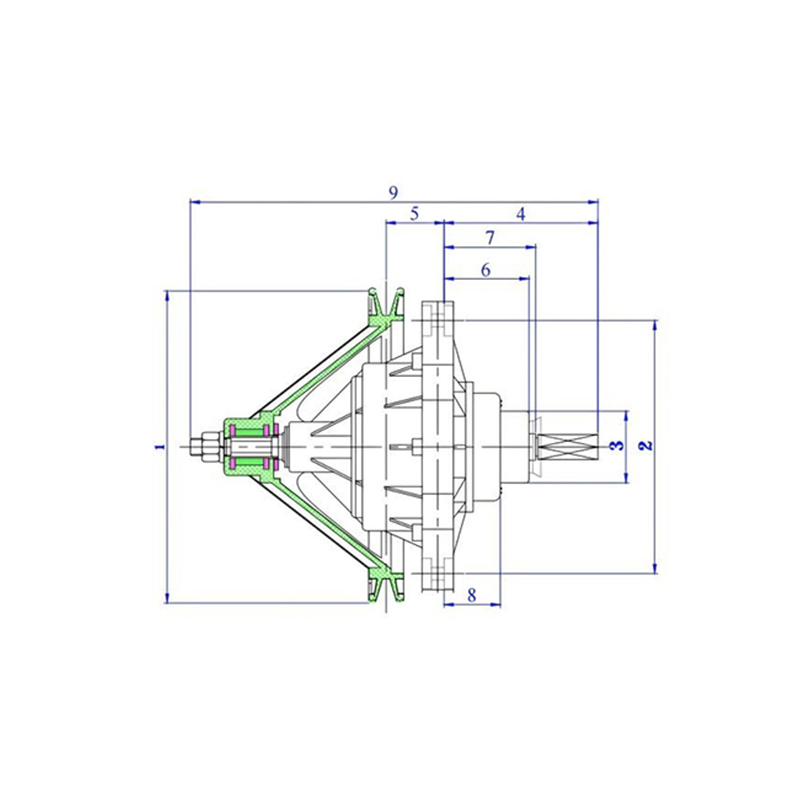 GT005 Washing Machine Transmission for Semi-Automatic Agitator WashersA lightweight GT005 transmission for semi-automatic agitator washers, with self-lubricating engineering-plastic gears that provide low-speed, high-torque wash output without added grease.View Product →
Match the symptom to the component before ordering: a rattle at agitation points to the P-shaft, a whine at speed points to the gearbox, and weak extraction points to the clutch.
Difficult Floors: Wood, Tile and Old Concrete
Floor construction changes the advice more than most guides admit. Tiled concrete is the easiest case: it is flat, hard and stable, and the feet only need to be set and locked. Old concrete is rarely flat, even when it looks it, so run the level across the footprint before assuming the machine is at fault.
Suspended timber floors flex under a spinning drum. The machine does not need to be out of level to shake; it needs the floor to stop moving with it. A plywood sheet spanning at least two joists spreads the load and usually removes the resonance. Carpet and deep-pile rugs are worse than timber, because the feet sink unevenly and the machine has no stable plane to stand on.
- Hard tile or concrete: standard leveling, check the lock nuts after the first week.
- Timber with visible flex: plywood pad across two joists, then level on the pad.
- Carpet or rug: rigid board underneath, never direct contact.
- Visible slope greater than a few millimetres: rigid shims under the low feet, full contact, then re-level.
Fix the floor before you chase the machine — a flexing timber floor will defeat any amount of foot adjustment.
What OEM and Aftermarket Buyers Should Ask Before Ordering
For a repair business or an appliance manufacturer, the leveling routine is the easy half. The harder half is specifying replacement transmission parts that will not reintroduce vibration six months later. P-shafts, reducers, gearboxes, synchronizers, clutch assemblies and drive shafts all sit in a tolerance band, and the difference between a good batch and a marginal one is usually visible in the paperwork rather than on the part.
Buyer checklist: the questions that separate a consistent washing machine parts supplier from one that only sells on price.
| What to ask |
Why it matters |
What a solid answer looks like |
| Material grade and heat treatment |
Determines wear life in a P-shaft or gear set |
A written grade with a hardness range |
| Dimensional tolerance and inspection method |
Controls fit at the drum hub and noise level |
Tolerance per drawing plus a sampling plan |
| Noise and vibration test at rated load |
Directly shapes end-user complaints |
A stated test method and acceptance limit |
| Batch traceability |
Makes warranty claims manageable |
Lot numbers linked to inspection records |
| Compliance documentation |
Required for market access |
Quality system certification and a RoHS declaration |
| OEM versus ODM scope |
Decides who owns the design and the drawing |
A clear line between build-to-print and design support |
Volume buyers usually add three more questions: minimum order quantity per model, sample lead time before a production run, and how aftermarket packaging is handled, since a wholesaler or distributor needs retail-ready cartons rather than bulk trays. A manufacturer with an in-house transmission line can answer these consistently because the gear cutting, shaft turning and assembly happen under one roof rather than across several subcontractors.
Background on the supplier behind this guide
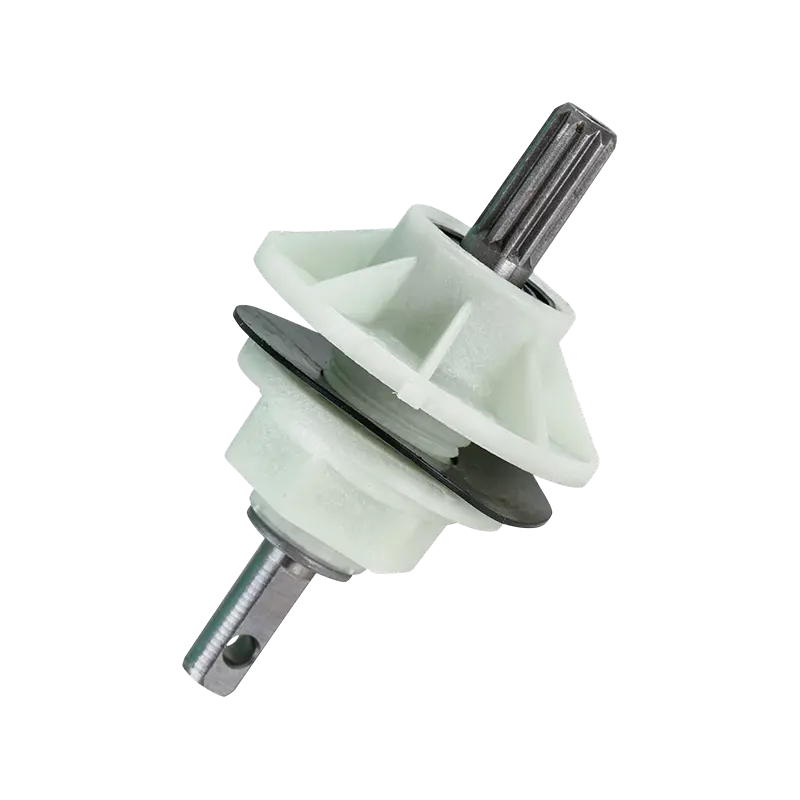
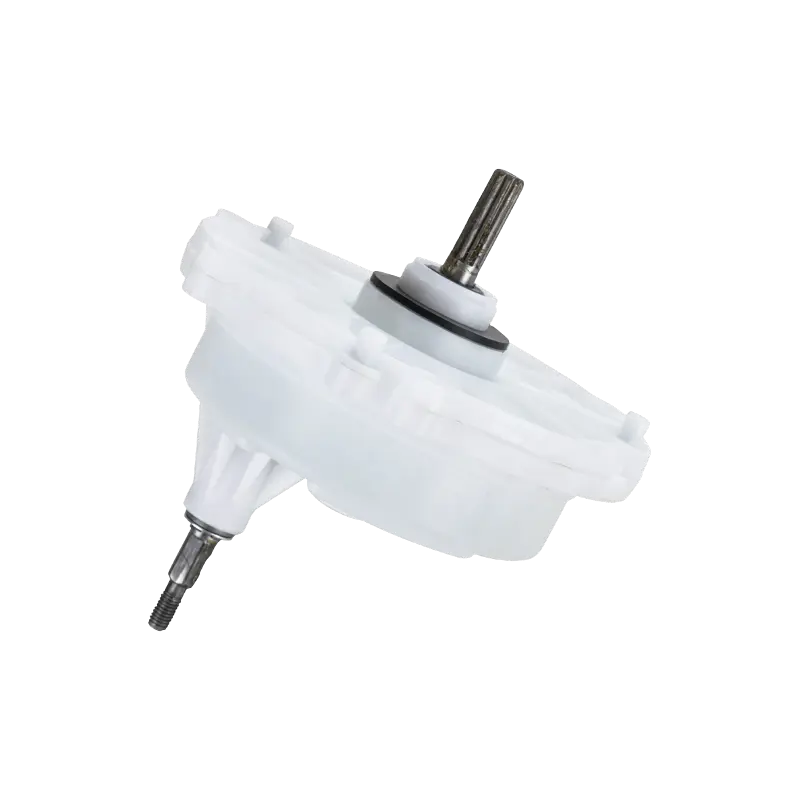
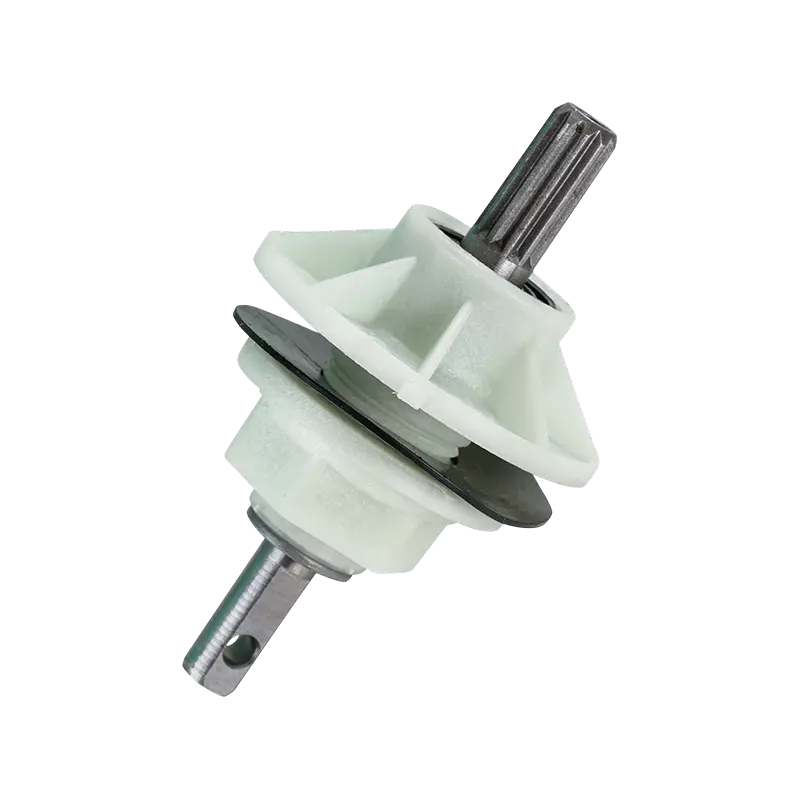 Washing Machine P-Shaft Pulsator Shaft AssemblyA direct-drive pulsator shaft assembly for twin-tub and semi-automatic washer spin systems, transmitting motor power to the spin drum with torque enhancement.View Product →
Ask for tolerances and test methods in writing — a supplier who can quote them is usually the one whose batches stay consistent.
Keeping a Washer Level After Installation
Leveling is not a one-time event. Machines settle, floors move and lock nuts work loose under repeated vibration. A short check twice a year catches most drift before it turns into a service call.
- Re-check the level after any move, even a short one across the same room.
- Re-tighten the lock nuts if the machine has been pushed back into place against a wall.
- Distribute laundry loosely. One heavy item wrapped around the agitator is a balance problem no foot adjustment can fix.
- Stay within the rated load. Overloading strains the suspension and accelerates wear on the shaft and gearbox.
- Listen for new sounds once a month. A change in pitch is easier to act on than a broken part.
Two minutes with a spirit level twice a year is cheaper than one gearbox replacement.
FAQ: How to Level a Washing Machine
How do I know if my washing machine is level enough?
Two tests together. Put a spirit level on the cabinet top and check both axes; the bubble should sit within its centre markings. Then press diagonally on opposite corners. If the machine rocks, one foot is not carrying weight, and it is not level enough regardless of what the bubble says.
Can I level a washing machine on my own?
Yes for the adjustment itself. The only part that needs two people is moving the machine into position, since front-loaders are heavy and awkward to tilt. Never drag a machine across a floor on its feet; lift and walk it back.
Why does my washer still shake after I leveled it?
The three usual reasons are a floor that is not flat despite the machine being level, an unbalanced load during the test, and a worn component inside the machine. Suspension springs and dampers, the P-shaft, the gearbox and the clutch assembly all produce vibration that has nothing to do with the feet.
Do anti-vibration pads replace leveling?
No. Pads change the height at each corner, so they alter the stance. Fit them first, then level, then tighten the lock nuts. On a hard floor they reduce transmitted noise usefully; on thick carpet they can make walking worse.
Why does my washing machine walk across the floor?
Walking comes from a foot that is not locked, a floor with a slight slope, transit bolts left in place, or a load that clumps to one side during spin. If all four are ruled out, check the drum suspension before assuming the transmission is at fault.
Can an uneven floor damage the gearbox?
Indirectly, yes. A machine that rocks puts repeated shock loads through the drum, shaft and gear train instead of passing them into the floor. That does not fail a gearbox overnight, but it shortens bearing and gear life, and it makes existing wear louder.
Most shaking complaints end at the feet, but the ones that come back a second time almost always end at the transmission.
Leveling a washing machine is a fifteen-minute job with a level, a wrench and a little patience, and it resolves the majority of vibration complaints before any part is ordered. The useful habit is to treat it as step one of a diagnosis rather than the whole diagnosis. Once the floor is flat, all four feet carry weight and the lock nuts are tight, the machine has told you everything it can about its stance. Any noise left after that is coming from the drum suspension or the drivetrain, and that is a parts question rather than a positioning one.
For service partners and appliance manufacturers, that same logic applies to sourcing. A transmission component specified with a clear tolerance, a stated test method and traceable batches is the difference between a repair that holds and a comeback six months later. Leveling protects the machine; component quality protects the reputation of whoever installed it.

 English
 عربى


 +86-574-63256717 /63267914
info@gaite.cn
 gaite@gaite.cn
 No. 208 Miaoshan Road, Shiyan Village, Henghe Town, Cixi City, Ningbo City, Zhejiang Province, China
