A top-load washer comes back from a customer with the same complaint it had three weeks earlier: it fills, it drains, and it refuses to agitate. The first technician replaced the washing machine control board. The second technician found a stiff gearbox and a dragging clutch that had been pulling stall current through the new board's motor relay the entire time. The replacement part was never the problem. The load the board was asked to switch was.
That sequence is far more common than most sourcing teams expect. A washing machine control board is a switching and decision layer. It reads the lid switch, the water level sensor and the tachometer coil, then it closes relays and fires triacs to drive the inlet valve, the drain pump, the lid lock and the motor. What it cannot do is create torque. Torque comes from the motor, the gear ratio inside the reducer, the clutch assembly, the synchronizer and the P-shaft. When any of those parts bind, slip or wear, the board absorbs the consequence in the form of heat, arcing and repeated current spikes.
So the practical rule for buyers is simple: select the board for the motor it drives, and select the drivetrain for the output profile that board was written for. Treat them as one part number pair rather than two unrelated line items. This article is written for the people who carry that risk, including OEM purchasing teams building a new platform, aftermarket distributors assembling replacement kits, and wholesalers deciding which SKUs deserve shelf space.
A washing machine control board is only as reliable as the transmission it drives. Pairing the two at the specification stage prevents most repeat failures, and most repeat returns.
What the Washing Machine Control Board Does, and What It Cannot Do
When a machine misbehaves, the board is the easiest component to blame because it is the easiest component to reach. Before you accept that diagnosis, it helps to be precise about the boundary between electronics and mechanics. The board owns timing, sequencing, user interface, safety interlocks and fault logging. The drivetrain owns motion, speed reduction, direction change and braking.
In a typical top-load platform, the board performs four jobs. First, it conditions incoming power and protects the rest of the system from surges. Second, it interprets sensor input, including water level pressure, temperature and lid state. Third, it switches high-current loads such as the motor, drain pump and inlet valves. Fourth, it enforces the cycle map stored in firmware, which decides when the machine fills, washes, rinses and spins.
Notice what is missing from that list: nothing on the board knows how much resistance the drum is offering. It only knows how much current the motor is drawing, and it responds to that current indirectly, usually by opening a relay or by tripping a protection routine. That indirect response is exactly why a worn gearbox can look like a board failure, and why a replacement board can fail again within weeks.
How control board outputs map onto mechanical components in a typical top-load washing machine.
| Board output or signal |
Mechanical part it acts on |
What goes wrong when the pairing is wrong |
| Motor drive current and direction |
Gearbox or reducer, P-shaft, drive shaft |
High current draw at spin start, repeated relay arcing, shortened board life |
| Wash and spin direction commands |
Dual-direction gearbox, synchronizer |
Agitation in the wrong phase, noisy reversal, incomplete drain and spin |
| Brake and clutch sequencing |
Clutch assembly |
Drum creep during fill, slow spin ramp, cycle aborts under load |
| Fill, wash and drain timing |
Reducer ratio and pump circuit |
Overlong cycles, water left in the tub, user complaints about damp clothes |
| Speed feedback from tachometer coil |
Motor and transmission ratio |
False overspeed or stall codes even when the motor is healthy |
Read the table from right to left and the sourcing implication becomes clearer. Every mechanical mismatch shows up on the board side as an electrical symptom. A buyer who only compares board price against board price is measuring half the cost of the assembly.
The board decides when and how hard to drive; the transmission decides how much resistance it meets. Fault diagnosis that ignores the second half of that sentence will keep replacing the same part.
Why Boards Get Blamed for Drivetrain Problems
Two physical effects explain most of the confusion. The first is inrush current. When a motor starts against a stiff load, it draws several times its running current for a fraction of a second. Relay contacts pit a little each time this happens, and the pitting accumulates. A machine with a dry or contaminated gearbox grease pack, or a clutch that drags, produces a harder start on every single cycle, which is hundreds of starts a year.
The second is thermal cycling. When spin-up takes longer than the firmware expects, the motor and the switching devices on the board both run hotter than the design intended. Heat is the single most common accelerator of electrolytic capacitor ageing, and capacitor ageing is the single most common reason a board stops responding to input.
The chart below is an illustrative split of the diagnosis outcomes that service networks commonly report when a washer arrives with a suspected board fault. It is a planning aid rather than a measured dataset, but the shape of it is consistent with what repair benches see: a meaningful share of board replacements are really load or connection problems wearing a board-shaped mask.
Illustrative field diagnosis split for suspected control board faults
Motor winding or run capacitor fault misread as a board failure
28 percent
Genuine board failure: power supply, relay or capacitor ageing
22 percent
Transmission binding, clutch wear or dry grease overloading the board
19 percent
Harness, connector or earth continuity problems
16 percent
Sensor drift, most often water level or temperature
15 percent
Illustrative composite of common service-bench outcomes, shown to frame the sourcing discussion rather than to report any single market study.
For buyers, the reading is practical rather than academic. If roughly one in five suspected board failures turns out to be mechanical, then a distributor that stocks only boards is handing its customers a partial solution and absorbing the returns itself. Pairing a board SKU with the matching gearbox, clutch or shaft SKU does two things at once: it raises the average order value, and it lowers the probability that the customer comes back with the same machine twice.
This is where a component manufacturer with real transmission experience becomes useful during the buying conversation. A supplier who only assembles electronics tends to treat the motor as a fixed input. A supplier who builds reducers, synchronizers and clutch assemblies for both OEM lines and the aftermarket tends to ask different questions first, such as what the stall current looks like at low temperature, or how much drag a clutch adds after a thousand spin cycles.
If a fifth of suspected board faults are mechanical, a catalogue that sells only boards is selling incomplete answers. Pair the electronics with the transmission and the return rate usually follows.
Fault Codes and Symptoms: A Diagnostic Matrix Buyers Can Use
Technical support teams need a fast way to separate board faults from drivetrain faults, because the answer determines which part the customer receives and who pays the freight. The matrix below is written for that first conversation, not for a full repair procedure. It groups the symptom, the plausible electronic cause, the plausible mechanical cause and the cheapest decisive test.
A first-pass screening matrix for separating washing machine control board faults from transmission faults.
| Symptom |
Board side possibility |
Drivetrain side possibility |
Decisive first check |
| No display, no response to any key |
Power supply section, fuse, main connector |
Usually none |
Incoming voltage at the board terminal block |
| Fills but will not agitate |
Motor relay or triac open circuit |
Gearbox seized, P-shaft stripped, clutch jammed |
Voltage present at motor terminals while the drum is commanded to move |
| Will not spin, or spins very slowly |
Speed feedback circuit, tachometer input |
Clutch slip, worn synchronizer, stiff grease |
Manual rotation of the drum with the belt removed |
| Cycle aborts at the spin transition |
Overcurrent protection tripping early |
Excess drag raising current beyond the trip point |
Clamp meter reading during spin ramp versus rated current |
| Burning smell near the console |
Relay contact erosion, capacitor venting |
Short circuit in the motor or harness |
Visual inspection of relay contacts and insulation resistance |
| Random stops mid-cycle |
Loose connector, cold solder joint, firmware variant mismatch |
Thermal cut-out in the motor, intermittent clutch drag |
Wiggle test on the harness while the machine runs |
| New board fails within weeks |
Wrong firmware variant or wrong harness pinout |
Persistent overload from the transmission |
Current profile comparison against a known-good machine |
The last row deserves particular attention from anyone running an aftermarket operation. A board that fails twice is rarely a batch problem. It is usually a system problem, and the second failure is the cheap opportunity to catch it. Distributors that log the vehicle or platform details of every board warranty return, and then check whether the drivetrain was replaced at the same time, tend to cut repeat claims substantially within two seasons.
It also pays to keep the language simple when training counter staff. Instead of asking whether the board is faulty, ask whether the drum turns freely by hand and whether the machine reaches full spin speed before the error appears. Those two answers resolve a surprising share of cases before a part is shipped.
A board that fails twice is a system fault, not a batch fault. Log the drivetrain details on every warranty return and the pattern becomes visible within one or two seasons.
Matching a Control Board to the Transmission: The Specifications That Matter
Compatibility is decided by a small number of parameters, and most sourcing errors come from checking the first two and skipping the rest. The list below is the one our engineers walk through with OEM and aftermarket buyers when a platform mix-up is suspected.
- Motor type and control method. An induction motor with a run capacitor behaves very differently from a brushless direct current motor driven by an inverter stage. The board must match the motor family before anything else is compared.
- Drive configuration. Belt-driven and direct-drive machines place different loads on the same nominal board. Direct-drive units typically pass torque through a shaft coupling, while belt-driven units add belt tension and slip behaviour into the current profile.
- Transmission ratio. The reducer ratio determines the drum speed that a given motor speed produces. Fit a gearbox with a different ratio and the firmware's speed window will flag a fault even though every component is healthy.
- Direction and reversal behaviour. Two-tub and semi-automatic machines rely on a synchronizer or dual-direction gearbox to swap between wash and spin rotation. The board's reversal timing has to suit the mechanics of that changeover.
- Speed feedback source. Tachometer coil, hall sensor or none at all. A board expecting feedback will not run quietly on a motor that provides none.
- Connector family, pinout and harness length. Mechanically identical housings with different pin assignments are one of the most common causes of instant failure on first power-up.
- Supply voltage and frequency. A 110 volt 60 hertz build and a 220 volt 50 hertz build are not interchangeable, and the transmission load at the lower voltage is higher for the same mechanical output.
- Firmware and feature variant. Delayed start, extra rinse, lid lock behaviour and diagnostic routines are firmware features. Two boards with the same part number prefix can behave differently in the field.
For semi-automatic and twin-tub platforms, the gearbox is usually the part that determines how forgiving the whole assembly is. A well-matched semi-automatic gearbox keeps the current profile inside the window the board was written for, which matters most at the start of the spin cycle when the water load is heaviest.
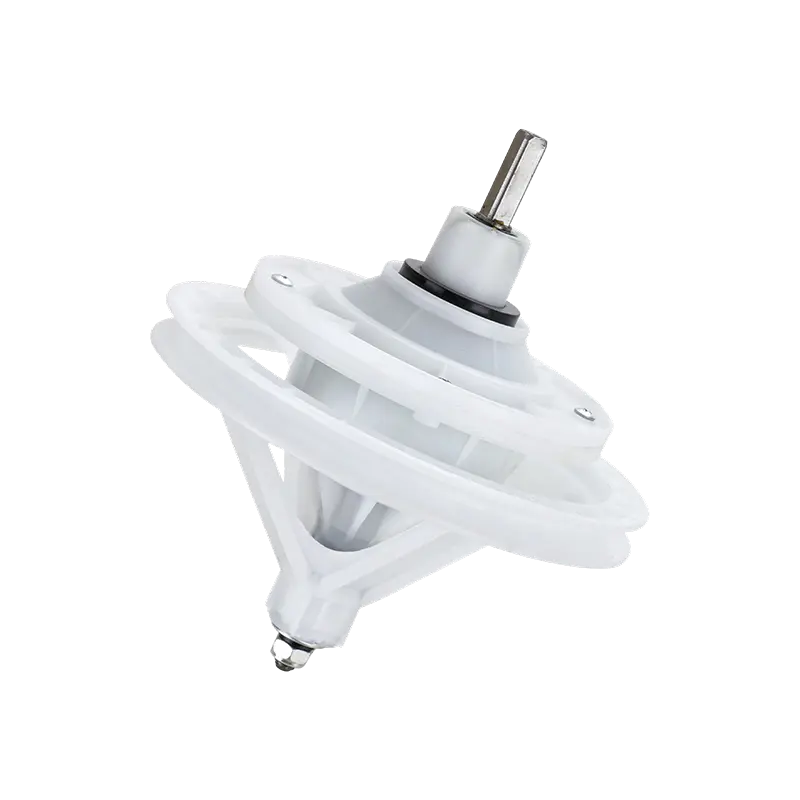
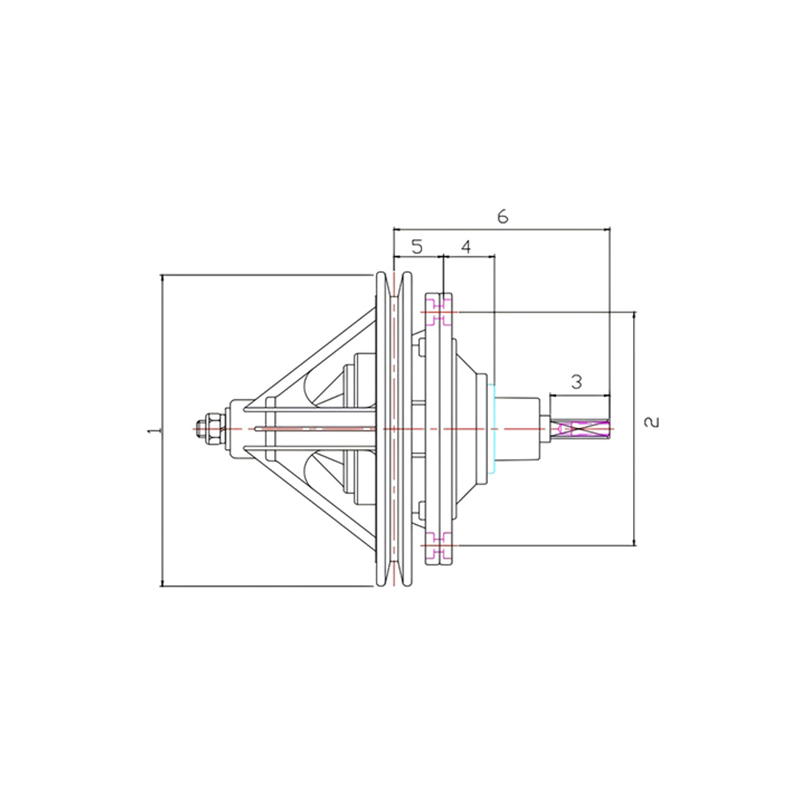 Semi-Automatic Agitator Washing Machine Gearbox GT003Planetary gearbox for semi-automatic agitator washers, with high-torque output, lightweight POM/reinforced nylon gears and maintenance-free self-lubrication; useful where spin-start load matching matters.View Product →
One habit separates experienced buyers from inexperienced ones. Experienced buyers ask for the current curve, not just the rated wattage. The rated number tells you what the machine does in steady state. The curve tells you what the board has to survive in the first 300 milliseconds, and that is where relays die.
Ask for the current curve, not the rated wattage. The first 300 milliseconds of a spin start is where boards fail and where the wrong transmission quietly guarantees a repeat claim.
OEM Programs: Validate the Board and Gearbox as One System
When a new platform is under development, the board and the transmission are usually sourced by different people on different timelines, and the integration risk lands on whoever runs the design validation. The cheapest way to manage that risk is to schedule a joint validation block rather than two separate ones.
A workable sequence looks like this. Start with a stall test at the lowest specified ambient temperature, because grease stiffness peaks there and current draw peaks with it. Move to a spin ramp test with a full rated load, and record the current curve rather than a single number. Then run an endurance block of at least a few thousand cycles with the drain pump and clutch engaged, watching for drift in spin-up time. Finish with an electrical interference check, since motor switching and relay arcing both generate noise that can disturb sensor readings on the same harness.
Documentation discipline matters as much as the tests. Record which board variant was validated against which gearbox ratio, and keep that mapping alive when either part is revised. Most integration failures we see are not design failures at all. They are revision failures, where a gearbox was improved for noise and the resulting change in friction was never re-validated against the original board firmware.
For twin-tub and semi-automatic programmes, the reducer is often the component with the most influence on perceived quality. A twin-tub washing machine reducer that runs quietly and holds its ratio over thousands of cycles will make an inexpensive board look well engineered, while a poor reducer will make an expensive board look unreliable.
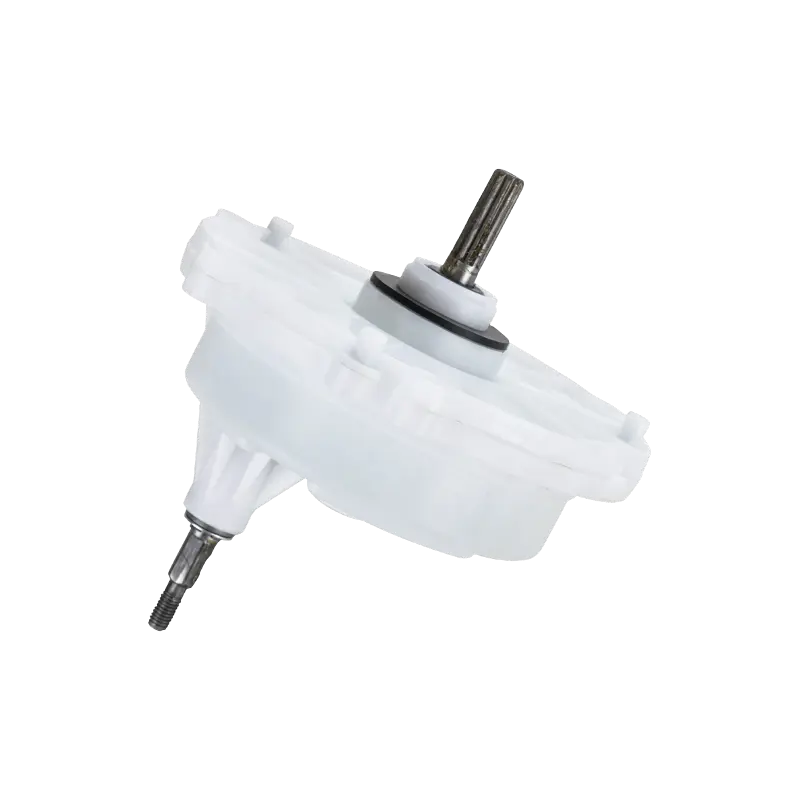
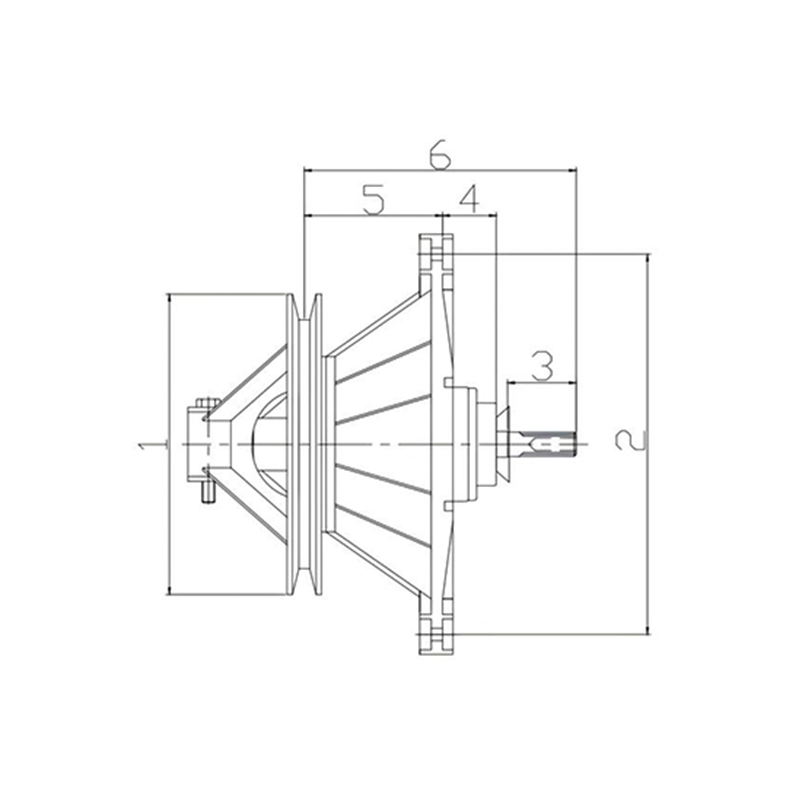 Twin-Tub Washing Machine Reducer GT002Planetary reducer for semi-automatic twin-tub washers, using self-lubricating POM/reinforced nylon gears to support quiet, low-speed high-torque operation where perceived quality and ratio stability matter.View Product →
This is where a transmission-focused manufacturer adds value that a pure electronics supplier cannot. Our own production is built around washing machine gearboxes, reducers, synchronizers, clutch assemblies, drive shafts and P-shaft components, and the working relationship with appliance makers since 2002 has been shaped by exactly these integration questions. Buyers who want the background can review our factory profile and certifications through the company and certification overview.
Validate the board and the gearbox in the same test block, then record which variant met which ratio. Most integration failures are revision failures, not design failures.
Aftermarket and Wholesale: Building SKU Pairs That Reduce Returns
The aftermarket has a different economics problem from the OEM line. The customer is not designing a platform. They are trying to get one specific machine back into service, often with incomplete information and a labour cost that dwarfs the part price. In that environment, the winning strategy is not the widest catalogue. It is the catalogue that lets a technician finish the job on the first visit.
Three practices tend to move the numbers. First, pair the board SKU with the drivetrain SKU that most often fails alongside it, and list them on the same page rather than in separate categories. Second, publish the small compatibility facts that prevent misorders: motor family, drive type, reversal behaviour and connector family. Third, capture the machine details at the point of the warranty claim, so the return data become a sourcing signal instead of a cost centre.
Wholesalers face an additional layer of complexity because they serve both repair shops and smaller distributors. A wholesaler that can ship a matched board and gearbox set, with a single reference number, saves its downstream customers a support call. That is worth more than a marginal discount on the board itself, and it is the reason many of our distributor conversations start with transmission kits rather than with individual components.
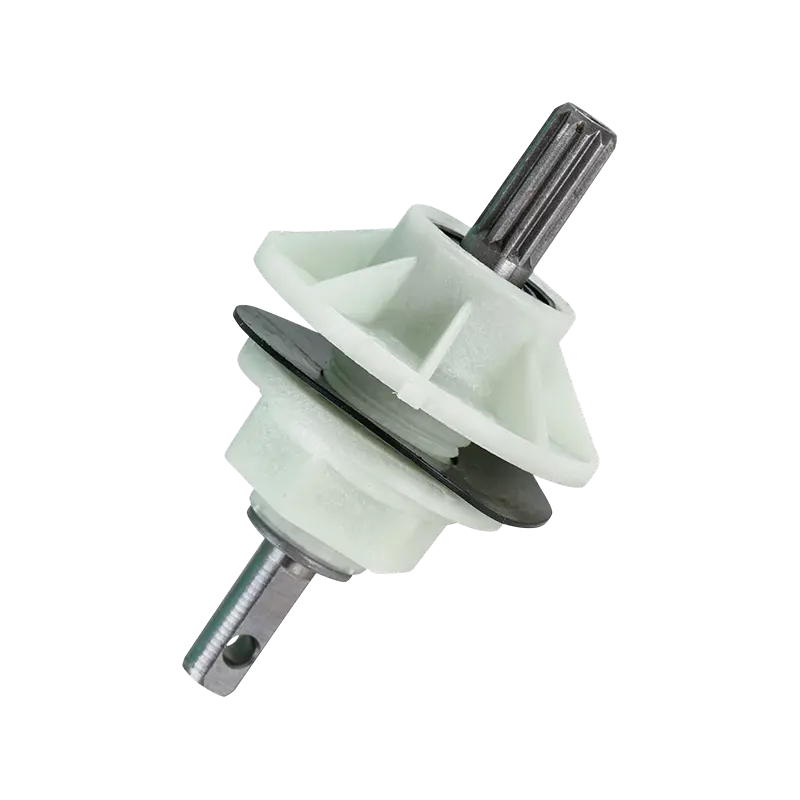
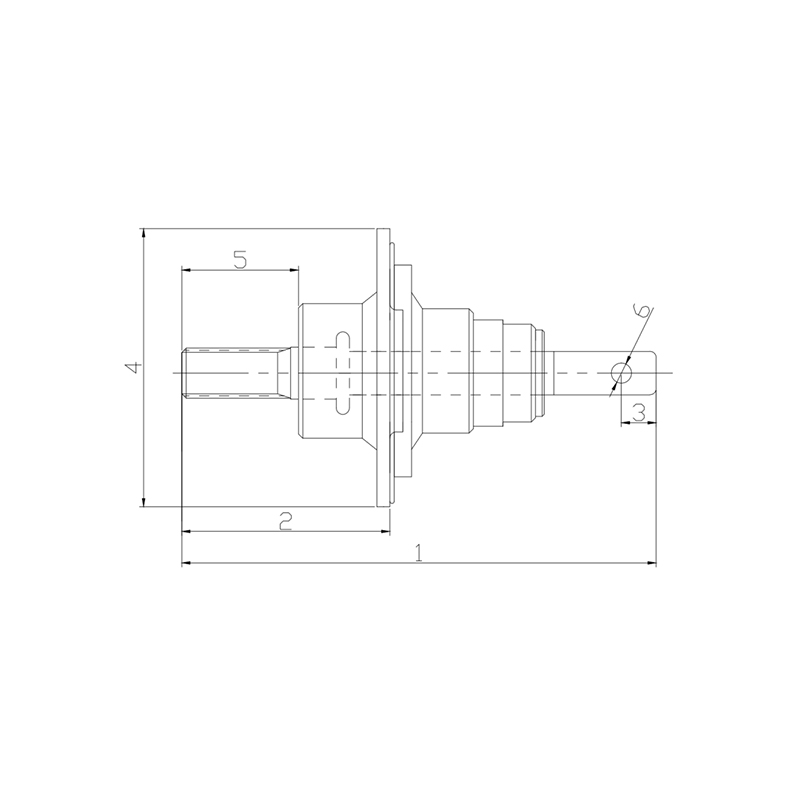 Semi-Automatic Twin-Tub Pulsator Shaft Assembly GT078Straight-through pulsator shaft for old-style semi-automatic twin-tub washers with built-in bearings and mechanical seal; useful when gearbox, P-shaft and clutch are renewed together.View Product →
For semi-automatic platforms, the gearbox, P-shaft and clutch are usually replaced together once one of them has worn, simply because the labour to reopen the machine is the dominant cost. Distributors who already stock those components as a set consistently report fewer partial repairs and fewer callbacks than those selling them one at a time.
In the aftermarket, the catalogue that finishes the job on the first visit beats the catalogue with the widest range. Pairing board and drivetrain SKUs is the cheapest return-reduction tool available.
Supplier Vetting: What to Confirm Before You Place the Order
Whether you are buying a washing machine control board from an electronics specialist or sourcing the transmission from a mechanical component manufacturer, the vetting questions are similar in structure. You are checking whether the supplier can hold a specification over thousands of units, not whether they can produce one good sample.
- Quality management certification. ISO 9001 is the baseline. ISO 14001 indicates an environmental management system, which increasingly matters for European and North American tenders.
- Material compliance. RoHS conformity should be documented per shipment, not promised verbally, and it should cover the plating and lubricants as well as the electronics.
- Incoming material control. Ask what share of core materials is produced in house. Vertical integration inside the factory reduces the number of suppliers whose quality you cannot see.
- Functional testing regime. A 100 percent functional test at the end of the line is different from sampling. Confirm which applies and what the test actually exercises.
- Traceability. Batch codes on the component and on the carton, linked to a production record, are what make a field failure investigable.
- Capacity and floor area. A production base in the region of 10,000 square metres is a reasonable indicator of scale for a component manufacturer serving appliance programmes, but ask for the utilisation figure rather than the headline number.
- Change notification. A written commitment to notify you before any material, process or sub-supplier change is worth more than any discount you will negotiate.
- Documentation package. Drawings, control plans, inspection reports and packing specifications should be available in a consistent format.
A quick word on sample evaluation. Testing three samples tells you whether the design is plausible. Testing thirty from three different production batches tells you whether the process is stable. For any component that carries a warranty, the second test is the one that matters.
Three samples prove a design; thirty samples across three batches prove a process. Only the second tells you whether the supplier can hold the specification.
Cost Drivers: Where the Money Actually Goes
Purchase price is the most visible number in a sourcing decision and usually the least important one over the life of the order. The table below sets out the cost layers that matter, using an order of 20,000 units as the working example.
Cost layers in a board-and-drivetrain sourcing decision, and where each one can be influenced.
| Cost layer |
How it accumulates |
Where to reduce it |
| Piece price |
Negotiated per unit, sensitive to volume and specification |
Standardise connector families and firmware variants across platforms |
| Field replacement cost |
Labour, freight, administration and customer goodwill per claim |
Better pairing and clearer compatibility data at the point of sale |
| Repeat claim cost |
The same machine returning after a partial repair |
Diagnostic guidance that checks the drivetrain before the board |
| Inventory carrying cost |
Slow-moving board variants held for low-volume platforms |
Consolidate to fewer variants with documented coverage |
| Line stoppage cost |
Late delivery of one component holding an assembly line |
Dual-source or buffer the long-lead mechanical part, not the electronics |
Put numbers against it and the picture sharpens. Take a board at 18 US dollars ex-works across 20,000 units, which is 360,000 dollars of purchase value. Now assume a 2 percent warranty return rate and a fully loaded field replacement cost of 110 dollars per claim. That is 400 claims and 44,000 dollars of avoidable expense, roughly 12 percent on top of the purchase value. A small change in pairing discipline that halves the return rate saves more than most price negotiations will ever deliver.
The same arithmetic applies to the mechanical side. A reducer that costs slightly more but holds its ratio and stays quiet over a longer service life reduces the current profile the board has to survive, which shows up as fewer board claims several months later. It is rarely possible to attribute that saving to a single line on the invoice, but the warranty trend generally shows it.
A 2 percent return rate on a 360,000 dollar order can add 44,000 dollars of field cost. Pairing discipline usually saves more than another round of price negotiation.
Lead Time, Minimum Order and Documentation Questions
Once the technical fit is settled, the commercial questions decide whether the programme runs smoothly. These are the ones worth putting in writing before the first purchase order.
- What is the quoted production lead time, and does it assume materials in stock or materials on order?
- What is the minimum order quantity per variant, and does it change if we consolidate variants?
- Which components are produced in house and which are bought in, and what is the lead time of the bought-in items?
- What is the sampling plan for outgoing inspection, and can we specify an agreed reject limit?
- How are packaging and pallet configurations defined, and do they suit our warehouse handling?
- What notice period applies to material or process changes?
- What documentation accompanies each shipment, and in what format?
- What is the process for a field failure investigation, and what response time is committed?
For buyers comparing a control board supplier with a transmission manufacturer, one difference is worth noting. Mechanical parts carry longer tooling lead times but more predictable cost curves. Electronics carry shorter lead times but more exposure to component availability. A programme that sources both from the same region, with documented interfaces, tends to absorb shocks better than one that spreads the two halves of the system across two unrelated supply chains.
Write the commercial answers down before the first order. Change notification periods and inspection limits are the clauses that protect a programme when a revision appears.
Frequently Asked Questions About Washing Machine Control Boards
How do I tell whether the control board or the gearbox is at fault?
Start with the mechanical side, because it is cheaper to check. Remove the belt where the design allows and turn the drum by hand. If it drags, grinds or resists, the transmission needs attention before any board is replaced. If it turns freely and the machine still will not agitate, measure voltage at the motor terminals while the drum is commanded to move. Voltage present with no movement points to the motor or the mechanics. No voltage points toward the board or the harness.
Can a failing gearbox damage a new washing machine control board?
Yes, indirectly. A binding gearbox or a dragging clutch raises the starting current and extends the spin ramp. That extra current erodes relay contacts and raises the operating temperature of the switching devices. The board may work perfectly for a few weeks and then fail in the same way as the original, which is why a second failure on the same machine should always prompt a drivetrain inspection.
Which specifications must match when replacing a control board?
At minimum: motor family and control method, drive configuration, transmission ratio, reversal behaviour, speed feedback source, connector family and pinout, supply voltage and frequency, and firmware variant. The connector pinout is the one that causes instant damage when it is wrong, so verify it against a drawing rather than against a photograph.
Are control boards different for belt-driven and direct-drive machines?
They can be, even when the housing looks the same. Belt-driven units add belt tension and slip behaviour to the current profile, while direct-drive units pass torque through a coupling or shaft. The firmware speed windows and the protection thresholds are usually tuned to one configuration, so a board from a belt-driven platform should not be assumed to suit a direct-drive machine.
What should a wholesaler stock alongside control boards?
The components that most often fail together with them: the gearbox or reducer for the platforms you serve, the clutch assembly, the P-shaft, and the synchronizer for two-tub designs. Stocking them as matched sets, with a single reference number, reduces partial repairs and callbacks more effectively than adding another board variant.
How long should a washing machine control board last?
Life depends far more on the load it switches than on the calendar. A board driving a well-matched transmission in a machine that is not overloaded will typically outlast the mechanical parts. A board driving a binding transmission will not, regardless of how well it was built. That is why buyers who care about field reliability spend as much time on the drivetrain specification as on the electronics.
Do you manufacture washing machine control boards?
No. Our work sits on the mechanical side of the same system: gearboxes, gear reducers, synchronizers, clutch assemblies, drive shafts and P-shaft components for OEM manufacturers and the aftermarket. We are a component manufacturer rather than a board supplier, and we work with buyers who need the transmission half of the pairing to be as well specified as the electronics half. Buyers who want the wider sourcing context can read our supplier guide for OEM and aftermarket buyers.
What documentation should accompany a mechanical component order?
Drawings with revision numbers, a control plan, inspection reports covering critical dimensions and material compliance, and a packing specification. A written change notification commitment should sit alongside them. If a supplier cannot produce those documents on request, the specification is effectively verbal.
Check the mechanics before replacing the electronics, and check the pinout before applying power. Those two habits prevent the majority of repeat board claims.
Putting the Pairing Into Practice
The washing machine control board is the part that gets blamed and the part that gets replaced, but it is rarely the part that starts the failure. Buyers who treat the board and the transmission as one system, specify them together, and validate them in the same test block avoid the pattern that opens this article: the same machine, the same complaint, and a second new board on its way to the same fate.
For OEM teams, that means joint validation and a live mapping between board variants and gearbox ratios. For aftermarket distributors and wholesalers, it means paired SKUs, honest compatibility data and warranty logging that captures the drivetrain. For both, it means asking suppliers for current curves rather than rated wattages, and for change notification rather than verbal assurances.
Our own position in that system is deliberately narrow. Cixi Gaite Electric Co., Ltd. has been building washing machine transmission components in Ningbo since 2002, covering gearboxes, reducers, synchronizers, clutch assemblies, drive shafts and P-shaft components for OEM programmes and aftermarket buyers. We hold ISO 9001 and ISO 14001 certification and supply products that meet RoHS requirements. If you are working through a board and drivetrain pairing question, the engineering team can usually tell you within a short conversation which transmission specification fits the current profile you are dealing with.
Treat the board and the transmission as one specification, one validation block and one catalogue entry. That single decision removes most repeat failures before they reach a customer.

 English
 عربى


 +86-574-63256717 /63267914
info@gaite.cn
 gaite@gaite.cn
 No. 208 Miaoshan Road, Shiyan Village, Henghe Town, Cixi City, Ningbo City, Zhejiang Province, China
