A purchasing engineer opens a motor specification sheet and reads the numbers that usually decide the conversation: rated voltage, frequency, input power, rated speed and starting torque. Two pages later the discussion has moved somewhere else entirely. It is no longer about the motor. It is about the gearbox that has to absorb that torque, the P-shaft that carries it to the pulsator, and the clutch that decides when the pulsator or the drum is allowed to turn.
That move is the practical centre of every motor washing machine project. When a machine comes back from the field with a noise complaint or a stiff transmission, the motor is rarely the failed part. The components that translate motor output into wash action carry the consequence, and their material, tolerance and lubrication choices decide whether a modest motor runs quietly for a decade or a strong motor wears its gears out in a season.
This article is written from the drivetrain side of that relationship. Cixi Gaite Electric Co., Ltd. has been building washing machine transmission components since 2002, including gearboxes, gear reducer units, P-shafts and pulsator shaft components, clutch assemblies, synchronizers and drive shafts for OEM programs and aftermarket buyers. What follows is how we approach matching those parts to a motor, where mismatches tend to appear, and what buyers should put into a request before a meaningful quotation is even possible.
Key point: the motor sets the input, but the drivetrain sets the ceiling, so a motor washing machine should always be specified as one system rather than two separate purchases.
Why the Motor Washing Machine Match Decides Noise, Life and Warranty Cost
A motor does one job in a washing machine: it converts electrical energy into mechanical energy at a shaft. Everything the user experiences after that point, from the rhythm of the wash to the pitch of the spin, is produced by the parts between the shaft and the water. That is why two machines built around the same motor can feel completely different to the same household.
What the motor hands over to the transmission
Three things cross the coupling. The first is speed: a typical washing machine motor runs at a speed fixed by mains frequency and pole count, so the transmission ratio, not the motor, decides how fast the pulsator oscillates or the drum spins. The second is torque, including the short spikes that appear when the motor reverses direction with a full water load sitting above the pulsator. The third is duty cycle, because a wash program asks for repeated starts, reverses and pauses rather than continuous running. A gearbox designed for smooth continuous input will not survive a reversing, high-inertia load simply because its nominal torque rating looks adequate on paper.
Where a mismatch shows up first
Field returns rarely announce themselves as a motor problem. They arrive as symptoms that point one step downstream:
- A whine or growl that changes with load rather than with motor speed
- Clutch slip or a delayed engagement when the program switches from wash to spin
- Pulsator wobble, or visible eccentric movement under a full tub
- Gear tooth pitting and dark lubricant found at the first inspection
- Housing resonance that appears only at certain speeds and disappears at others
Each symptom points to a specific interface. A load-dependent whine usually means gear geometry or backlash is fighting the torque ripple coming through the coupling. A delayed spin engagement usually means the clutch spring or the synchronizer timing does not match the inertia the motor has to accelerate. Wobble usually traces back to P-shaft straightness or to the fit between the shaft and the pulsator hub. None of these are fixed by changing the motor.
Why one motor behaves differently in two machines
Take the same motor model and fit it to two machines with different transmission ratios and different clutch designs. In the machine with the lower reduction ratio, the motor reaches its torque limit sooner and the reversing spikes travel further back up the drivetrain. In the machine with the higher ratio, the motor is comfortable but the gearbox runs at higher internal speed, which generates more heat and more gear mesh noise. Neither machine is wrong. They are simply matched differently, and that matching decision was made when the gearbox and clutch were selected, long before anyone listened to the finished product.
Key point: noise, slip and early wear are almost always interface problems between motor and transmission, not failures of the motor itself.
How a Motor Washing Machine Turns Motor Speed into Wash Action
The path from motor shaft to moving water has four stages, and each stage has a different job and a different failure mode. Understanding the sequence shortens specification conversations considerably, because a buyer can point to the stage causing trouble instead of describing the whole machine.
The reduction stage: gearbox and gear reducer unit
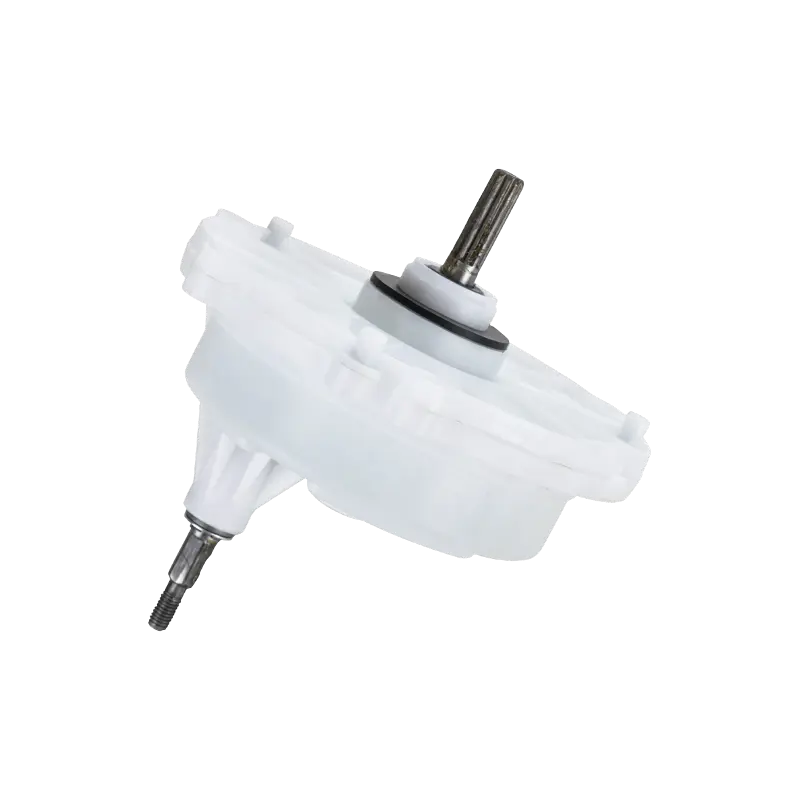
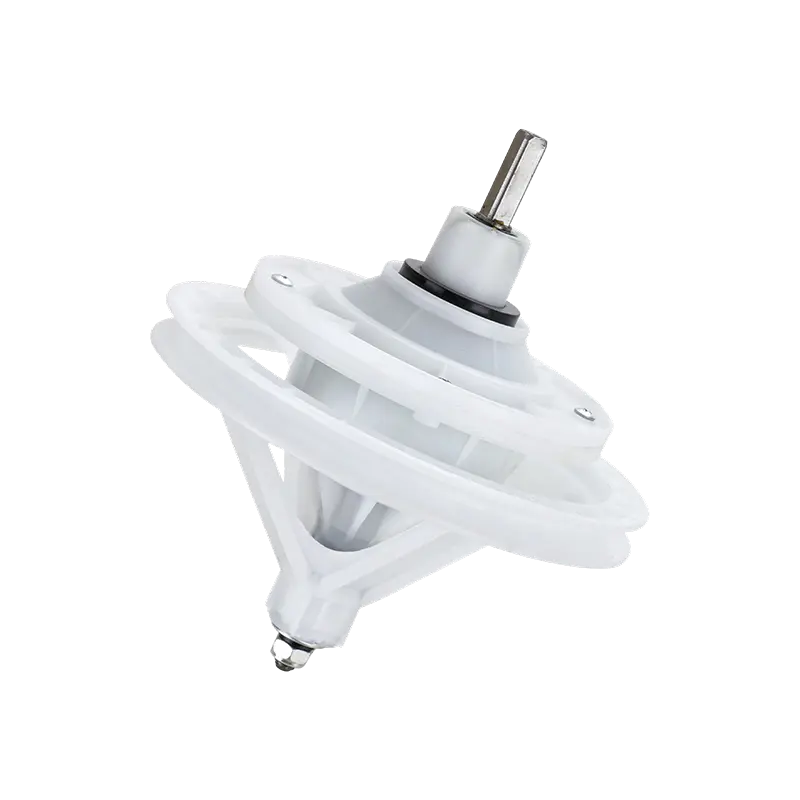
The gearbox takes high speed and low torque and turns it into low speed and high torque, which is what a pulsator or a drum actually needs. In semi-automatic and twin tub machines this is usually a compact spur, worm or planetary arrangement inside a die-cast or moulded housing. In automatic machines the reducer may be integrated with a clutch pack in a single transmission unit. The two numbers that matter are the reduction ratio and the rated output torque, and they must be read together. A ratio that is too low leaves the motor working near its limit on every reverse; a ratio that is too high trades torque margin for internal speed, heat and mesh noise.
The output stage: P-shaft and pulsator components
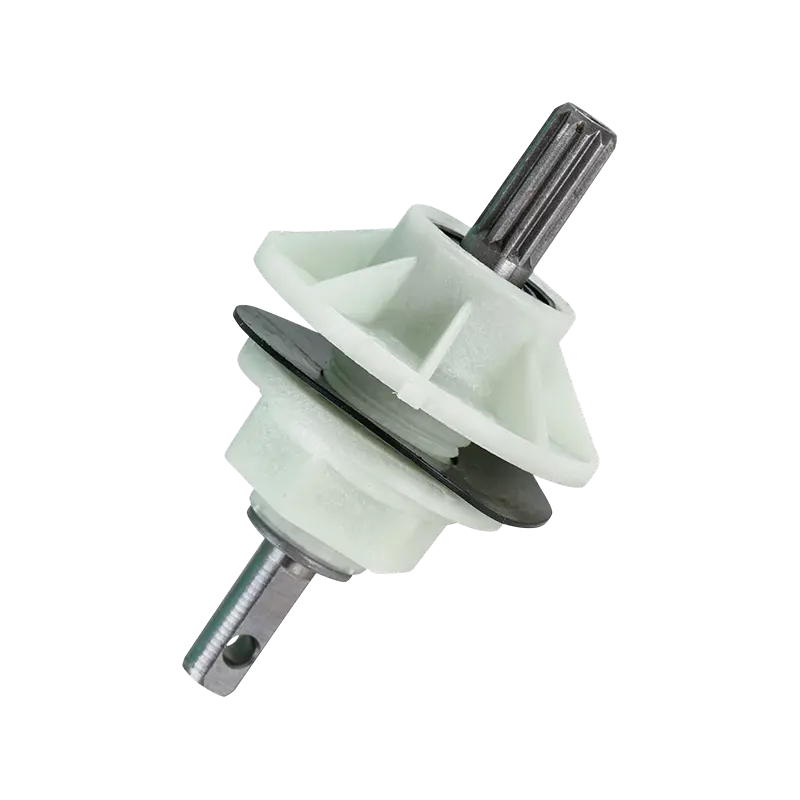
The P-shaft, sometimes called the pulsator shaft, is the last mechanical link before the water moves. It carries the reduced rotation through the tub hub to the pulsator and absorbs a surprising amount of bending load, because the pulsator is pushing against the full mass of wet laundry. Straightness, surface finish at the seal journal, and the spline or keyed fit into the pulsator hub matter more than shaft diameter alone. A shaft that is straight but poorly finished at the seal will leak; a shaft that is well finished but slightly bent will wobble and destroy the seal anyway.
The control stage: clutch assembly and synchronizer
The clutch and the synchronizer decide when the transmission is allowed to drive the pulsator, the drum, or both. During a wash phase the clutch holds the drum still while the pulsator oscillates; during a spin phase it locks the assembly so the whole tub rotates. Timing is everything. If the clutch engages a fraction of a second late, the motor has already accelerated and the engagement is harsh. If it engages early, the motor starts under a load it was not sized for. Synchronizer-integrated gearboxes handle the same decision with a different mechanism, using a sliding sleeve to lock a gear to its shaft and to hold that lock against vibration.
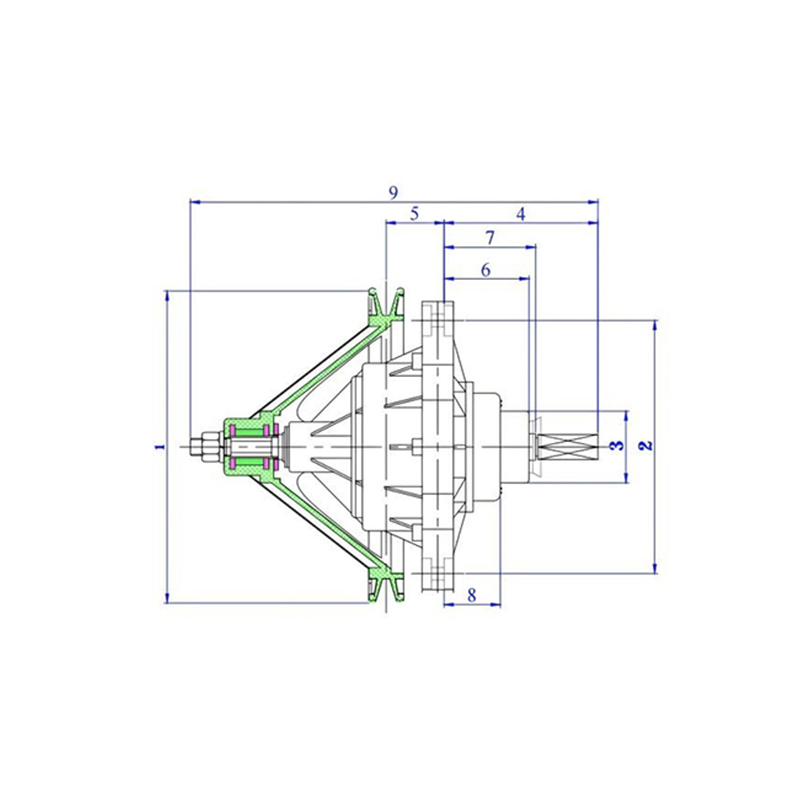 GT005 Washing Machine Transmission for Semi-Automatic AgitatorsPrecision plastic gear transmission converts motor speed into low-speed, high-torque agitator drive with self-lubricating, maintenance-free operation.View Product →
Belt-driven and direct-drive layouts
Belt-driven machines put a pulley and belt between motor and transmission. The belt absorbs some torque ripple and misalignment, which makes the drivetrain more forgiving, but it also adds a wear item and a source of squeal. Direct-drive layouts couple the motor much closer to the transmission, removing belt losses and belt noise but sending every torque spike straight into the gearbox. A direct-drive gearbox therefore needs more attention to gear tooth strength and housing stiffness than an equivalent belt-driven unit, even when the nominal ratings on both nameplates look identical.
Key point: reduction, output, control and coupling must all be sized against the same motor curve, otherwise one stage becomes the sacrificial part.
Drivetrain Layouts Compared
Most sourcing confusion comes from comparing parts across layouts that are not equivalent. A gearbox quoted for a twin tub machine and a gearbox quoted for a direct-drive automatic are not interchangeable alternatives, even when both are described as washing machine gearboxes. The table below sets out how the common layouts differ in what they load and what they demand from a buyer.
Table: how common washing machine drivetrain layouts differ in the parts they load and the checks they demand.
| Layout |
Wash action |
Parts under most load |
What to verify against the motor |
Typical sourcing risk |
| Belt-driven twin tub or semi-automatic |
Pulsator oscillation, spin switched separately |
Gearbox, P-shaft, drive shaft |
Reversing torque and belt slip margin |
Mixing gearbox models that look alike but carry different ratios |
| Belt-driven automatic with clutch |
Pulsator wash, clutch-switched spin |
Clutch assembly, gearbox, P-shaft |
Clutch engagement timing and load inertia |
Clutch springs matched to the wrong motor start profile |
| Direct-drive automatic |
Pulsator wash, direct spin control |
Gearbox, synchronizer, drive shaft, bearings |
Torque spike strength and housing stiffness |
Gear teeth sized for belt-damped loads |
| Planetary reducer unit |
High torque wash in a compact envelope |
Planetary gear set, carrier, output shaft |
Continuous duty versus reversing duty rating |
Using a continuous duty rating in a reversing application |
Reading the table from the buyer side, the useful question is not which layout is better but which layout the part was designed for. A clutch assembly that suits a belt-driven automatic will not necessarily behave well when bolted to a direct-drive unit, because the inertia it has to control and the speed at which it controls it are different. The same caution applies to gear reducers: a planetary reducer chosen for smooth continuous input behaves differently under the reversing, high-inertia duty of a real wash cycle.
Key point: the first question in any drivetrain enquiry should be which layout the part will live in, not which part number looks closest.
Matching a Gearbox to Motor Torque Before You Order
The most expensive mistakes in this category are made at the quotation stage, when both sides are working from a nameplate and a photograph. A structured review takes an hour and removes most of that risk. These are the steps we walk through with OEM engineers and aftermarket buyers before a sample is built.
- Start from the motor curve rather than the motor label. Ask for starting torque, reversal pattern and the number of direction changes per wash cycle.
- Confirm the reduction ratio against the required pulsator or drum speed, then check the resulting output torque against the rated gearbox torque with a working margin.
- Count the reversing duty honestly. Two reverses per minute on a light load is a different duty from eight per minute with a full tub of wet bedding.
- Confirm the mechanical interface: mounting bolt pattern, shaft diameter and spline, housing envelope depth and clearance to the tub.
- Confirm the environmental requirements: humidity, splash exposure, ambient temperature range and any restricted substance obligations.
- Agree an acoustic target with a stated test method and a stated load condition, not a single number written on a drawing.
- Ask for the validation plan and a first article report before tooling is released.
What a torque margin actually buys
A margin is not a number added to make a specification look safe. It buys tolerance for the things that change after the drawing is signed: a slightly thicker shaft seal, a new pulsator with more blades, a different motor supplier with a sharper start, or a detergent-laden load that weighs more than the test rig. In our experience, most field complaints about stripped gears or cracked housings trace back to a margin that was adequate for the prototype and marginal for production. Reversing duty is where margin gets consumed fastest, because each direction change loads the opposite flank of the same teeth.
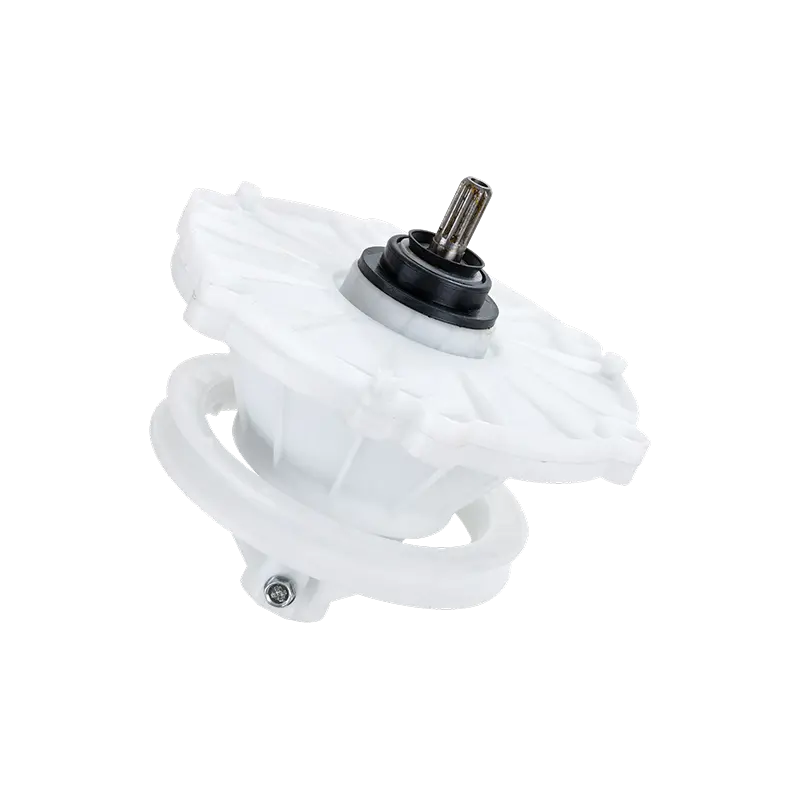
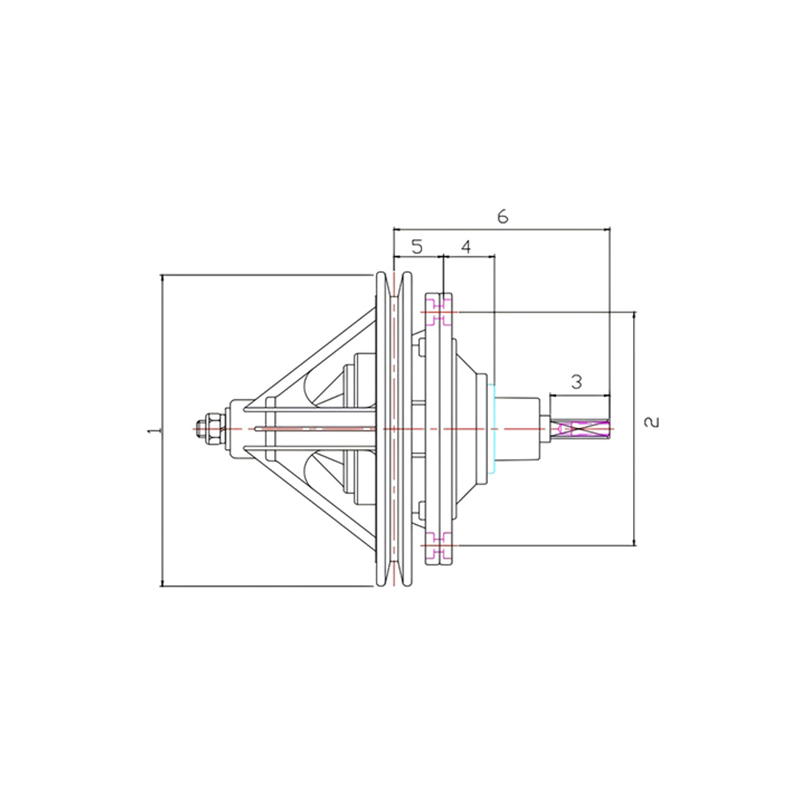 GT003 Semi-Automatic Washing Machine Gear BoxPlanetary plastic gear box delivers low-speed, high-torque agitator drive with self-lubricating, maintenance-free design for cost-sensitive semi-automatic washers.View Product →
Key point: specify gearboxes against the reversing duty cycle, not against a single continuous torque figure.
Where Engineering Attention Goes When a Drivetrain Is Matched
Not every interface in a drivetrain deserves the same amount of review time. The bars below show how we typically distribute engineering attention during an application review, weighted by how often a mismatch in that area turns into a field complaint. It is an illustrative planning aid for discussion rather than a set of measured test results.
Gearbox and reducer matching, about 30 percent of review weight
P-shaft, pulsator hub and coupling fit, about 22 percent
Clutch assembly engagement and spring selection, about 20 percent
Synchronizer timing and sleeve travel, about 16 percent
Drive shaft, bearing and seal stack, about 12 percent
Gearbox matching takes the largest share because ratio and torque margin decisions propagate into every other part of the drivetrain, so an error there cannot be corrected downstream. P-shaft and coupling work comes second, not because the part is complex but because the fit between shaft and pulsator hub is where wobble, seal leaks and startup vibration usually begin. Clutch and synchronizer timing follow closely, since both govern how abruptly the motor load is applied. The smaller share given to drive shaft, bearing and seal work does not mean those parts are simple; it reflects that once the upstream decisions are correct, the shaft and seal stack usually behaves predictably. Buyers who send motor data together with a drivetrain enquiry let us compress this review considerably.
Key point: most field problems originate in the three highest-weighted interfaces, which is exactly where a buyer should insist on documentation.
Materials, Tolerances and Finish That Keep a Motor Washing Machine Quiet
Once the ratio and torque margin are settled, the remaining noise and life questions are answered by materials and fits. These are the details that are hardest to see in a quotation and easiest to feel in the finished appliance.
Gear and shaft materials
Gear sets in washing machine transmissions usually combine a hardened steel pinion with a steel or engineering polymer wheel, depending on the load and the acoustic target. Polymer wheels run quieter and absorb some reversal shock, but they need a compatible lubricant and a housing that does not distort under load. Steel wheels tolerate higher torque and higher temperature but transmit mesh noise more directly. Shafts are typically turned from free-machining or medium-carbon steel with a hardened and ground journal at the seal and bearing positions, because those two surfaces decide leakage and bearing life.
Tolerances and fits
The interfaces that matter most are the shaft-to-pulsator fit, the bearing seat in the housing and the gear centre distance. A slightly loose pulsator spline feels fine in a dry assembly and rattles once the tub is full. A bearing seat that is too tight distorts the outer ring and shortens bearing life; too loose and the shaft walks. Centre distance controls backlash, which controls noise at one end of the range and tooth loading at the other. Good practice is to define these fits with a stated measurement method, so that the supplier and the customer are measuring the same thing.
Lubrication and sealing
Washing machine transmissions live in a wet, detergent-laden environment with wide temperature swings. Grease retention depends as much on seal geometry and shaft finish as on the grease itself. A double lip seal running on a ground journal, protected by a dust lip, is a different proposition from a single lip running on a turned surface. Where the gearbox sits close to the tub, water ingress through the vent path is a common cause of early failure, and it is usually solved by a design change rather than a lubricant change.
Environmental compliance
Restricted substance requirements are now part of most appliance supply agreements. RoHS compliance is a documentation activity as much as a materials activity, and it only holds if every coating, plating, lubricant and polymer in the bill of materials is covered. Our own production is organised under ISO 9001 and ISO 14001 management systems, and product documentation follows the RoHS requirements our customers set.
Key point: material and fit decisions, not motor choice, determine whether a washing machine drivetrain stays quiet through its service life.
P-Shaft and Pulsator Components: the Small Part That Sets the Wash Feel
If a household says a machine washes gently or washes aggressively, the P-shaft and pulsator assembly is doing most of that work. The shaft transfers rotation and holds the pulsator centred under load, and the pulsator profile converts that rotation into the water movement that actually lifts and folds the laundry. When the shaft is slightly out of true, the pulsator does not simply wobble; it changes the flow pattern unevenly and leaves the load circulating in one direction.
For buyers, the practical checks are short. Confirm the shaft length and spline against the tub hub, confirm the seal journal finish, confirm the material and any plating, and confirm the runout limit with the measurement point stated. Then confirm it again after assembly, because a shaft that passes on the bench can still fail when it is pressed into a hub with the wrong interference. Semi-automatic and twin tub machines are especially sensitive here, since the pulsator sits in a tall column of water and any eccentricity is amplified by the tub geometry.
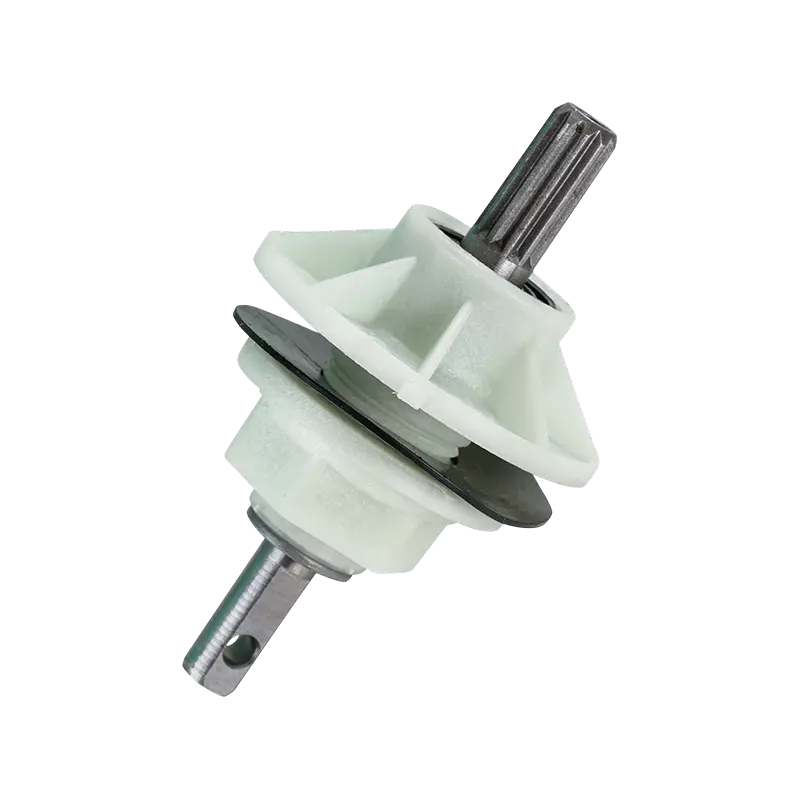 Washing Machine P-Shaft for Twin-Tub Spin DriveDirect-drive output shaft transmits motor power to the spin drum, supporting stable high-speed drying in twin-tub and semi-automatic washers.View Product →
Key point: define P-shaft runout and seal journal finish in writing, with the measurement point specified, or the specification is not repeatable.
OEM and ODM Paths for a Washing Machine Parts Manufacturer
Buyers arrive at a transmission supplier from two directions. Some have a complete drawing package and need a manufacturing partner who will hold the tolerances. Others have a motor, a tub and a target retail price, and need someone to propose the drivetrain. Both are normal, but they need different inputs.
Working through an OEM path
In an OEM arrangement, the customer owns the design. That means the drawing package should be complete: material specification, heat treatment, tolerance stack, surface finish, allowable runout, lubricant, marking and packaging. The supplier's job is to manufacture to that intent and to flag anything that cannot be achieved repeatably before tooling is cut. The most useful early output from a supplier is a list of the three or four features that carry the most process risk, together with the proposed inspection method for each.
Working through an ODM path
In an ODM arrangement, the drivetrain design is proposed around the customer's motor and tub. Here the conversation starts with the application rather than the drawing: machine type, tub capacity, target spin speed, motor characteristics, reversing pattern, expected product life and any acoustic target. From that, a ratio, a clutch or synchronizer configuration and a shaft geometry can be proposed, then validated. This path is often faster for aftermarket programs, where the goal is to fit an existing machine family well rather than to create a new platform.
What to put in a request
- Machine type and tub capacity, plus wash and spin speed targets
- Motor data: rated speed, input power, starting torque if available
- Reversing pattern and the number of direction changes per cycle
- Mounting interface details, shaft dimensions and spline or keyed fit
- Annual volume expectation, target markets and any certification requirements
Complete inputs change the nature of the reply. A request with motor data usually produces a drivetrain proposal; a request with only a photograph usually produces a question about which of several similar parts is meant. As an OEM and ODM supplier working with washing machine program teams, we would rather spend an extra day in the enquiry than a month in tooling correction.
Key point: the quality of a drivetrain quotation is limited by the quality of the motor and tub data supplied with the enquiry.
Sourcing Risks and Practical Ways to Reduce Them
Most drivetrain sourcing problems are predictable, which means most of them are preventable with a little structure at the front end.
- Similar part numbers, different internals. Two gearboxes can share a housing and differ in ratio or gear material, so insist on the ratio and material callout on every drawing revision.
- Sampling from a different process than production. A sample made on a manual line proves the design, not the process, so ask which line the validation build came from.
- Untested second sources. A lubricant or seal change can shift noise and life, so treat any substitution as a change requiring re-approval.
- Acoustic targets agreed without a method. If the measurement distance, load condition and background noise level are not written down, the target will be argued about later.
- Interface drawings that stop at the supplier boundary. The pulsator hub and the tub centre are part of the fit, so the stack has to be reviewed across the boundary.
- Documentation gaps at the end of the project. Material declarations, first article reports and inspection records are easier to collect at launch than a year afterwards.
A useful discipline is to write the acceptance criteria into the purchase order as a short appendix: ratio, torque rating, runout limit, acoustic method, lubricant and compliance documents. It takes an hour and removes most of the ambiguity that later becomes a rework claim.
Key point: put ratio, torque, runout and acoustic method into the purchase order, because undocumented expectations are not specifications.
What Aftermarket Buyers and Wholesalers Should Ask
Aftermarket programs ask a different question from OEM programs. Instead of one machine, a distributor or wholesaler may be covering dozens of models with overlapping parts, and the risk shifts from design validation to coverage and identification. The most common failure in this segment is a part that fits the intended machine but is listed under a description that also matches a different machine family.
Three practices reduce that risk. First, build the catalogue on dimensional and functional attributes rather than on marketing names: shaft length, spline count, mounting hole spacing, ratio, engagement type. Second, request a fitment note for every part, stating which machine families it was validated against and where the boundary is. Third, ask for consistent marking on the part itself, because cartons are lost and labels fade. A washing machine parts manufacturer serving both OEM and aftermarket channels should be able to support this without treating it as an extra service.
Key point: catalogue a drivetrain part by dimension and function, never by machine name alone.
Factory, Certification and Delivery Confidence
Drivetrain parts are small, high-value and easy to get wrong in a way that only shows up after installation. That makes the manufacturing base part of the technical answer rather than a commercial footnote. Our production site in Henghe Town, Cixi, Zhejiang covers roughly 10,000 square metres and is organised around washing machine component manufacturing, with a large share of core component production handled in house so that heat treatment, machining and assembly do not depend on unrelated suppliers.
Quality management follows ISO 9001, environmental management follows ISO 14001, and product compliance documentation is prepared against the RoHS requirements our customers specify. None of that replaces a first article report, but it does mean there is a documented system behind the report. For buyers planning a program over several years, the useful questions are about stability: which processes run in house, how a change is notified, and what records accompany a shipment. Those answers matter more than any single certificate.
Key point: a documented management system plus in-house core production is what turns a sample approval into a repeatable supply.
Where to Go Next on This Site
If you want the background on how the company was built and how its washing machine component lines developed, the company profile page covers the manufacturing base, the component categories and the management systems in more detail.
Read the company profile and manufacturing background
If your next step is a process audit or a first article discussion, the factory tour section walks through the production flow from machining to assembly and inspection.
Walk through the factory tour pages
Key point: technical fit and manufacturing confidence should be checked in the same visit, not in two separate stages.
FAQ: Motor Washing Machine Questions Buyers Ask
What does the motor actually drive in a motor washing machine?
The motor drives a shaft that connects to the transmission, which usually consists of a gearbox or reducer, a clutch or synchronizer that selects the operating mode, and a P-shaft that carries the reduced rotation to the pulsator or drum. The motor supplies speed and torque; the transmission decides how that torque is delivered, at what speed, and in which direction.
Can I change the motor without changing the gearbox?
Sometimes, but it should not be assumed. A replacement motor with a different starting torque or a sharper reversal will load the same gearbox differently. Before substituting, compare rated speed, starting torque and the reversing pattern, then check that the existing ratio and torque margin still hold. If either margin shrinks, the gearbox or clutch is effectively being re-specified even though the part number has not changed.
How do I tell whether noise comes from the motor or the gearbox?
Run the machine without load and note the sound, then repeat with a full tub. Motor noise generally follows motor speed and stays similar under load. Gearbox noise changes with load and often shifts pitch during reversal, while bearing noise tends to appear at one particular speed and remain. A pulsator wobble that appears only when wet points to the shaft and hub fit rather than to either the motor or the gear set.
What information should I send with a gearbox enquiry?
Send the machine type, tub capacity, wash and spin speed targets, motor rated speed and input power, starting torque if available, the number of direction changes per cycle, and the mounting and shaft interface details. Annual volume expectation and target markets help as well. Requests that include motor data normally receive a drivetrain proposal rather than a list of similar part numbers.
Do you supply parts for twin tub and semi-automatic machines as well as automatics?
Yes. The product range covers semi-automatic and twin tub gearboxes and reducers, P-shafts and pulsator shaft components, clutch assemblies, synchronizers, drive shafts and gear reducer units, alongside belt-driven and direct-drive gearbox configurations. Because the duty cycles differ so much between these machine types, each enquiry is reviewed against its own reversing pattern rather than against a single general rating.
How does a synchronizer differ from a clutch in a washing machine transmission?
A clutch uses friction engagement to connect or release drive, which allows some slip during engagement and softens the load on the motor. A synchronizer uses a sliding sleeve to lock a gear to its shaft, bringing the two parts to matching speed before the lock is completed. Clutch designs tend to dominate in belt-driven automatics, while synchronizer-integrated gearboxes are used where a positive lock and a compact layout are preferred.
What certifications apply to washing machine drivetrain components?
The most common requirements are a quality management system such as ISO 9001, an environmental management system such as ISO 14001, and material compliance with restricted substance rules such as RoHS. Customers sometimes add their own incoming inspection standards and acoustic limits. All of these should be listed in the enquiry so that the documentation package matches what the receiving plant will actually check.
How does a buyer start a custom drivetrain project?
Start with the application: machine type, motor data, target speeds, life expectation and interface dimensions. A drawing is helpful but not essential at the first contact. From that starting point the discussion can move to ratio, clutch or synchronizer configuration and shaft geometry, and then to a sample for validation. The earlier the motor data arrives, the fewer assumptions have to be corrected later.
Key point: every FAQ above reduces to one practice, which is to describe the motor and the duty cycle before describing the part.
Bringing the Specification Together
A motor washing machine is a chain of decisions, and the motor is only the first link. Once the motor curve is known, the ratio, torque margin, clutch or synchronizer timing, shaft geometry and seal finish all follow from it. When those decisions are made in that order, the result is a drivetrain that behaves predictably: a comfortable wash rhythm, a spin that engages without a jolt, and a gear set that still sounds the same after several seasons of reversing loads.
When they are made in the opposite order, the symptoms appear later and in the wrong place. A buyer replaces a motor and the noise returns. A production line changes a lubricant and the seal starts weeping. A catalogue lists two similar housings under one description and the returns pile up. None of these are mysterious; they are what happens when the drivetrain is treated as an accessory rather than as the part that defines the machine.
For teams working through that process now, the practical sequence is straightforward: gather the motor data, define the duty cycle, agree the interface dimensions across the supplier boundary, and write the acceptance criteria into the order. Everything else, including the choice between a gearbox family, a clutch design or a synchronizer-integrated unit, becomes a technical comparison instead of a guess.
Key point: match the drivetrain to the motor curve, document the interfaces, and the wash performance and service life follow without further argument.

 English
 عربى


 +86-574-63256717 /63267914
info@gaite.cn
 gaite@gaite.cn
 No. 208 Miaoshan Road, Shiyan Village, Henghe Town, Cixi City, Ningbo City, Zhejiang Province, China
