A top-load washer that fills, drains, hums through the wash cycle and then refuses to spin is one of the most common calls in appliance service work, and on older direct-drive platforms the diagnosis usually ends in the same place. Once the lid switch, the drive block and the clutch have been cleared, the Kenmore washing machine transmission is the component that has to come out of the cabinet.
The short version first: that transmission is a sealed gear case holding a gear train, a shift mechanism and an output shaft, and once the internals wear, replacement is almost always cheaper and more dependable than repair. What decides whether the repair holds is not the badge on the lid but whether the replacement core matches the original in shaft geometry, shift timing and load rating. A core that is dimensionally close but not correct will often run quietly for a week and then come back as a comeback claim.
This guide is written for people who make that call repeatedly: independent repair technicians, aftermarket distributors stocking fast-moving cores, and OEM or ODM buyers specifying gearboxes for new platforms. It covers how the part fails, how to confirm a failure before spending money, what a replacement should be measured against, and how to source at volume without inheriting field returns.
Confirm the gear case before you order a gear case; a clutch, drive block or lid switch fault can imitate transmission failure closely enough to fool a rushed diagnosis.
The Short Answer on Kenmore Washing Machine Transmission Failures
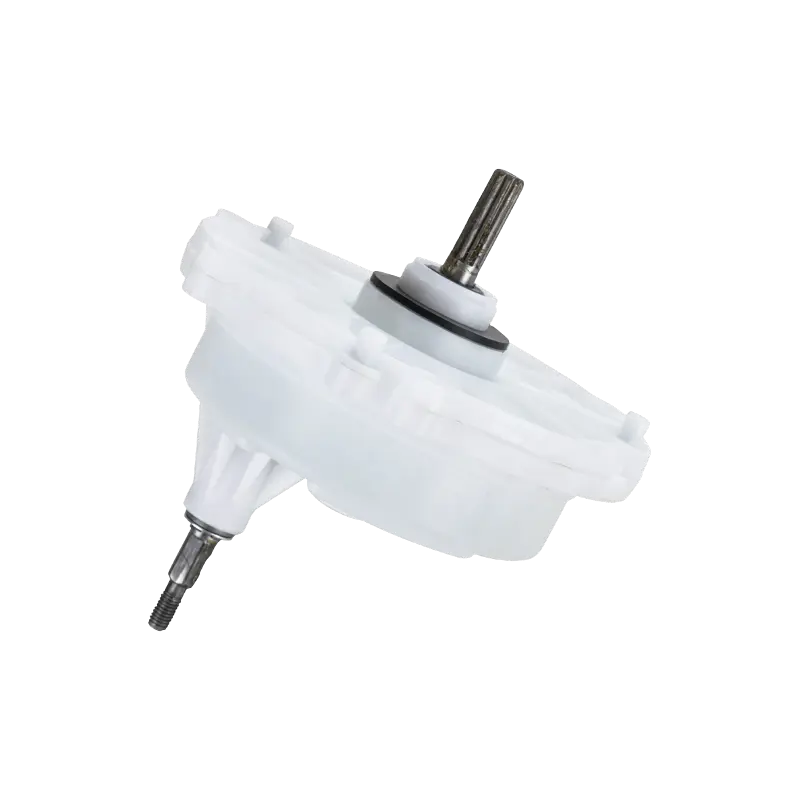
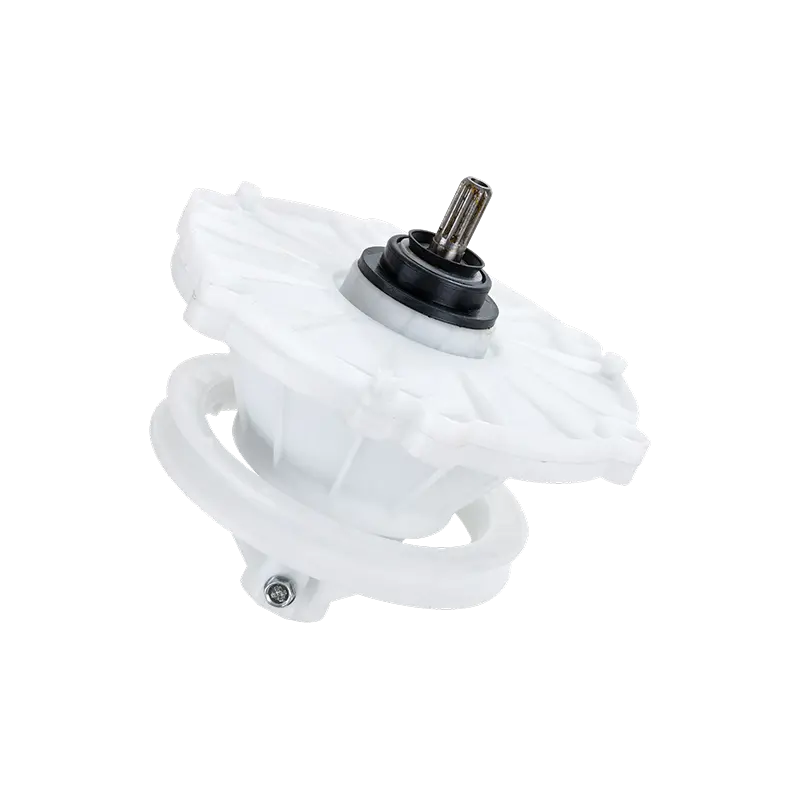
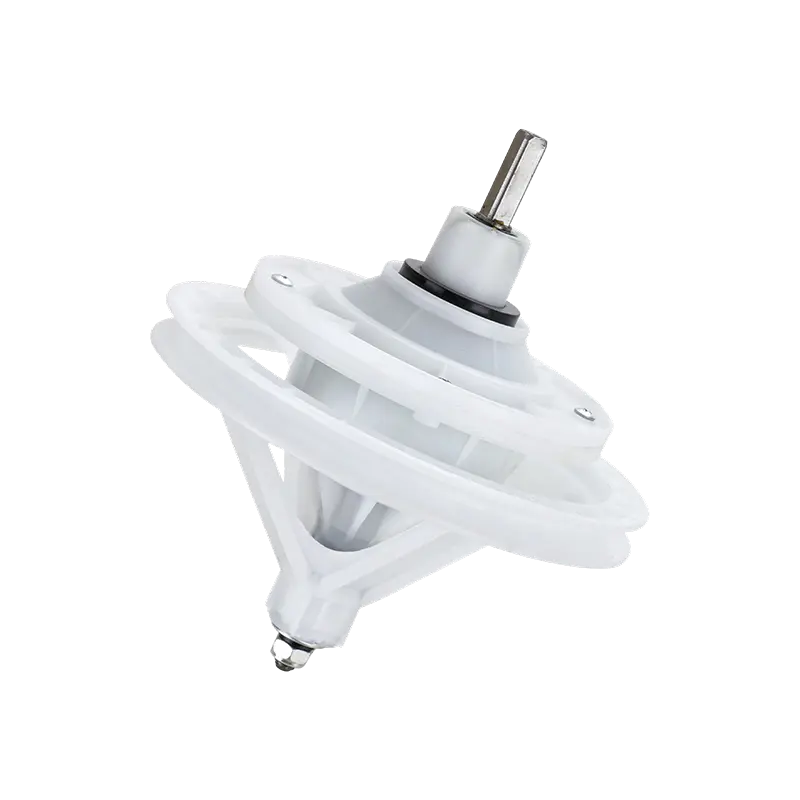
In a direct-drive top-load design, the motor sits vertically under the tub and drives the gear case directly. The gear case does two jobs that look simple from the outside and are anything but simple inside. During wash, it converts continuous motor rotation into a slow oscillating motion at the pulsator. During spin, it locks that oscillation out and passes rotation straight through to the basket at high speed. A shift mechanism changes between the two states, usually triggered by a cam and actuator on the side of the case.
When a customer reports that the machine washes but will not spin, or spins but will not agitate, the transmission is a candidate, not a verdict. The useful distinction is this: if the motor runs, the coupling is intact and the clutch is not slipping, and the drum still refuses to move in one direction, the fault is almost certainly inside the sealed case. At that point the practical answer is a replacement unit, because the case is not designed to be opened, shimmed and resealed in the field.
Rebuilding is technically possible on a bench, and some workshops do it for vintage machines where parts are unobtainable. For anything resembling regular service work it does not pay. The labour time exceeds the price of a new core, the reseal is rarely as good as the factory seal, and the failure repeats if the underlying wear on the gear teeth or bearings is not fully corrected.
Symptom patterns on direct-drive top-load machines; clutch and drive-block faults can imitate several of these, so confirm each before ordering parts.
| Symptom |
What it usually points to |
Check first |
| Washes normally, will not spin, motor hums |
Shift cam or actuator not engaging spin, or a slipping clutch |
Actuator and clutch before the gear case |
| Spins normally, will not agitate |
Worn shift fork or damaged gear teeth inside the case |
Drive block and coupling, then the gear case |
| Grinding or rumbling under load |
Bearing wear or chipped gear teeth |
Gear case replacement |
| Oil film under the cabinet |
Seal failure and water ingress into the lubricant |
Seal condition and case housing |
| Both agitation and spin lost at once |
Case internals or the motor coupling |
Coupling first, then the gear case |
On a sealed direct-drive gear case, a confirmed internal fault means replacement, not repair, and the replacement has to match the original core rather than merely fit the bolt holes.
What Sits Inside the Gear Case and Why Each Part Matters
Understanding the internals is what separates a technician who diagnoses accurately from one who changes parts until the noise stops. The four functional groups below are also the four places where an aftermarket core can differ from the original, which is why buyers should ask about them directly.
The Gear Train and Reduction Stage
The gear train reduces motor speed to a pulsator speed that will not tear fabric. In most top-load units this is a planetary arrangement or a compound spur set running in grease. Wear here shows up as a whine that rises with load, as metal paste in the grease, or as a complete loss of agitation when teeth strip. The metallurgy and heat treatment of these gears is the single largest quality difference between a budget core and a durable one, and it is invisible from the outside until the unit is in a customer's home.
The Shift Mechanism
The shift mechanism decides whether the machine agitates or spins, and it is the most frequent failure point in the field. A cam, a fork or a synchroniser moves a sliding member into and out of engagement. When the cam wears, the unit may agitate during the spin cycle, a fault that sounds like a control board problem but is entirely mechanical. A synchroniser integrated into the gearbox, of the type used on many modern platforms, reduces the shock load at the moment of engagement and extends the life of the fork and the sliding gear.
Output Shaft, P-Shaft and Pulsator Interface
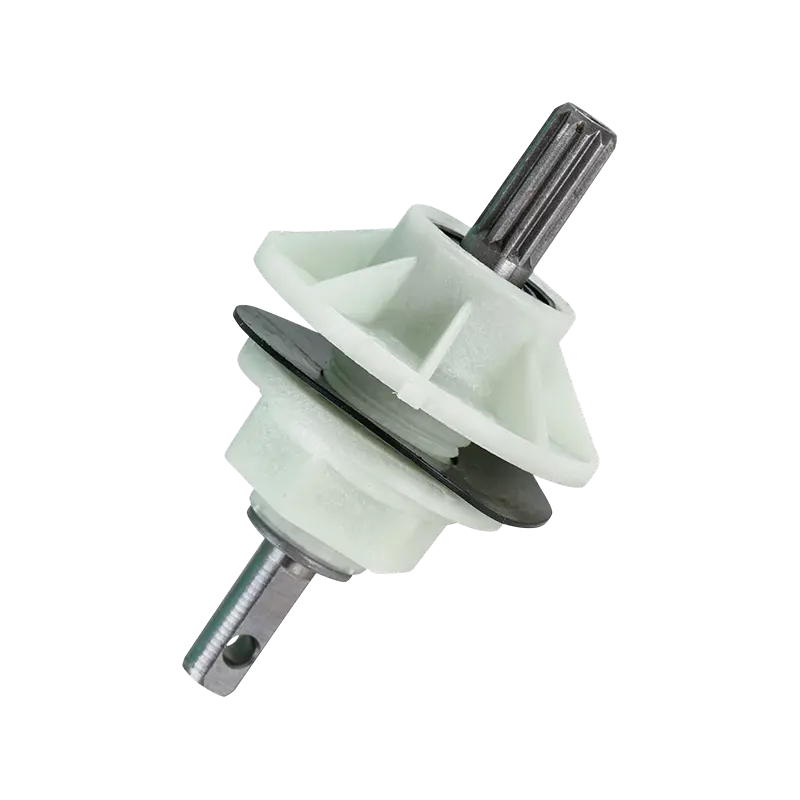
The output shaft carries the load out of the case to the pulsator or the basket hub. On twin-tub and semi-automatic platforms the equivalent part is the P-shaft assembly, which has to run true because any runout is amplified at the pulsator. Shaft diameter, spline count and the length of the engagement surface are the dimensions most often mismatched in aftermarket supply, and a mismatch usually appears as a wobble at high spin speed rather than an immediate failure.
Clutch and Brake Interface
The clutch and brake are separate from the transmission but share the same load path, which is why the two are so often confused during diagnosis. The brake holds the basket still during wash; the clutch engages the spin drive. If either is marginal, the machine behaves like a transmission failure. Replacing a healthy gear case because the clutch was slipping is the most common wasted repair in this category.
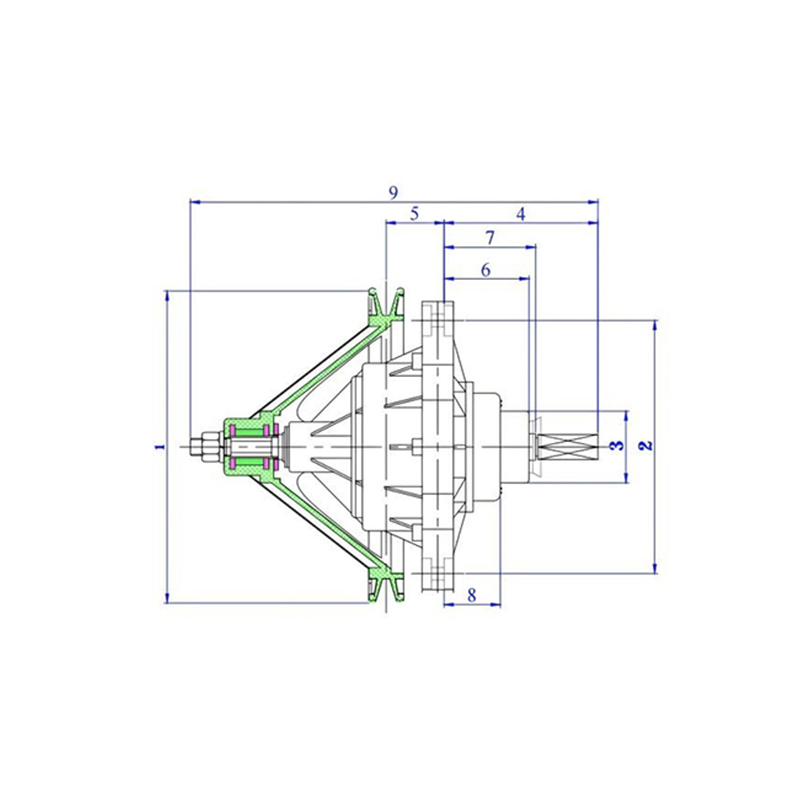 GT005 Washing Machine Transmission for Semi-Automatic Agitator WashersGT005 core transmission delivers low-speed, high-torque agitator drive with POM or reinforced nylon gearing and self-lubrication for humid semi-automatic washers.View Product →
For buyers specifying this class of part, the questions worth asking a supplier are concrete: what gear material is used, what heat treatment is applied, how is the shift cam hardened, and what runout is accepted at final inspection. Suppliers who can answer with numbers rather than adjectives are usually the ones whose cores survive the second year in service.
The gear train, the shift mechanism, the output shaft and the clutch interface fail in different ways but produce overlapping symptoms, so each has to be cleared in sequence rather than assumed.
A Diagnostic Sequence That Avoids Unnecessary Replacements
Working in a fixed order saves more money than any single test. The sequence below moves from the cheapest and most accessible checks to the most expensive, and it deliberately leaves the gear case until last.
- Confirm the complaint with a full cycle, not a single function. Note whether fill, drain, agitation and spin all behave as the customer described.
- Check the lid switch and the control, since a machine that will not spin at all frequently has an electrical interlock fault rather than a mechanical one.
- Inspect the drive block and the motor coupling. A worn drive block slips under spin load and mimics a dying gear case almost exactly.
- Observe the clutch and brake. Basket movement by hand with the power off tells you whether the brake releases and whether the clutch drags.
- Listen with the cabinet open and the machine in spin. A rhythmic knock that tracks motor speed suggests the coupling; a whine that rises with basket speed suggests the case.
- Look for oil residue, water staining and corrosion around the case seam and the shaft exit, which indicate a failed seal and contaminated grease.
- Only after the first six checks point inward should the gear case be condemned and a replacement ordered.
Experienced technicians will recognise step three as the one most often skipped. On a machine that is fifteen years old, the drive block is often worn to the point where it slips under load while the transmission itself is still serviceable. The reverse is also common: a transmission with a failing bearing produces a noise that a customer describes as a slipping belt, and the technician replaces the drive block twice before the real fault is found.
A fixed diagnostic order that clears the lid switch, coupling, drive block and clutch before the gear case prevents most unnecessary transmission replacements.
Where Transmission Problems Cluster in Practice
Service feedback across direct-drive top-load platforms does not distribute evenly across the internal components. The pattern below is an indicative picture assembled from common field findings rather than a statistical study, and it is useful mainly for deciding where to look first.
Indicative share of gear-case related service findings
Worn shift cam or actuator engagement
30
Gear tooth wear or stripped reduction gear
24
Seal leak and water in the lubricant
18
Worn output shaft or drive block interface
13
Bearing noise or end play at the shaft
9
Housing crack or mounting ear failure
6
Illustrative distribution based on common field findings; individual machines vary.
The first two categories together account for roughly half of what technicians find, which explains why so many failures present as a shift problem rather than a broken gear. A cam that no longer holds engagement produces the classic symptom of agitation during the spin cycle, and a worn reduction gear produces a machine that fills and drains but never moves the clothes.
For a component manufacturer, the same pattern shapes design priorities. Shift engagement surfaces, cam hardening and the choice of synchroniser geometry matter as much as gear tooth strength, because they determine how long the unit behaves correctly before wear changes the timing. Semi-automatic and twin-tub gearboxes, where the reducer carries continuous reversing loads, benefit from the same attention to the shift and reduction stages rather than to raw torque alone.
The seal category is smaller but more expensive in the long run. Once water reaches the grease, bearing damage follows quickly, and a machine that was merely noisy becomes a machine that is seized. Buyers who ask suppliers for seal material, shaft surface finish and grease specification are addressing the third-largest failure group directly.
Shift engagement and gear tooth wear dominate field failures, so engagement geometry and surface hardening deserve the same specification attention as load rating.
Replacement Options Compared: New OEM-Grade, Rebuilt and Pulled Units
Once the gear case is condemned, the choice of replacement shapes the risk profile of the whole job. There are three practical routes, and they differ less in price than in the cost of a comeback.
Comparison of replacement routes for a failed top-load transmission core; labour cost of a callback usually outweighs the price difference between routes.
| Route |
Typical strength |
Main risk |
Best used for |
| New OEM-grade aftermarket core |
Consistent tolerances and full warranty support |
Varying quality between suppliers |
Volume repair work and resale |
| Rebuilt original unit |
Original housing and mounting accuracy |
Reseal quality and reused worn internals |
Low-volume or vintage machines |
| Used pull from a donor machine |
Lowest immediate cost |
Unknown service history and no traceability |
Temporary or non-critical use |
For most service businesses the first route is the only one that scales. The second depends on the skill of the rebuilder and is difficult to guarantee to a customer. The third is a gamble that occasionally pays and frequently does not, because a donor machine of the same age is likely to be close to the same wear point.
What makes an OEM-grade aftermarket core credible is documentation rather than the label on the box. A supplier operating an OEM programme should be able to describe the inspection criteria applied at final assembly, the sampling plan used on incoming gears, and the process followed when a batch fails. Buyers evaluating a new source can review the OEM washing machine gearbox programme structure and compare it against what their current supplier provides.
Price differences between replacement routes are small compared with the labour cost of a callback, so traceability and inspection documentation should decide the purchase.
Specifying a Replacement Transmission: The Measurements That Decide Fit
A core that bolts up is not necessarily a core that works. Five dimensional and behavioural characteristics determine whether a replacement behaves like the original, and each of them can be checked against the removed unit before installation.
- Output shaft diameter and length of the engagement surface at the drive block.
- Spline count and spline profile at the pulsator or basket hub connection.
- Mounting bolt pattern and the position of the locating dowels on the case flange.
- Shift cam timing and actuator stroke, which together define when spin engagement occurs.
- Overall case height and the clearance between the case and the tub support.
Of these, shift timing is the hardest to verify without running the machine and the most damaging when wrong. A core whose cam releases late will allow the brake to drag during spin, generating heat and noise that the customer notices within days. A core that releases early will allow the basket to rotate during wash, which shows up as clothes tangling rather than as a mechanical fault.
The housing deserves separate attention because it carries the seals, the bearing bores and the mounting ears in one casting. A housing with imperfect bore alignment will shorten bearing life no matter how good the gears are, and a housing with a thin flange will crack at the mounting ear under repeated spin torque. Reviewing a 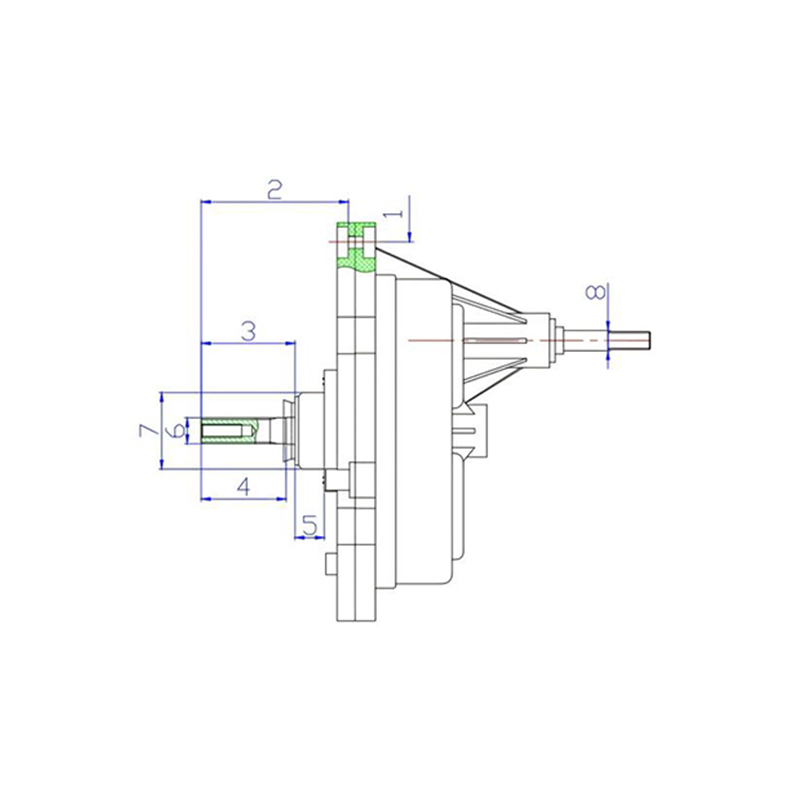 GT007 Washing Machine Gear Case for Semi-Automatic Agitator WashersGT007 gear case uses precision plastic gearing and self-lubricating construction to drive agitators in humid semi-automatic and light commercial washers.View Product → gear case option alongside the transmission itself helps buyers judge whether the supplier controls the whole assembly or only assembles purchased parts.
On the bench, a straightedge across the mounting face and a dial indicator on the output shaft will reveal most of what matters. Runout beyond a few thousandths of an inch at the shaft is enough to produce a visible wobble at the pulsator, and a wobble that reaches the customer becomes a warranty conversation rather than a specification conversation.
Shaft geometry, spline profile and shift timing decide whether a replacement behaves like the original, and shift timing is the characteristic most often wrong and least often checked.
Belt-Driven and Direct-Drive: Different Gear Cases, Different Buying Logic
The two drive architectures put very different demands on the transmission, and mixing the two in a purchasing plan causes confusion. In a belt-driven machine, the motor sits beside the tub and a belt carries torque to a pulley on the gearbox input. The belt absorbs shock at start and at reversal, which protects the gear train but also means the gearbox has to provide all of the reversing motion itself through the reduction stage.
In a direct-drive machine, the motor is coupled straight to the input shaft. There is no belt to absorb anything, so every start, stop and reversal arrives at the gear teeth as a shock load. That is why direct-drive cores place such emphasis on gear tooth root strength, on the fit between the sliding gear and the shaft, and on the hardness of the shift cam. It is also why the same nominal load rating can behave very differently in the two applications.
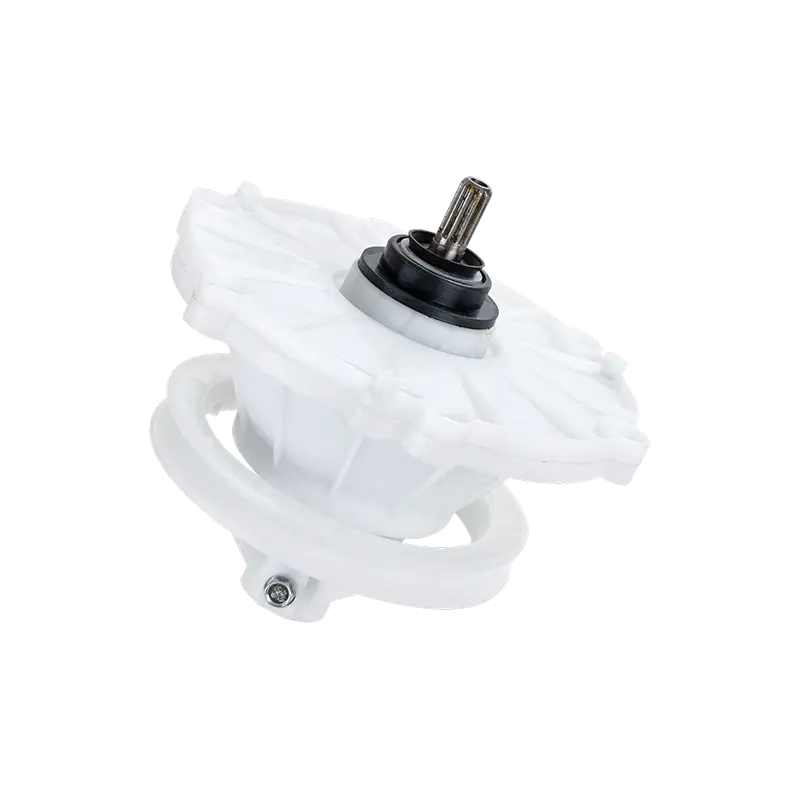 Washing Machine Gearbox Range by Drive ArchitectureBrowse twin-tub reducers, semi-auto gear boxes, transmissions, and gear cases organized by belt-driven, direct-drive, planetary, and synchronizer-integrated structures.View Product →
For distributors, the practical implication is that stock planning should be separated by architecture rather than by machine capacity alone. A ten-kilogram belt-driven unit and a ten-kilogram direct-drive unit do not share a failure profile, and treating them as interchangeable in a catalogue leads to the wrong part arriving at the wrong repair. Reviewing the full gearbox range by structure, including dual-direction rotation and high-torque variants, helps buyers build a catalogue that reflects how the parts are actually used.
Semi-automatic and twin-tub platforms form a third group with their own logic. These machines reverse the pulsator continuously and often run long cycles with heavy loads of water and fabric. Reducers built for that duty emphasise seal integrity and continuous reversing durability over peak torque, and a twin-tub reducer specified for the correct tub size will outlast a larger unit run outside its intended duty.
Belt-driven and direct-drive gear cases face different shock loads, so stock and specification decisions should be organised by drive architecture rather than by drum capacity.
Sourcing at Volume: What Distributors and Repair Chains Should Ask
Aftermarket demand for transmission cores is steady rather than seasonal, which makes it attractive for distributors who can hold the right depth of stock. The risk sits in supplier selection rather than in demand. A low-cost manufacturer with no incoming inspection will deliver a first batch that performs acceptably and a third batch that generates returns.
The questions that separate a real manufacturer from a trader are specific. Ask who produces the gears, whether heat treatment is done in house, how the shift cam is hardened, and what the acceptance criteria are for backlash and shaft runout. Ask what happens when a batch fails those criteria, and ask for the process rather than the promise. A supplier with an established factory and a documented quality system will answer in procedures; a trader will answer in adjectives.
Commercial terms matter as much as technical ones for a wholesaler building a programme. Minimum order quantity, lead time stability, packaging that survives international freight, and the willingness to hold a part number consistently across years all affect the cost of carrying the line. Consistency of part numbering is underrated: a distributor who has to re-catalogue every eighteen months loses more margin than a slightly higher unit price would cost.
Buyers should also confirm compliance early. RoHS conformity, ISO 9001 quality management and ISO 14001 environmental management are baseline expectations for appliance component supply into international markets, and asking for certificates before the first order avoids a costly interruption later.
The difference between a manufacturer and a trader shows up in the third shipment, not the first, so ask for processes and certificates before placing volume orders.
Installation and First-Run Checks That Prevent Comebacks
Most transmission replacements that fail within the warranty period fail because of installation rather than because of the part. A short, disciplined procedure catches nearly all of them before the machine leaves the workshop.
- Clean the mounting face and the shaft interface. Grit trapped under the case flange tilts the housing and loads the bearing unevenly.
- Inspect the drive block and coupling and replace them if worn; fitting a new transmission onto a worn drive block transfers the wear immediately.
- Torque the mounting bolts in a cross pattern to the specification for the platform rather than by feel.
- Check that the shift actuator moves through its full stroke without binding before the cabinet goes back on.
- Run a short wash cycle, then a spin cycle, listening for the engagement point and watching for basket wobble.
- After the spin cycle, check the case seam and the shaft exit for grease seepage while the assembly is still warm.
- Confirm the machine completes a full automatic cycle, including drain and final spin, before it is returned to the customer.
The engagement point is worth listening for specifically. A healthy unit engages spin cleanly with one distinct change in sound; a unit with incorrect cam timing will produce a short period of drag before the basket reaches speed. That drag is easy to miss in a noisy workshop and very obvious in a customer's laundry room.
Clean mating surfaces, a fresh drive block and a correctly torqued flange prevent more warranty returns than any single component upgrade.
Quality and Supply Signals Worth Verifying
When a transmission core is being evaluated for a long-term programme, the manufacturing environment tells you more than a sample unit can. A supplier with a dedicated production base, documented process control and experience across both OEM and aftermarket channels is generally a safer partner than one competing purely on unit price.
Established component makers in this segment typically combine in-house production of the core mechanical parts with assembly and end-of-line testing. Vertical control of gear cutting, heat treatment and shaft machining reduces the variability that appears when those steps are outsourced to different workshops. For buyers, that translates into fewer batch-to-batch differences in noise and shift feel, which are exactly the characteristics a customer notices first.
Certification is a useful filter but not a substitute for a factory visit. A quality management certificate confirms that a system exists; a walk through the plant confirms whether it is being used. Watching incoming inspection, seeing how gears are gauged, and looking at how non-conforming parts are segregated will tell you within an hour what a certificate cannot.
Certificates confirm a system exists, while in-house gear cutting, heat treatment and end-of-line testing confirm that the system is actually controlling what the customer will feel.
Kenmore Washing Machine Transmission: Frequently Asked Questions
How do I know the transmission is the problem and not the clutch?
The clutch slips progressively and usually still allows some basket movement, while a failed gear case typically produces no spin at all or an obvious mechanical noise that tracks basket speed. Running the machine with the cabinet open and watching for basket movement while listening to the case will separate the two in most cases, and a clutch that drags will often smell hot after a spin cycle.
Can a Kenmore washing machine transmission be repaired instead of replaced?
It can be opened on a bench, but the case is designed as a sealed assembly and the reseal is rarely as reliable as the factory original. For regular repair work the labour cost usually exceeds the price of a new core, and reusing worn gears or bearings means the fault returns. Repair makes sense mainly for vintage machines where no replacement exists.
What causes a transmission to fail in the first place?
Wear in the shift mechanism is the leading cause, followed by gear tooth wear and seal failure that lets water into the lubricant. Overloading the machine and running heavy loads at high spin speeds accelerates all three. In direct-drive designs the absence of a belt means every start and reversal reaches the gear teeth as a shock load, which is why engagement surfaces are built up and hardened.
Do aftermarket transmission cores fit the same as original parts?
They fit when the supplier controls shaft diameter, spline profile, mounting pattern and case height against the original drawing. Problems appear when a supplier works from a sample rather than a drawing, because small differences in shift cam timing or shaft runout are invisible at installation and obvious in service.
How long should a replacement transmission last?
Service life depends far more on load profile and water conditions than on the calendar. Machines run with consistently heavy loads, or with water conditions that promote corrosion at the shaft seal, will shorten the life of any core. Sourcing from a supplier that specifies seal material and grease type is the most practical way to extend it.
What should a distributor check before stocking a new transmission line?
Confirm the supplier manufactures rather than assembles purchased parts, review the incoming inspection and end-of-line test process, verify RoHS and quality management certification, and check part number stability across previous years. A trial order across two or three high-turnover part numbers will reveal batch consistency faster than any questionnaire.
Is agitation during the spin cycle always a transmission fault?
Not always, but it is the most common mechanical explanation. A worn shift cam that fails to hold engagement allows the gear case to keep oscillating while the machine is supposed to be spinning. The same symptom can come from a sticking actuator, so check the actuator stroke before replacing the gear case.
Most transmission questions come down to one distinction: a worn shift mechanism behaves like a control fault, while a worn gear train behaves like a mechanical failure, and the two need different responses.
Where to Go Next
Whether the job in front of you is a single repair or a container-scale order, the same logic applies: confirm the fault, match the core to the original specification, and buy from a source that can describe its inspection process. That approach costs slightly more attention up front and considerably less in returns later.
Diagnosis decides the repair, but specification and supplier inspection decide whether the repair stays fixed.

 English
 عربى


 +86-574-63256717 /63267914
info@gaite.cn
 gaite@gaite.cn
 No. 208 Miaoshan Road, Shiyan Village, Henghe Town, Cixi City, Ningbo City, Zhejiang Province, China
